Introduction
Picture this: someone’s cooking dinner, elbows deep in marinara sauce, and suddenly thinks, “I need more olive oil.” They glance at their smart speaker and say, “Hey Alexa, order my usual olive oil.” Boom—order placed, without a single finger swipe.
Welcome to 2025, where voice commerce isn’t sci-fi—it’s supper prep.
Voice assistants like Alexa, Siri, and Google Assistant aren’t just helpful—they’re shopping buddies, personal concierges, and, in some cases, better sales reps than your human team (sorry, Jim from sales). From searching for product reviews to making purchases, users are increasingly turning to voice-based tools to do everything hands-free.
And this shift isn’t just cute tech novelty—it’s a multi-billion-dollar evolution in how people interact with content, search engines, and e-commerce platforms. Voice commerce and audio SEO are two emerging digital powerhouses that are quietly taking over the search landscape—and most businesses aren’t ready.
So here’s a gut-check: If someone asked Alexa to find your product, would it show up? Or would your competitor’s voice-optimized site swoop in and take the sale while your SEO still thinks it’s 2015?
This article dives deep into the voice-driven world of commerce and search, from what voice commerce really means to how to optimize your content, listings, and site for natural, spoken conversations. Whether you’re a seasoned marketer, an e-commerce brand owner, or a tech-savvy creator riding the voice wave, this guide will show you how to be heard, not ignored.
Let’s get conversational, shall we?
1. What Is Voice Commerce?

Hint: It’s not just people yelling “Buy now!” at their smart speakers.
Let’s break it down: voice commerce is the act of purchasing products or services through voice-enabled devices like smart speakers (Amazon Echo, Google Nest), voice assistants (Siri, Alexa), or even voice-activated apps. It’s e-commerce… minus the keyboard.
It all started with voice assistants being helpful little robots—answering weather questions, setting timers, or playing your “Cooking With Beyoncé” playlist. But over the past few years, those assistants have evolved into full-blown shopping companions. Today, you can reorder household items, book flights, compare product prices, and even track deliveries—all without lifting a finger.
From Convenience to Commerce
Here’s how it typically works:
-
You say: “Hey Google, buy more paper towels.”
-
Google Assistant checks your preferred store or past purchases.
-
It suggests a brand, confirms the price.
-
You say “Yes,” and boom—it’s on its way.
That’s voice commerce in action.
Examples in the wild:
-
Alexa: Reorders from your Amazon history in seconds.
-
Siri: Searches local businesses and places orders via Apple Pay integrations.
-
Google Assistant: Finds deals, checks availability, and even enables purchases across supported platforms.
Voice commerce is essentially e-commerce with training wheels for your vocal cords.
Voice Commerce vs. Traditional E-Commerce
| Feature |
Traditional E-Commerce |
Voice Commerce |
| Input Method |
Typing, clicking |
Talking |
| UX Design |
Visual (menus, grids) |
Conversational (dialog flow) |
| Speed |
Depends on navigation |
Instant commands |
| Multitasking |
Limited |
Hands-free |
So, why does this matter?
Because voice commerce isn’t replacing e-commerce—it’s evolving it. It enhances the buying journey by making it faster, more convenient, and context-aware.
Why People Love It
-
Hands-free convenience: You can shop while driving, cooking, or even mid-burpee (okay, maybe not burpees).
-
Speed: No need to scroll endlessly through search results.
-
Personalization: Voice assistants learn preferences and make better suggestions over time.
-
Accessibility: Helpful for users with visual impairments or limited mobility.
Voice Commerce by the Numbers
Let’s throw some stats into the mic:
-
By 2025, over 75% of U.S. households are expected to own a smart speaker.
-
Voice commerce is projected to hit $80 billion globally by 2027.
-
Nearly 52% of voice-enabled device users say they’d rather shop via voice than mobile if accuracy and suggestions improve.
That last one? That’s your opportunity knocking—and whispering sweet, SEO-optimized nothings into your customer’s ear.
So now that we’ve laid the foundation, let’s explore what’s fueling this shift: voice search itself.
2. The Rise of Voice Search

Why your audience is talking to devices instead of typing—and what it means for your strategy.
Let’s play a game. Say the phrase:
“Best Thai restaurant near me open now.”
Congratulations, you just made a voice search query—something millions of people do every day, often without realizing how different it is from typing.
What Makes Voice Search Different?
When we type into Google, we tend to speak like robots:
“Thai restaurant NYC open late.”
But when we use voice? We sound like humans (finally):
“Hey Siri, what’s a good Thai place nearby that’s open right now?”
This is called a conversational query, and it’s powered by Natural Language Processing (NLP)—a fancy term for how AI tries to understand our very human, often chaotic way of speaking.
Voice search has shifted how users interact with search engines, and it’s fundamentally changing SEO.
What People Use Voice Search For
-
Quick answers: “How many tablespoons in a cup?”
-
Local searches: “Where’s the nearest gas station?”
-
Product discovery: “What’s the best sunscreen for oily skin?”
-
Tasks: “Remind me to call mom at 5pm.”
It’s not just about searching—it’s about doing, which makes voice search the ultimate action-based interface.
The Intent Behind Voice
Voice search is usually:
-
Faster (less effort than typing)
-
Local (often on-the-go or in-the-car)
-
Transactional (ready to buy or act)
-
Conversational (hello long-tail keywords!)
People speak differently than they type, which means your content strategy needs to match the way real people talk, not just how they type.
Where It’s Happening
Voice search isn’t limited to smart speakers. It’s creeping into every connected corner of our lives:
-
Smartphones: With built-in assistants and voice typing.
-
Cars: “Navigate to the nearest Starbucks.”
-
Smart TVs: “Play Stranger Things on Netflix.”
-
Wearables: “What’s my heart rate?”
By 2025, voice assistants will live in over 8 billion devices globally. If you’re only optimizing for screens, you’re ignoring half the conversation.
Let’s Talk Stats (because numbers love the spotlight):
-
71% of consumers prefer voice search over typing when hands-free is a must.
-
58% of people use voice search to find local businesses.
-
43% of smart speaker owners use them to shop weekly.
-
“Near me” searches with voice grew over 500% in the last few years.
And let’s not forget: voice search results typically come from a single answer. If your site isn’t first, it’s invisible.
So, the rise of voice search isn’t just a trend—it’s a new language of engagement. And to speak it fluently, we need to talk about audio SEO—aka your brand’s voice in the search universe.
3. Understanding Audio SEO: Beyond Keywords
Spoiler alert: You can’t just stuff “Hey Alexa” into your H1 tag and call it optimized.
When it comes to audio SEO, the rules of traditional SEO don’t disappear—they evolve. Think of it like this: regular SEO is building a storefront; audio SEO is designing a friendly salesperson who answers questions through a drive-thru speaker.
So… What Is Audio SEO?
Audio SEO is the practice of optimizing content for voice-based searches—so that when someone asks a question aloud (to Alexa, Siri, Google Assistant, etc.), your brand is the one that answers.
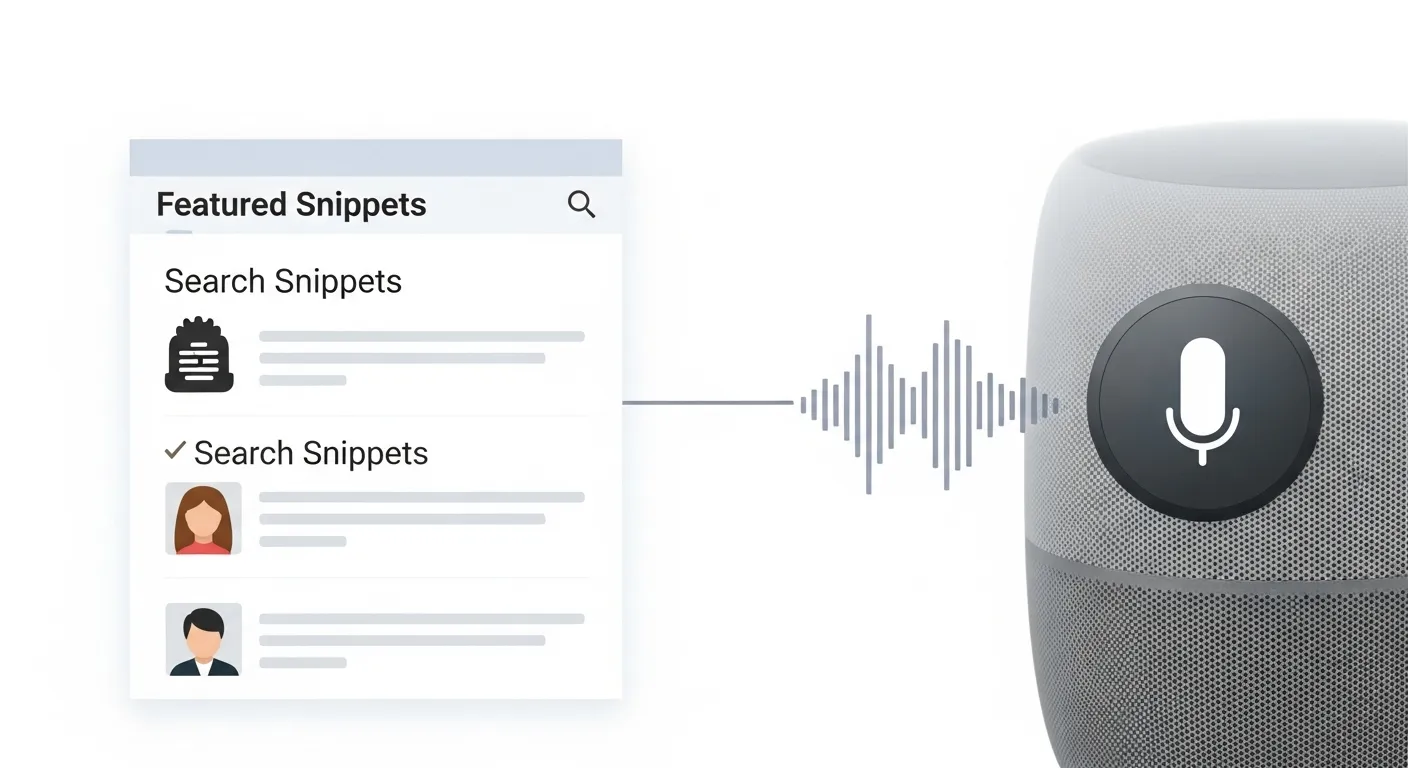
And here’s the kicker: unlike a regular Google search that shows you 10 blue links, voice search usually gives just one spoken result.
That means you’re not competing for first page—you’re competing for position zero.
Position Zero: The Holy Grail of Voice Search
Most voice search answers are pulled from:
So, if your content is clear, concise, and structured properly, you can own the voice space without needing a 10,000-word blog post.
Say It Like a Human
Here’s the golden rule: Write like people speak.
Forget keyword stuffing. Today’s voice assistants are powered by natural language processing (NLP), which means they favor:
Think FAQ style. Think “how do I…” Think “best way to…”
If your blog sounds like it was written by an over-caffeinated robot cramming for an SEO final, voice assistants will pass you over faster than you can say “Okay Google.”
Structured Data: Your Secret Weapon
Want to increase your chances of being voice-picked? Add schema markup to your site. It helps search engines understand your content better—and gives your answers a better shot at that voice-friendly spotlight.
Types of schema to consider:
-
FAQPage (for question-answer content)
-
HowTo (for step-by-step guides)
-
Product (for voice commerce listings)
-
Speakable (specifically for voice-read content!)
Basically, schema is like adding subtitles for Google—and when it understands you better, your content gets amplified across voice platforms.
Quick Tips for Audio SEO Greatness
✅ Use natural, question-based headlines
✅ Add a lightning-fast, direct answer in the first sentence
✅ Break content into scannable chunks (bullets, headers, etc.)
✅ Use schema markup to structure your content
✅ Don’t forget accessibility and mobile optimization
Voice-first SEO isn’t just about answering questions—it’s about answering them better, faster, and friendlier than anyone else.
And now that your content’s voice is prepped, let’s look at how this all connects back to your e-commerce strategy—because being found is great, but converting that find into a sale? Even better.
4. How Voice Commerce Impacts E-commerce Strategy

Hint: If your product listing doesn’t sound good out loud, it might never be heard at all.
Imagine this:
Someone’s making pancakes on a lazy Sunday morning, hands covered in batter. They glance over at their smart speaker and say:
“Hey Alexa, order more maple syrup.”
Boom. A sale happens—without a screen, a click, or even a second thought.
That, my friend, is voice commerce in action. And in 2025, it’s not science fiction—it’s a sales channel.
Voice Listings: Your New Sales Rep
If your product listing isn’t optimized for voice, you’re missing a rapidly growing slice of the market.
Why? Because voice-assisted shopping is:
But to make the cut, your product must be the answer—not just an option.
So let’s talk about how to be the one Alexa, Siri, or Google recommends.
Speak Their Language (Literally)
Your product titles and descriptions need to use natural, voice-friendly language.
Instead of:
“SPF 50 Facial Moisturizer with Hyaluronic Acid – 1.7oz, Non-Greasy, For Oily Skin”
Try:
“A lightweight face sunscreen for oily skin with SPF 50.”
One sounds like SEO robot soup. The other sounds like something you’d actually say.
Long-Tail Keywords Are Your Best Friend
Voice searches are often longer and more specific than typed ones.
People don’t say:
“Cheap earbuds”
They say:
“What are the best wireless earbuds under $50?”
So your product descriptions and blog content should include:
-
Question phrases (“what’s the best…”)
-
Conversational triggers (“looking for…”)
-
Use-case scenarios (“great for workouts, running, and commuting”)
This makes you more findable and more relatable.
Voice CTAs & Micro-Conversions
Don’t stop at discovery—optimize your call-to-action for voice too.
You can’t say “Click here” when there’s no clicking involved!
Use phrases like:
-
“Order now with your voice assistant”
-
“Ask your smart speaker to add this to your cart”
-
“Say ‘Buy [product name]’ to reorder instantly”
Also, integrate micro-conversions like:
Voice isn’t just for buying—it’s for building habits.
What About Payments?
Yes, people are buying with their voices—and yes, security matters.
Most platforms (Amazon Alexa, Google Assistant) offer voice-based payment verification, often with:
-
Voice profiles
-
PINs
-
Biometrics (on phones)
As a brand, ensure your checkout process is compatible with:
Voice UX Isn’t Optional Anymore
Most e-commerce platforms now offer voice integrations—Shopify, WooCommerce, and BigCommerce all have plug-ins or API access for voice compatibility.
Make sure your mobile app and website are:
-
Mobile-first (because voice and mobile go hand-in-hand)
-
Fast-loading (slow sites don’t win)
-
Simple to navigate by voice (use clear labels and product categories)
And yes—test how your product names, CTAs, and categories sound when read aloud by Siri or Alexa. You’ll be amazed how many listings fall flat because they’re hard to pronounce or just plain awkward.
TL;DR: Voice Is a Sales Channel
Your product page is now a pitch. Your description is now a script. And your CTA is a voice command.
So optimize not just for clicks, but for conversations.
Because in voice commerce, the brands that win aren’t the loudest—they’re the clearest.
5. Optimizing for Voice Search: A Tactical Guide
Because when someone says “Hey Google,” you want to be the answer, not the afterthought.
Voice search is like the cool new intern who gets straight to the point. No fluff. No unnecessary detours. Just fast, helpful answers in everyday language.
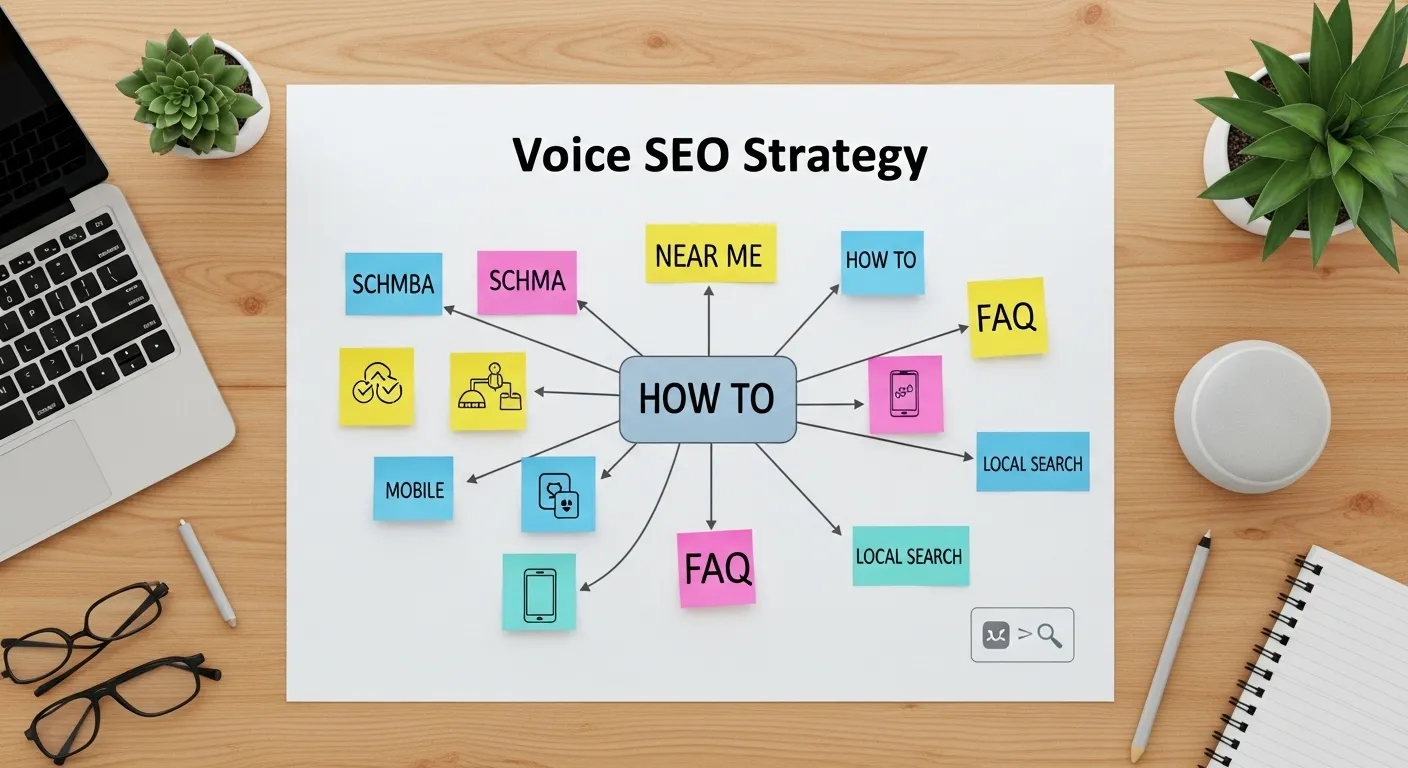
If you’re still optimizing for desktop keywords like it’s 2014, it’s time for a glow-up. Here’s your tactical playbook to master voice SEO in 2025—broken down into manageable, practical steps you can take right now.
a. Keyword Strategy for Voice: Ask the Right Questions
Voice search thrives on conversational queries—especially the famous five:
Who, What, When, Where, Why + How.
Instead of optimizing for:
“Best running shoes”
Try:
“What are the best running shoes for flat feet?”
“Where can I buy waterproof running shoes near me?”
🔑 Pro Tip: Use tools like AnswerThePublic, AlsoAsked, or SEMrush’s Voice Search Report to uncover the long-tail, question-based keywords people are actually saying—not just typing.
b. Content Creation Tips: Sound Like a Human (Not a Brochure)
Voice assistants don’t read like blog posts—they talk like people. Your content should too.
✅ Write FAQ-style content
✅ Use short, scannable sentences
✅ Add summaries at the top of pages
✅ Create How-To’s and Listicles (yep, still hot)
🎯 Bonus Tip: Use conversational connectors like “Let’s break it down,” “Here’s the deal,” and “Good news!” It’s like adding seasoning to your SEO stew.
Also: speak to your persona. If your audience is new moms, don’t write like a finance bro. Match their tone.
c. Page Speed & Mobile Optimization: The Silent Deal-Breaker
Here’s a truth bomb:
Voice search usually happens on mobile devices or smart speakers—and slow, clunky sites get ghosted.
✔️ Use Google PageSpeed Insights to test load times
✔️ Compress images
✔️ Minimize JavaScript
✔️ Ensure mobile-first design (text size, clickable areas, load speed)
If your page doesn’t load in under 3 seconds, you’re not the voice result. You’re background noise.
d. Local SEO and Voice: “Near Me” Just Got Louder
Voice search is a local beast. People use it to:
-
Find businesses
-
Check hours
-
Ask for directions
-
Discover nearby services
Optimize your Google Business Profile like it’s your storefront window.
✅ Add business hours, photos, and reviews
✅ Use natural language in your business description
✅ Keep location info consistent across the web
✅ Answer questions in your Q&A section (bonus: those might be read aloud!)
📍 Voice tip: Be the brand people ask for by name. If someone says “Hey Siri, order tacos from Taco Luna,” you’ve already won.
e. Schema Markup for Voice: Help the Robots Help You
Search engines love structured data. It tells them exactly what your content is about—and it helps voice assistants deliver accurate answers.
Use schema types like:
Tools like Google’s Structured Data Markup Helper or plugins like Yoast SEO can get you started without diving deep into code.
🏗️ Think of schema as the foundation that keeps your voice SEO house standing tall.
f. Optimizing Audio Content (Podcasts, Audio Blogs): The Underrated Goldmine
Got a podcast? Voice-activated devices LOVE audio content. But here’s the catch—you need to prep it for SEO.
🎧 Add:
-
Transcripts (hello, keywords!)
-
Time-stamped summaries
-
Clear titles and meta descriptions
-
Speakable markup (for news-type content)
Platforms like Podpage, Chartable, and Podscribe offer plug-and-play options to make your podcast more searchable and voice-assistant-friendly.
📢 Voice Tip: Use spoken calls to action—“Just say ‘Play [Your Podcast Name]’ on your smart speaker.”
TL;DR: Voice SEO = Helpful, Conversational, and Quick
To recap, here’s your voice search checklist:
Voice search users don’t have time to scroll. They want results—clear, relevant, and right now. Your job? Be the answer that talks back.
6. Tools & Tech for Audio SEO

Because even the smoothest voice needs a little tech support.
Voice search optimization may sound futuristic, but the good news is—you don’t need a PhD in linguistics or a team of robots to get started. With the right tools, even small businesses and solo creators can sound like they have an enterprise budget.
Here are the tools making audio SEO and voice commerce smoother than your morning podcast intro:
🔍 Keyword Discovery for Voice
-
AnswerThePublic – It’s like reading your audience’s minds, only more polite. This tool visualizes common voice-style questions around any topic: “how,” “what,” “near me,” etc. Super helpful for FAQ and blog content ideas.
-
SEMrush Voice Search Reports – SEMrush now offers insights tailored for voice queries. Think long-tail phrases, “featured snippet” intel, and mobile voice SERP data. Ideal for nerdy deep dives.
-
AlsoAsked – A goldmine for question-based keyword trees. Perfect for building content that mirrors natural human conversations.
💬 Schema Markup & Structured Data
-
Google’s Structured Data Markup Helper – A beginner-friendly way to tag your content with schema like FAQPage, Product, LocalBusiness, and Speakable.
-
Yoast SEO (Pro) – This WordPress plugin includes structured data blocks and integrates FAQPage schema directly into your content—great for featured snippets and voice-read responses.
-
Schema.org Validator – Want to double-check your markup? This tool tells you if your structured data is hitting all the right notes.
🎧 Optimizing Audio Content
-
Podscribe & Descript – Auto-generate transcripts and time-stamped highlights from podcasts and audio clips. That transcript isn’t just ADA-compliant—it’s keyword-rich SEO fuel.
-
Podpage – Automatically creates podcast episode pages with SEO-optimized metadata, transcripts, and summaries. Basically a smart landing page for your voice content.
🛍️ Voice Commerce Integrations
-
Shopify + Alexa Skills Kit – Shopify merchants can build Alexa integrations with relatively low lift. Customers can reorder, track, or ask questions via voice.
-
Voiceflow & Dialogflow – Design, prototype, and test voice apps for Google Assistant or Alexa. Ideal for advanced teams building branded voice experiences or voice commerce flows.
📢 Pro Tip:
Always test your voice content. Ask Alexa or Google Assistant to read your FAQ page or play your podcast. If it can’t find you, neither can your customers.
7. Real-World Examples: Brands Nailing Voice Commerce
Because success stories speak louder than ads.
If you’re still on the fence about investing in voice commerce and audio SEO, let these early adopters do the convincing. From pizza to perfume, these brands have mastered the art of turning “Hey Alexa…” into cha-ching.
🍕 Domino’s Pizza: Your Dinner Plans, Delivered by Voice
Domino’s was one of the first big brands to embrace voice ordering—and they made it deliciously easy. Users can reorder their “Easy Order” via Alexa, Google Assistant, or even Siri. You just say, “Alexa, ask Domino’s to feed me,” and boom—pizza is on the way.
Why it works:
-
Voice ordering is faster than tapping through a dozen screens.
-
Perfect use of saved customer preferences.
-
Adds a fun, branded personality to the experience. (Because “feed me” feels way cooler than “place order.”)
💄 Sephora: Voice-Guided Glam
Sephora turned Alexa into your own personal beauty guru. Their “Sephora Skincare Advisor” lets users ask skincare questions, get personalized recommendations, and hear how-tos for using products. It’s like having a makeup artist in your smart speaker.
Why it works:
-
High-value content through voice (tutorials, tips).
-
Conversational shopping journey with minimal friction.
-
Smart alignment between product discovery and education.
📰 NPR: Audio Content as a Strategy, Not a Side Hustle
National Public Radio lives and breathes audio. With daily briefings on Alexa and Google Assistant, NPR uses voice to reach millions—no screens required. They’ve even optimized segments for smart speaker delivery, structuring them like snackable content nuggets.
Why it works:
-
Designed for how people consume audio during daily routines.
-
Seamless transitions between live news, podcasts, and voice briefings.
-
Authentically voice-first without trying to “repurpose” text-based content.
🛒 Amazon: The Voice Commerce Juggernaut
Obviously, Amazon and Alexa go hand-in-hand like peanut butter and… peanut butter that orders more peanut butter. With Alexa integrated directly into the Amazon shopping app and Echo devices, users can:
Why it works:
-
Deep integration into user data, past purchases, and Prime perks.
-
Built-in trust: users know exactly what they’re getting.
-
Dominates voice search for transactional intent.
🧼 Local Hero: The Soap Shop That Spoke Up
A small handmade soap brand in Texas optimized their product listings for voice (“lavender goat milk soap near me”) and added FAQ schema to their website. Their local “near me” searches tripled, and Alexa started recommending their products to users asking for “organic soap shops nearby.”
Why it works:
📢 Takeaway:
Voice isn’t just for tech giants. From beauty brands to broadcasters to your neighborhood soap artisan—those who speak up, show up.
8. The Future of Conversational Marketing
Voice + AI = A match made in marketing heaven.
We’re not just talking to machines anymore—they’re starting to talk back in ways that are shockingly helpful, weirdly charming, and occasionally… a little too real. Welcome to the next wave: Conversational Marketing, where AI doesn’t just listen—it understands, predicts, and personalizes.
🤖 AI-Powered Conversations: The Evolution of “Hey Google”
Voice commerce is becoming more intuitive thanks to AI models like GPT (hi, that’s me 👋). These models make smart assistants smarter—capable of:
-
Holding actual conversations, not just responding with robotic blurbs.
-
Recommending products based on past purchases, behavior, and even tone of voice.
-
Adapting to context (“Find me a gift for my outdoorsy mom under $50”).
We’re moving from command-based voice search to collaborative voice shopping. It’s not just ask and answer—it’s ask, clarify, suggest, recommend, confirm, buy.
🧑🎤 Enter the Era of Voice Avatars and Brand Personas
Let’s get weird—in a good way.
Brands are developing custom voice avatars: branded tones, unique personalities, even regional accents. Think of it like your brand’s mascot, but instead of dancing in a costume, it’s chatting from a speaker.
Imagine:
-
A meditation app with a calm Australian voice that remembers your favorite evening routine.
-
A fashion brand’s AI assistant with a cheeky British accent, throwing out style tips like a runway coach.
It’s branding meets performance marketing meets…audio drama?
🕹️ Immersive Storytelling: Audio as the New Experience
With voice becoming central to how people engage content, storytelling is evolving too. Picture:
-
Voice-guided product demos (“Alexa, how do I use my air fryer?”)
-
Interactive choose-your-own-adventure shopping journeys
-
Story-based product discovery—think podcast meets QVC
We’re talking immersive brand experiences where content talks back—literally.
♿ Accessibility & Inclusivity: Not Optional, Non-Negotiable
Voice tech is breaking barriers for people with visual impairments, reading difficulties, or limited mobility. That means brands who prioritize voice aren’t just future-proof—they’re also people-first.
Want to make your content inclusive? Optimize for:
-
Clear voice-readable language.
-
Accurate alt text and transcripts.
-
Multilingual voice support where possible.
The more accessible your brand’s voice is, the more customers you’ll reach.
🔮 Prediction Time: Will Voice Replace Typing?
Not entirely. But…
-
For local, transactional, and quick-answer queries? Voice might become dominant.
-
For multitaskers, drivers, and anyone who’s ever had their hands full with a toddler, coffee, or both? Voice wins.
As AI and voice tech become more natural, we won’t just search differently—we’ll shop, learn, and live differently too.
📢 Bottom line?
Voice isn’t a novelty anymore—it’s the new norm in customer experience. And with AI in the mix, conversational marketing will only get smarter, smoother, and sassier.
Next: Let’s keep you out of the SEO blooper reel. On to Section 9: Common Mistakes to Avoid in Voice SEO (300 words).
You said:
ChatGPT said:
Absolutely! Let’s dive into the “what not to do” section—because even the best intentions can go a bit sideways when voice SEO is involved.
9. Common Mistakes to Avoid in Voice SEO
Because sounding smart takes more than just talking loud.
Before you launch your voice strategy and start imagining your brand as the next Alexa BFF, pause and make sure you’re not stepping into any of these common (and avoidable) voice SEO potholes:
❌ 1. Keyword Stuffing in a Conversational World
This isn’t 2005. You can’t just dump 20 keywords into a paragraph and hope Google’s voice assistant will read it out loud. Voice search favors natural, flowing language—not robotic keyword repetition.
💡 Fix it: Write like you talk. Literally. Answer questions the way you would explain them to a friend over coffee (or while screaming into your smart speaker mid-panic).
❌ 2. Forgetting the Mobile Experience
Voice search and mobile UX go together like peanut butter and voice-activated jelly. If your site takes forever to load, has tiny fonts, or requires 47 taps to buy something—congrats, you just lost the voice search game.
💡 Fix it: Speed up your site. Optimize buttons and layout for thumbs. Make every step frictionless for the “I’m in a hurry” crowd.
❌ 3. Neglecting Your Business Listings
You’d be shocked how many businesses show up in voice results with outdated phone numbers or “temporarily closed” status—when they’re… very much open.
💡 Fix it: Regularly update your Google Business Profile, hours, and contact details. Voice searches often pull directly from these sources.
❌ 4. Skipping Structured Data and Schema Markup
If your content isn’t marked up with schema, you’re making it harder for voice assistants to “understand” it. Think of schema like subtitles for search engines.
💡 Fix it: Use FAQ schema, Product schema, and Speakable schema where relevant.
❌ 5. Ignoring the Subtlety of Natural Language
“Top-rated vegan tacos near me at 7pm” ≠ “vegan tacos restaurant best time open.” Don’t sound like a robot wrote your content.
💡 Fix it: Embrace full sentences, questions, and answers in plain English. You’re optimizing for people, not just machines.
10. Action Plan: Getting Started with Voice Commerce & Audio SEO
Your “I-don’t-know-where-to-start” survival guide—no jargon, just action.
So, your content doesn’t show up when someone whispers sweet nothings like “best handmade candles near me” into their smart speaker? No worries. Here’s how to go from “what even is voice SEO?” to “we’ve got voice-optimized content and we’re not afraid to use it.”
✅ Step 1: Audit Your Current SEO for Voice Readiness
Let’s take stock of what you’ve got. Look at:
-
Do you already rank for question-based or long-tail keywords?
-
Is your content mobile-optimized and fast-loading?
-
Are your headers, meta descriptions, and snippets voice-friendly?
💡 Use tools like Google Search Console, SEMrush, and Screaming Frog to crawl and assess.
✅ Step 2: Refresh Your Content With Voice in Mind
Voice SEO thrives on conversational content, so start tweaking:
-
Add FAQ sections to your top-performing pages.
-
Rewrite some headers as questions (“What’s the best way to clean suede boots?”).
-
Break up chunky paragraphs and make answers snappy.
💬 Think: if Siri or Alexa read this out loud, would it sound natural?
✅ Step 3: Add Structured Data and Schema Markup
You don’t need to be a dev wizard—just start with:
-
FAQ schema (for Q&A-rich pages)
-
HowTo schema (for step-by-step guides)
-
Product schema (for e-commerce listings)
💡 Use Google’s Rich Results Test tool to check your markup is working.
✅ Step 4: Optimize for Local Voice Search
If you’ve got a physical location (or even a delivery radius), local voice search is your jam:
-
Claim and fully update your Google Business Profile.
-
Add “near me” and location-based phrases to your content.
-
Collect reviews—those get read out loud too!
✅ Step 5: Test Like You Talk
Simulate voice queries:
-
Use your phone, Alexa, or Google Assistant to ask questions your customers might ask.
-
See if you show up.
-
If not? Go back and tweak.
Voice is quirky. Test in real scenarios—different accents, casual phrasing, mobile vs. smart speaker.
✅ Step 6: Keep Learning
Voice and audio SEO are evolving faster than your morning coffee brews. Bookmark these:
Conclusion
Voice Commerce and Audio SEO Aren’t the Future—They’re the Now
If you’ve made it this far, congrats—you’re officially one of the few who realize that voice commerce and audio SEO aren’t sci-fi concepts anymore. They’re here, woven into your customer’s daily lives, one “Hey Google” or “Alexa, find me…” at a time.
Voice is hands-free, fast, natural, and becoming the go-to search method for millions. Whether your audience is cooking dinner, driving, jogging, or just avoiding typing altogether, they’re talking—and expecting answers. If your brand isn’t part of the conversation, it’s missing out. Big time.
So what do you do now? Start small. Audit your content. Add a few FAQs. Play around with schema. Test your product listings via voice. Bit by bit, you’ll find yourself not only showing up in search results—but being spoken aloud in homes, cars, and earbuds everywhere.
📣 Don’t wait to be discovered—be heard.
Want help fine-tuning your voice SEO or testing your voice-readiness? Reach out! Or better yet, say, “Alexa, find me a voice SEO expert,” and see if we show up. 😉
Bonus Section: FAQs
Smart Answers to the Questions Everyone’s Asking Their Voice Assistant
(…and now asking you)
🤔 What is voice commerce and how does it work?
Voice commerce is the magical ability to shop using only your voice—no keyboard, no screen, just commands like “Order more oat milk” or “Buy that LED desk lamp from my wishlist.” It’s powered by voice assistants like Alexa, Siri, and Google Assistant, which are connected to e-commerce platforms.
Once your voice assistant knows your preferences, payment method, and delivery address, shopping becomes as simple as speaking out loud. And yes, this tech is secure—payment methods are often protected with voice recognition, PINs, or two-factor authentication.
🧠 Is audio SEO different from traditional SEO?
Yes, and it’s not just SEO with a pair of headphones. Traditional SEO focuses on screen-based search—think Google’s search results page. Audio SEO, on the other hand, is about spoken answers, conversational phrasing, and position zero—the snippet Google reads aloud when someone uses voice search.
Audio SEO requires:
-
Short, concise answers
-
Natural, speech-friendly phrasing
-
Schema markup (like FAQ or HowTo)
-
Fast-loading, mobile-optimized pages
In short: same Google, different format.
🛍 How do I make my product show up in voice searches?
Great question, shopkeeper! Start by optimizing your product listings with:
-
Natural language: “best eco-friendly yoga mats” vs. “yoga mat green”
-
Long-tail keywords: “Where can I buy eco yoga mats under $50?”
-
Schema markup: use Product schema so search engines know what you’re selling
Also, if you’re using platforms like Shopify, check for voice commerce integrations. Alexa-friendly plugins are already a thing.
🛠 What tools can help me optimize for voice search?
Here are some fan-favorite voice SEO tools:
-
AnswerThePublic – Great for discovering natural question-based queries
-
SEMrush Voice Search Reports – Track and analyze voice performance
-
Google’s Speakable Schema – For marking up content that’s voice-readable
-
Voiceflow / Dialogflow – Design and test smart speaker experiences
-
Yoast SEO (with Podcast plugin) – Great for optimizing audio content like podcasts or audio blogs
Bonus: use your own smart assistant (Siri, Alexa, etc.) to test queries and see how your site responds.
🎙 Is podcasting part of audio SEO?
Absolutely! Podcasts are a goldmine for audio SEO. Search engines can now index audio transcripts, titles, and summaries. If your podcast answers specific questions, even better—Google loves turning spoken insights into featured snippets.
Just be sure to:
-
Include transcripts on your site
-
Use keyword-rich titles and descriptions
-
Add schema markup like PodcastEpisode
🎧 Your voice can literally be your content.
📱 Does voice commerce work on mobile too, or only smart speakers?
Oh, it definitely works on mobile—maybe even better. Smartphones are basically pocket-sized voice assistants. Whether it’s Siri on iPhone or Google Assistant on Android, mobile voice search is everywhere, especially for:
-
Local business lookups
-
Restaurant reservations
-
Quick product orders
Mobile voice search is booming, especially among multitaskers and younger demographics.
📉 Will voice SEO affect my Google rankings?
Yes, in a roundabout way. Voice SEO doesn’t replace traditional SEO—it extends it. When Google answers a voice query, it typically pulls from high-ranking, well-optimized pages (usually the featured snippet).
So if your content is:
-
Structured well
-
Mobile-optimized
-
Uses natural language
-
Has proper schema…
You’re more likely to own that voice search result, and that could indirectly boost clicks, traffic, and dwell time.
🧭 How do I get started with a voice strategy for my small business?
Start small and strategic:
-
Optimize your Google Business Profile
-
Add FAQs to your website pages
-
Use schema to help search engines understand your content
-
Try “voice testing” with smart speakers and phones
-
If you’re feeling fancy, dip your toes into podcasting or smart assistant integrations (like Alexa Skills)
Remember, you don’t need a big budget—just a clear voice and a good strategy.