
Introduction
Every year, developer surveys roll in like Oscar nominations, and—surprise, surprise—Python almost always takes home the “crowd favorite” award. According to the Stack Overflow Developer Survey, Python consistently ranks among the most loved and most wanted languages. It powers data science workflows, fuels artificial intelligence breakthroughs, runs web applications, and even sneaks into automation scripts that make developers’ lives easier. Basically, Python is that friend who’s equally comfortable at a black-tie gala, a hackathon, or a Netflix binge session.
But here’s the thing: most programming languages are like athletes in training. Some are obsessed with raw speed (hello, C++), while others show off their flexibility at the expense of clarity (looking at you, JavaScript). Many force you to trade simplicity for power or power for readability. Python, however, refuses to play by those rules. Its secret sauce is a design philosophy that doesn’t just settle for one trait—it aims for the sweet spot between readability, flexibility, and power.
So, what’s behind this balancing act? The answer lies in something every Pythonista eventually stumbles upon: The Zen of Python. This little manifesto, tucked away in PEP 20, is like the language’s guiding compass. It’s not just a list of cryptic aphorisms; it’s a north star that shapes how developers write code, how the community evolves, and why Python feels like such a “human-friendly” language compared to others.
The magic of Python’s design philosophy is that it puts humans before machines. Computers, after all, will run whatever weird concoction of code we throw at them. But humans? We need clarity, structure, and a bit of sanity when staring at code at 2 a.m. Python’s readability makes collaboration easier, its flexibility ensures you’re never boxed in, and its power means you can scale from a simple script to a machine learning model that predicts protein folding.
In this article, we’ll explore how Python’s philosophy was born, how it thrives on readability, how it bends without breaking under flexibility, and how it packs surprising power into deceptively simple code. We’ll also peek into its quirks, criticisms, and what the future might hold as Python marches into new frontiers like async programming and AI dominance.
So, whether you’re a seasoned Pythonista or a curious newcomer, buckle up. We’re about to unravel how Python’s philosophy manages to achieve that rare, almost paradoxical balance: code that’s not just executable, but beautiful.
The Origins of Python’s Philosophy
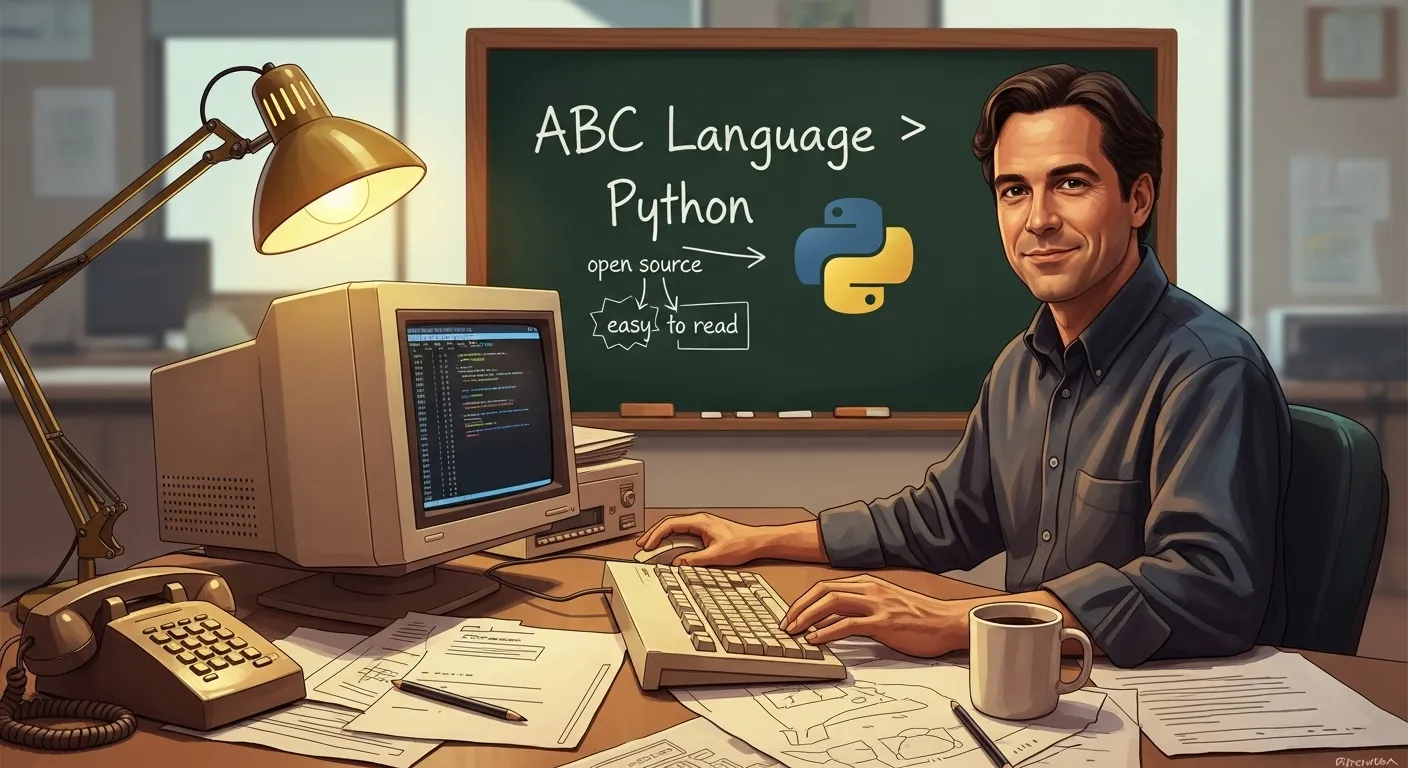
Every superhero has an origin story, and Python is no exception. While there are no radioactive spiders or gamma rays involved (thankfully), Python’s birth in the late 1980s has all the makings of a classic tale: one visionary developer, an underdog language, and a mission to make programming more human-friendly.
Guido van Rossum’s Vision
Enter Guido van Rossum, Python’s creator and self-styled “Benevolent Dictator for Life” (a tongue-in-cheek title he held until 2018). Back in 1989, while working at Centrum Wiskunde & Informatica (CWI) in the Netherlands, Guido wanted a hobby project to tinker with during Christmas holidays. But like most hobby projects that spiral out of control, this https://digitechworld.net/the-design-philosophy-of-python/one would go on to change the world.
His motivation was simple yet profound: he wanted a language that was both easy to learn and practical to use. At the time, languages like C offered raw power but at the cost of complexity. Meanwhile, beginner-friendly languages like BASIC lacked the sophistication needed for serious work. Guido set out to build a language that struck a balance—a tool that didn’t force developers to choose between readability and capability.
Influences from ABC
One of Guido’s major inspirations was the ABC programming language, which was developed at CWI before Python. ABC was designed for teaching and experimentation. It had a clean, simple syntax but suffered from being too rigid and lacking extensibility. Guido saw the potential in ABC’s readability but wanted something more pragmatic—something that could scale beyond classrooms and small demos into real-world applications.
In many ways, Python is ABC’s spiritual successor: it inherited the clean syntax but shed the rigidity, replacing it with extensibility and a vibrant ecosystem.
The “Pythonic” Mindset
What Guido created wasn’t just a language—it was a mindset. Early Python developers coined the term “Pythonic” to describe code that embodies the language’s philosophy. Writing Pythonic code isn’t just about syntax; it’s about embracing simplicity, readability, and elegance. For instance, using a list comprehension to filter data isn’t just shorter—it’s considered more Pythonic because it’s clearer and more expressive.
Being Pythonic became a cultural norm. Instead of “does it compile?” the real question was, “is it Pythonic?” This cultural DNA ensured that Python grew not just as a tool but as a community shaped by shared values.
PEP 20 – The Zen of Python
In 1999, long after Python had begun to spread beyond its academic roots, the community captured its design philosophy in a short but legendary document: PEP 20, The Zen of Python. Written by Tim Peters, it isn’t a set of strict laws but a collection of 19 aphorisms that act like fortune-cookie wisdom for Python developers.
Some of these are widely quoted, like:
-
“Beautiful is better than ugly.”
-
“Explicit is better than implicit.”
-
“Simple is better than complex.”
-
“Readability counts.”
These sayings may sound like common sense, but in practice, they influence everything from library design to coding style. They are the invisible threads weaving Python’s ecosystem into a coherent whole.
A Philosophy That Shapes a Community
The Zen of Python became more than just a quirky Easter egg you can summon in your interpreter with import this. It turned into a cultural compass, reminding developers that code isn’t just for machines—it’s for people. This philosophy helped Python attract not only programmers but also scientists, educators, and hobbyists who appreciated the language’s emphasis on clarity and accessibility.
By the early 2000s, Python wasn’t just another programming language. It was a movement rooted in readability, practicality, and community-driven design. Its philosophy—anchored by Guido’s vision, ABC’s influence, and the Zen of Python—set the stage for its explosive growth in the decades to come.
Readability: The Heart of Python
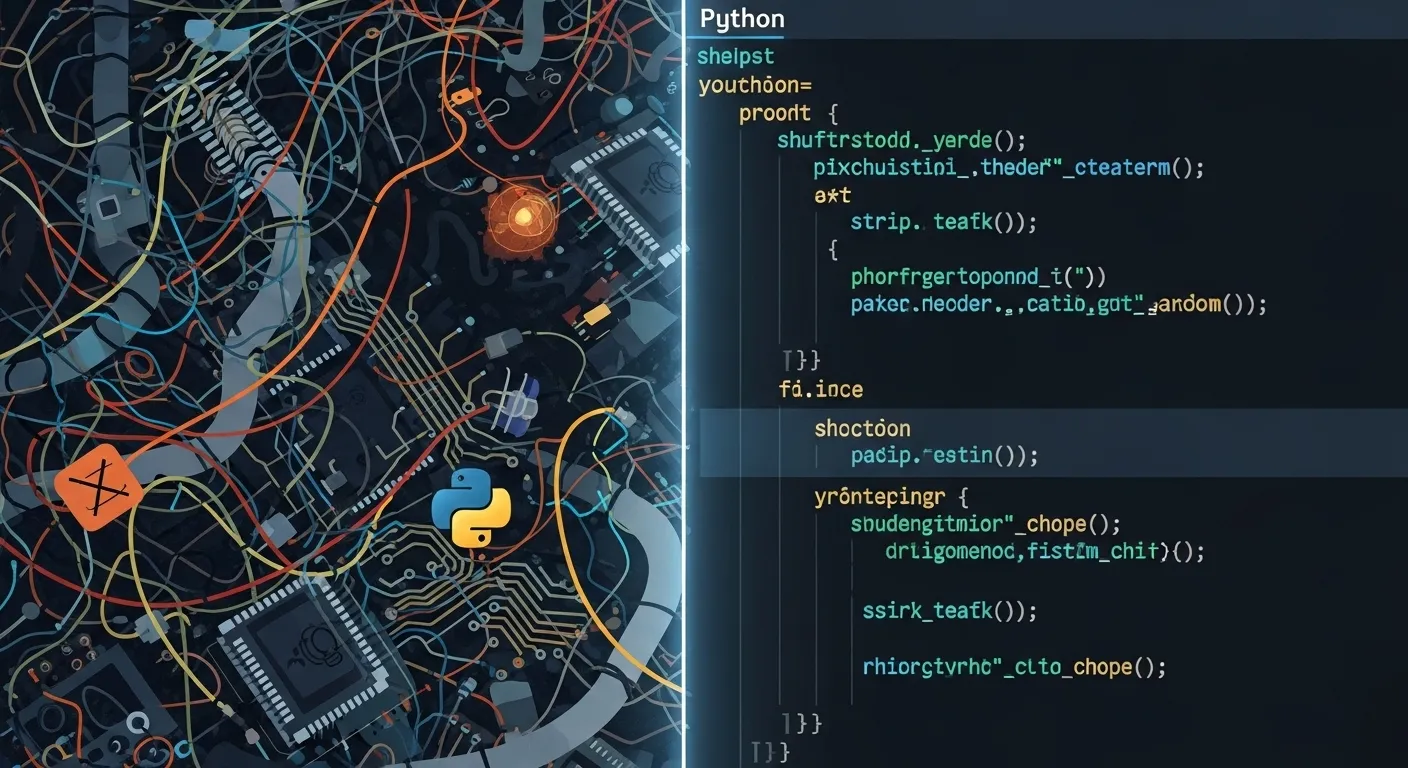
If Python had a dating profile, its tagline would be simple: “Readability counts.” And unlike some online profiles, Python actually lives up to its promise. The language was built on the radical idea that code should be easy to read as well as easy to write.
Other languages? They often treat readability like a bonus feature—nice if you have it, but not essential. Python, however, makes readability its core design principle. In fact, it’s right there in the Zen of Python: “Readability counts.” And if you’ve ever inherited a messy codebase at 2 a.m., you know how much that really counts.
Why Readability Matters
Let’s face it: machines don’t care how pretty your code looks. Give them a spaghetti mess or a poetic masterpiece, they’ll both run just fine (assuming no bugs). But humans? We’re a fragile bunch. Most of the time, code is read far more often than it’s written. Teams maintain code for years, debug it under stress, and hand it off to newcomers. Python’s readability is a gift to these weary souls—it makes codebases more approachable, maintainable, and downright humane.
White Space and Indentation: Python’s Bold Move
Probably the most controversial design choice in Python—and the one that makes Java and C++ programmers raise an eyebrow—is its use of indentation instead of braces.
In C++ or Java, you’ll often see this:
Python’s version looks like this:
No braces, no semicolons, no clutter. Just clean indentation. Critics call it “opinionated,” but Guido van Rossum argued that indentation isn’t optional—it’s essential. By enforcing indentation, Python eliminates “style wars” over where braces should go and ensures that code visually represents its structure. The result? Cleaner, more consistent code across the ecosystem.
Clear and Concise Syntax
Python doesn’t waste your keystrokes. Compare these snippets:
Java-style verbosity:
Python:
By dropping unnecessary punctuation and boilerplate, Python’s syntax reads almost like plain English. This simplicity lowers the barrier for beginners and makes experienced developers faster at expressing ideas.
Minimal Boilerplate
If you’ve ever written a “Hello World” in Java, you know the ceremony:
Meanwhile, Python greets the world with a single line:
That’s not laziness—that’s Python’s philosophy in action. By stripping away unnecessary boilerplate, Python makes the code easier to understand and keeps the focus on solving problems, not wrangling syntax.
Descriptive Naming in the Standard Library
Python’s standard library also reflects its readability-first philosophy. Functions and modules are named descriptively: json.loads() (load a JSON string), datetime.now() (get the current time), math.sqrt() (calculate a square root).
Compare this to languages where names can feel cryptic or overly clever. Python’s naming conventions are intentionally boring—and that’s a compliment. When you read Python code, you don’t need a decoder ring.
Pythonic Idioms: Explicit Is Better Than Implicit
Another cornerstone of Python readability is the preference for explicit code. Take the Zen of Python’s mantra: “Explicit is better than implicit.”
Here’s an example of implicit (and confusing) code:
Sure, it works, but it’s not obvious where sqrt came from. The explicit version is far clearer:
Or even:
Python encourages clarity, even at the cost of a few extra characters.
Readable vs. Un-Pythonic Code
Let’s look at a real-world example:
Un-Pythonic:
Pythonic:
Both do the same thing, but the second version is shorter, cleaner, and easier to read at a glance. That’s the essence of Pythonic code.
The Benefits of Readability
So, why all this fuss about making code look pretty? Because readability translates directly into real-world benefits:
-
Faster onboarding – New developers can quickly understand and contribute without deciphering cryptic syntax.
-
Easier debugging – Clean, structured code makes bugs easier to spot and fix.
-
Collaboration – Teams can work together smoothly when code looks familiar and consistent.
-
Long-term maintainability – Future-you (and your teammates) will thank you when maintaining a large codebase years later.
The Heart of Python
In the end, readability isn’t just a design choice—it’s Python’s beating heart. It shapes how the language is taught, how teams collaborate, and why the community holds itself to a higher standard of clarity. Python doesn’t just let you write code; it encourages you to write code that others can read, understand, and build upon.
That’s why Python codebases often feel less like tangled jungles and more like well-kept gardens—maintained by developers who value elegance as much as efficiency.
Flexibility Without Chaos
Python is often described as the “Swiss Army knife” of programming languages—adaptable, versatile, and ready for almost anything. But here’s the kicker: a Swiss Army knife is only useful if it doesn’t stab you while you’re opening a bottle of soda. That’s where Python stands out. It offers flexibility without descending into complete chaos.
A Flexible but Opinionated Philosophy
Flexibility in programming languages can be a double-edged sword. Too little flexibility, and you end up with rigid code that feels suffocating. Too much, and developers start writing programs that resemble abstract art installations. Python strikes a balance—it’s flexible enough to let you choose different approaches, but opinionated enough to nudge you toward cleaner, more consistent solutions.
The Zen of Python says it best: “There should be one– and preferably only one –obvious way to do it.” This doesn’t mean Python forces you into a single paradigm, but it does try to prevent anarchy by encouraging best practices.
Dynamic Typing: Friend and Foe
One of Python’s most famous (or infamous) features is dynamic typing. Variables in Python don’t need explicit type declarations—you just assign and go:
On the plus side, this makes prototyping blazingly fast. You can sketch out ideas without the overhead of writing type signatures everywhere. For startups, research projects, and quick experiments, this agility is golden.
But dynamic typing comes with a price: errors show up at runtime instead of compile time. That means your program might run beautifully until one day it crashes because you accidentally passed a string where a number was expected. Debugging these surprises can be… let’s say “exciting.”
To address this, the Python community introduced type hints in Python 3.5. While still optional, type hints let you annotate code for clarity and catch issues early with tools like mypy. It’s the best of both worlds: you keep flexibility while gaining a safety net.
Multiple Paradigms, One Language
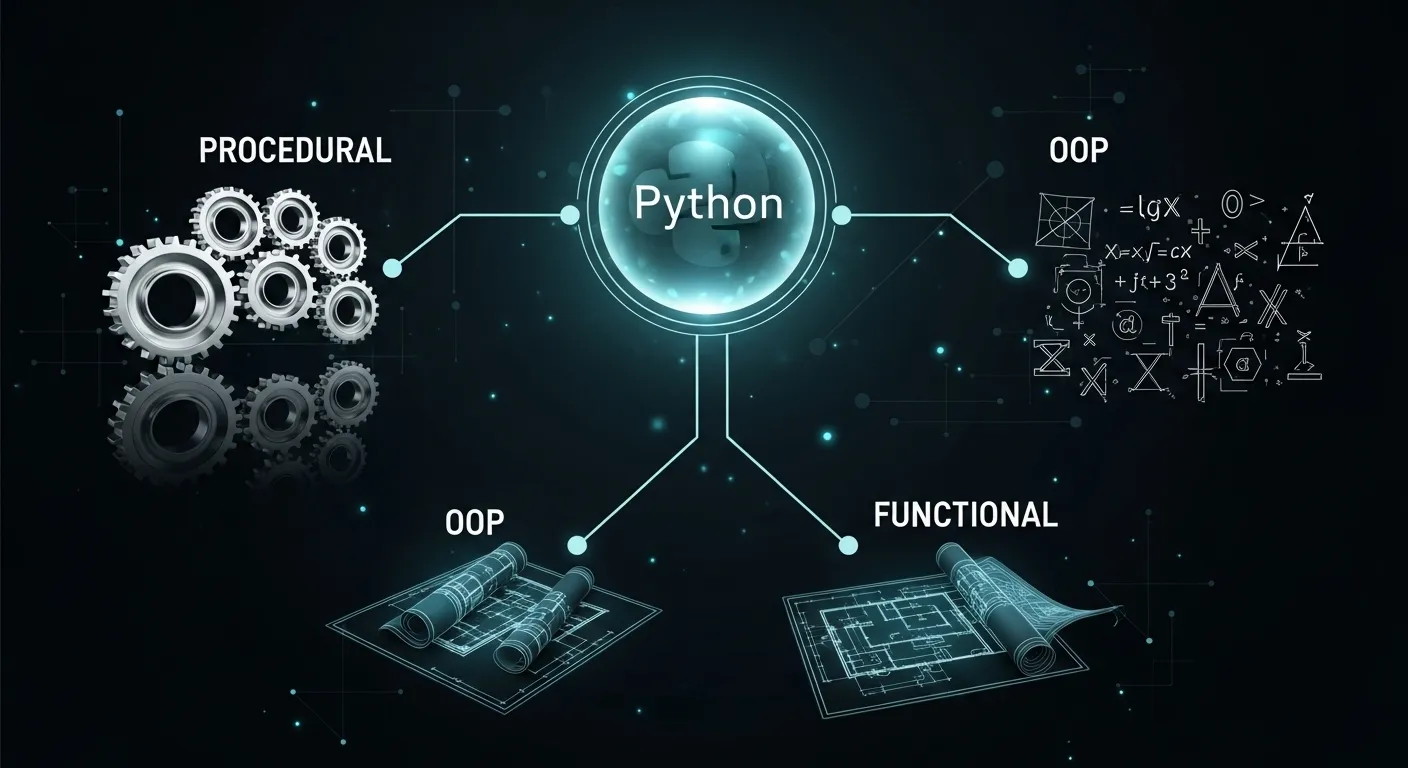
Python is famously multi-paradigm. You can write Python in a procedural style, an object-oriented style, or even a functional style. This flexibility means you can adapt Python to the problem at hand.
-
Procedural Programming – Great for scripts and simple automation tasks.
-
Object-Oriented Programming (OOP) – Build reusable components, classes, and inheritance hierarchies.
-
Functional Programming – Use lambdas, comprehensions,
map,filter, andreducefor clean, declarative code.
Example:
Functional style:
Pythonic (but still functional-ish):
Python doesn’t force you into one paradigm—it gives you options while gently steering you toward readability and simplicity.
Extensibility: Plugging into the World
Flexibility isn’t just about syntax; it’s also about ecosystem. Python can integrate with C and C++, letting you write performance-critical components in a lower-level language while keeping the rest of your code clean and Pythonic. This is why libraries like NumPy and TensorFlow can deliver high performance—they’re powered by C under the hood but expose a Python-friendly interface.
Then there’s the massive world of third-party libraries. Whether you’re building a web app with Django, crunching data with Pandas, or automating tasks with Ansible, chances are someone has already written a library for it. This extensibility makes Python feel less like a tool and more like a platform.
Guardrails Against Chaos
Of course, too much flexibility can lead to code that looks like a Picasso painting. Python prevents this in a few ways:
-
Strong conventions – The community embraces the PEP 8 style guide, which sets clear rules for formatting and style.
-
The Zen of Python aphorisms – Mantras like “There should be one obvious way to do it” encourage developers to favor clarity over cleverness.
-
Community culture – Pythonistas are quick to remind each other to “keep it Pythonic.” Peer pressure, but the good kind.
An Example of Controlled Flexibility
Take file handling. In many languages, opening and closing files requires ceremony and error handling. In Python, you can just do this:
The with statement is syntactic sugar for resource management. It’s flexible (you can define your own context managers) but standardized enough that everyone knows what it means. This is flexibility channeled into readability.
Flexibility as Empowerment
At the end of the day, Python’s flexibility empowers developers. Whether you’re writing a 10-line script or architecting a massive machine learning pipeline, Python adapts without demanding you learn a new language. It’s the reason Python is equally beloved by data scientists, web developers, and hobbyist tinkerers automating their coffee machines.
Python’s philosophy ensures that flexibility doesn’t descend into anarchy. It’s like jazz: there’s freedom to improvise, but the structure keeps it from turning into noise.
Power and Expressiveness

If Python were a person, it would be that friend who shows up in sneakers and a hoodie, but then casually solves a Rubik’s cube in 10 seconds and wins a chess match at the same time. In other words: Python looks simple, but don’t mistake that simplicity for weakness. Underneath its approachable exterior lies a language that’s incredibly powerful and expressive.
Simple, But Not Simplistic
One of the guiding principles in the Zen of Python is: “Simple is better than complex.” But don’t confuse “simple” with “dumbed down.” Python’s simplicity is deliberate—it reduces friction so you can get to the good stuff faster.
Consider this: in many languages, tasks that should be straightforward require a mess of boilerplate. Python lets you do more with less, but without sacrificing clarity. This is where expressiveness comes into play. Expressiveness means you can translate your ideas into code quickly and clearly, without having to jump through hoops.
Syntax That Speaks Volumes
Python’s syntax is one of its superpowers. Take list comprehensions—a feature that’s both concise and incredibly readable:
That’s one line instead of a four-line loop, and anyone can glance at it and instantly know what it does.
Or generators, which let you handle large datasets without gobbling up memory:
This tiny function creates an efficient iterator—no fuss, no clutter.
Then there are decorators, which let you modify functions with elegance:
That’s Python’s magic trick: it gives you powerful tools wrapped in elegant, human-readable syntax.
Batteries Included: Python’s Standard Library
Guido van Rossum once described Python’s philosophy as “batteries included.” Translation: when you install Python, you’re not just getting a bare-bones interpreter—you’re getting a treasure chest of tools ready to use.
Need to parse JSON?
Want to schedule asynchronous tasks?
Working with data structures, regular expressions, file systems, or even servers? Python’s standard library probably has a module for it. This rich toolkit is one reason Python is beloved in industry and academia alike.
High Performance, When You Need It
Now, let’s address the elephant in the room: Python isn’t the fastest language. Compared to C++ or Rust, it can feel like a bicycle in a Formula 1 race. But here’s where Python shows its cleverness: it delegates.
Libraries like NumPy, Pandas, and PyTorch do the heavy lifting in C or C++, while exposing a Python interface. The result? You get blistering performance with Python’s ease of use.
For example, multiplying two large matrices in Python alone would be a nightmare. But with NumPy:
That one line hides optimized C code running under the hood.
Balancing Abstraction and Control
Python shines in striking a balance between high-level abstraction and low-level control. You can write concise code for everyday tasks, but when needed, you can dig deeper—embedding C extensions, optimizing critical sections, or leveraging just-in-time compilers like PyPy.
Take context managers again. The with statement abstracts resource management into one clean construct. But you can also implement your own context managers if you want full control. Python gives you the tools to stay simple—or go deep.
Expressiveness in the Wild
Python’s power and expressiveness are why it dominates fields like:
-
Data Science and AI – With NumPy, Pandas, TensorFlow, and PyTorch, Python is the lingua franca of machine learning.
-
Web Development – Frameworks like Django and Flask let developers build robust apps quickly.
-
Automation – From DevOps scripts to scraping bots, Python makes repetitive tasks disappear like magic.
-
Education – Beginners love Python’s approachable syntax, while educators love its ability to scale into serious projects.
The common thread? Python lets people do more with less code, without the cognitive overload of languages that are “powerful” but unreadable.
The Secret Ingredient: Human-Centric Power
At the end of the day, Python’s power isn’t just about what the language can do. It’s about what it enables you to do. Its expressiveness makes you productive, its libraries give you superpowers, and its philosophy ensures that power never comes at the cost of clarity.
Python proves that a programming language doesn’t have to be intimidating to be powerful. In fact, its greatest strength is making advanced concepts accessible and elegant.
The Zen of Python in Practice
If Python were a religion (and for some developers, it kind of is), then The Zen of Python would be its sacred text. But unlike most sacred texts, you don’t have to spend years deciphering it—it’s literally one line away in your interpreter:

And voilà—nineteen short aphorisms written by Tim Peters appear on your screen. They’re witty, concise, and deceptively powerful. Think of them as fortune cookies for Pythonistas. They’re not laws carved in stone, but guiding principles that shape how we write Python every day.
Beautiful Is Better Than Ugly
Take the first line: “Beautiful is better than ugly.”
This isn’t about aesthetics in the abstract—it’s about writing code that looks and feels elegant. Compare these two ways of checking if a number is even:
Ugly (but functional):
Beautiful (cleaner, more readable):
Both work, but the second follows conventions that make it easier to read, especially when scaled up to larger programs. Beauty in Python is about clarity and simplicity.
Simple Is Better Than Complex
Another gem: “Simple is better than complex.”
Sure, you can write a one-liner that compresses three nested conditions into an unreadable mess. But should you? Probably not. Python nudges you toward solutions that are straightforward and maintainable.
Example:
Complex (and confusing):
Simple (and clear):
Yes, it’s longer. But now you and your teammates can actually understand it six months later.
Errors Should Never Pass Silently
One of the most underrated aphorisms: “Errors should never pass silently.”
In many languages, you might be tempted to catch an error and quietly move on. Python, however, encourages you to acknowledge and handle errors explicitly. Consider file handling:
Bad (ignores errors):
This swallows errors, leaving you clueless if something goes wrong.
Pythonic (acknowledge errors):
Here, the program fails loudly and clearly, making it easier to debug.
Real-World Pythonic Approaches
These aphorisms aren’t just platitudes—they influence everyday coding practices. A few examples:
-
“Explicit is better than implicit.” → Prefer
import mathoverfrom math import *. -
“Readability counts.” → Use descriptive variable names like
student_scores, nots. -
“Flat is better than nested.” → Avoid deeply nested conditionals; use guard clauses instead.
Pythonic Code Examples
Let’s see how Zen principles shape Pythonic code.
Un-Pythonic:
Pythonic:
Both work, but the second is simpler, clearer, and makes use of Python’s expressive standard library.
The Role of PEP 8
Beyond PEP 20, Python also has PEP 8, the official style guide. While Zen sets the philosophy, PEP 8 gives the practical details: naming conventions, indentation rules, line lengths, and so on. Together, they create a culture of consistency and readability across the Python ecosystem.
When you see a Python project on GitHub, chances are it “feels” familiar because the community has internalized these standards. That sense of familiarity is no accident—it’s a byproduct of the Zen at work.
A Mindset, Not Just Syntax
Perhaps the most important thing to understand about the Zen of Python is that it’s not just about syntax—it’s about a mindset. It reminds us to write code for humans first, machines second. To favor clarity over cleverness. To embrace simplicity without sacrificing power.
That mindset is why Python feels approachable to beginners and powerful for experts. It’s why Python has scaled from hobby projects to powering Google, Netflix, and machine learning research. The Zen is the invisible hand guiding all of this.
The Zen in Your Day-to-Day Coding
Even if you don’t memorize all 19 aphorisms, you’ll feel their influence every time you write Python. When you choose readability over brevity, when you handle errors explicitly, when you flatten your nested loops—you’re practicing the Zen.
It’s less about following rigid rules and more about internalizing a philosophy: that code is a craft, and like any craft, beauty and simplicity matter.
Criticisms and Limitations of Python’s Philosophy
Okay, let’s be real for a second. We’ve spent a lot of time singing Python’s praises—its readability, flexibility, and power. But no language is perfect, not even the beloved Python 🐍. In fact, some of the very things that make Python charming also come back to bite it. Let’s look at the limitations and criticisms that developers often raise.
Performance Concerns
First up: speed. Python is famously slower than languages like C, C++, or Java. Why? Because Python is interpreted and dynamically typed, which makes it easy to write but harder to optimize.
If you’re crunching huge datasets or running performance-critical systems, pure Python might feel like driving a tricycle in a Formula 1 race. That’s why performance-heavy tasks often rely on optimized libraries like NumPy (written in C) or use tools like Cython to squeeze more speed out of Python.
So yes, Python can be slow—but clever workarounds often save the day.
Dynamic Typing Headaches
We praised Python’s dynamic typing earlier for its flexibility, but here’s the downside: bugs love it. Because types aren’t enforced at compile time, errors can sneak into your code and explode at runtime.
Example:
This will crash because you can’t add a string and an integer. Static languages would catch this before running. Python? It lets you learn the hard way.
To address this, Python introduced type hints (PEP 484). But since they’re optional, not every project uses them, meaning dynamic typing remains a double-edged sword.
Strict Indentation Complaints
Remember how Python enforces indentation instead of braces? Many love it, but some developers hate it with the burning passion of a thousand suns. They argue that whitespace should be a stylistic choice, not a language requirement. Accidentally mixing tabs and spaces? Congratulations, you’ve earned yourself a frustrating IndentationError.
While most Pythonistas eventually see indentation as a blessing, newcomers occasionally see it as a roadblock.
“There Should Be One Obvious Way…” – Really?
The Zen of Python tells us: “There should be one– and preferably only one –obvious way to do it.” Sounds great in theory, but in practice? Subjectivity creeps in.
Ask two developers what the “obvious way” is, and you might get two different answers. Should you use a list comprehension or a for loop? Should you import modules explicitly or alias them? Sometimes, the “obvious” way depends on experience, context, or personal taste.
How the Community Addresses These Issues
The good news is that Python’s community doesn’t ignore these criticisms—it innovates around them:
-
Performance → Projects like PyPy (a just-in-time compiler) and optimizations in Python 3.11+ have dramatically improved execution speed.
-
Dynamic typing issues → Tools like mypy and Pyright help enforce type hints, giving teams more confidence in large projects.
-
Indentation frustrations → Linters and IDEs handle formatting automatically, reducing whitespace headaches.
-
Subjectivity in “obvious ways” → Conventions like PEP 8 bring consistency, even where multiple approaches exist.
A Balanced View
So yes, Python has flaws. It’s not the fastest. Dynamic typing can cause headaches. Indentation can frustrate. And the Zen’s aphorisms can sometimes feel more like philosophy class than hard rules.
But here’s the thing: most developers still choose Python because its strengths outweigh its weaknesses. For every complaint, there’s usually a library, tool, or convention that smooths things out.
In other words, Python’s limitations aren’t deal-breakers—they’re reminders that no language can be everything to everyone. What makes Python remarkable is how it acknowledges its imperfections while continuously evolving to address them.
Python’s Philosophy in the Real World

It’s one thing to talk about design philosophies and Zen aphorisms—it’s another to see how those ideas actually shape the real world. Fortunately, Python isn’t just a language of ideals; it’s a language that shows up everywhere. From data science labs to Hollywood studios, Python’s philosophy of readability, flexibility, and power has fueled its widespread adoption.
Adoption Across Industries
Python isn’t picky about where it’s used. It’s become the lingua franca of data science and AI, thanks to libraries like NumPy, Pandas, TensorFlow, and PyTorch. Researchers love it because they can prototype ideas quickly without getting lost in syntax jungles.
In web development, frameworks like Django and Flask power everything from startups to enterprise apps. And in automation and DevOps, Python scripts are often the glue holding systems together—automating deployments, parsing logs, and even orchestrating servers.
It doesn’t stop there. Python also thrives in education. Its clean syntax makes it the go-to language for teaching programming fundamentals. And yes, it’s in entertainment too—visual effects studios use Python for scripting in tools like Maya and Blender.
Why Beginners Love Python
If you’re new to programming, Python is like that friendly professor who makes complex topics feel manageable. Its readable syntax means beginners spend less time worrying about curly braces and semicolons, and more time learning the actual logic of programming.
The result? A lower barrier to entry that has made Python the first language for millions of new developers. And once they learn Python, many stick with it—because it scales gracefully from “hello world” to serious projects.
Why Experts Love Python
On the flip side, seasoned developers appreciate Python for entirely different reasons: its depth and extensibility. The same language that introduces kids to coding can also handle high-performance computing with C extensions, manage distributed systems, or serve as the backbone of AI research.
That rare blend—beginner-friendly but expert-approved—is a direct result of Python’s design philosophy. It doesn’t dumb things down; it makes powerful concepts accessible.
Case Studies: Python in Action
-
Google’s Early Adoption: In the early 2000s, Google embraced Python for internal projects because it let engineers move fast without sacrificing maintainability. Guido van Rossum himself worked at Google, further cementing the language’s role there.
-
Machine Learning Research: Today, Python dominates machine learning. Researchers rely on it not because it’s the fastest language, but because it strikes a balance between expressiveness and power, with libraries that handle the heavy lifting under the hood.
-
Netflix and Instagram: From recommendation engines to massive-scale web backends, companies rely on Python to keep their systems both flexible and scalable.
Philosophy in Action
So what does all this tell us? Python’s real-world success isn’t an accident. Its design philosophy—centered on readability, flexibility, and power—has made it adaptable across domains and accessible to a wide spectrum of users. It’s why Python is as comfortable in a classroom as it is in a research lab or a Fortune 500 company.
Python’s philosophy isn’t just theory—it’s practical magic.
Future of Python’s Philosophy
If Python were a person, it’d be the wise friend who’s always learning new tricks without losing their grounded, down-to-earth personality. As the programming world evolves, Python faces pressure to stay relevant, competitive, and modern—yet its core philosophy of readability, flexibility, and power continues to guide the way forward.
Static Typing and Type Hints
One of the biggest shifts in Python’s recent evolution has been the rise of type hints. Introduced in PEP 484, type hints give developers the option to annotate their code with explicit types. This helps large teams avoid the pitfalls of dynamic typing while still preserving Python’s lightweight, readable nature.
It’s the best of both worlds: beginners can ignore typing completely, while advanced users can embrace tools like mypy and Pyright to catch bugs before they hit production. This shows Python’s philosophy in action—adding structure without sacrificing accessibility.
Performance Improvements
Performance has long been a sore spot for Python, but the future looks brighter. Python 3.11 introduced major speedups (some benchmarks show 10–60% improvements), and the work continues in 3.12 and beyond. Meanwhile, alternative implementations like PyPy leverage just-in-time compilation to push Python closer to the speed of compiled languages.
In short, Python is finding ways to stay fast enough for modern workloads without abandoning its high-level abstractions.
Balancing Simplicity with Growth
As the world of software shifts toward asynchronous programming, concurrency, and distributed systems, Python has been adapting. Features like asyncio bring async/await patterns into the language, showing how Python can evolve to meet modern needs without drowning in complexity.
The challenge? Staying true to the Zen of Python. Every new feature risks adding complexity, but the community is careful to ensure that Python’s simplicity remains its hallmark.
A Community-Driven Future
Unlike many languages controlled by corporations, Python’s destiny is shaped by its community. The Python Software Foundation (PSF) and open-source contributors ensure that the language grows democratically, with decisions often grounded in the principles of the Zen of Python.
That community focus is why Python hasn’t lost its identity despite decades of change. And it’s why developers trust Python not just as a tool, but as a language that will keep putting humans first, machines second.
Looking Ahead
The future of Python isn’t about reinventing itself—it’s about refining its strengths. Type hints, performance upgrades, async support, and community governance all point toward a language that will keep thriving across industries.
In other words: Python’s philosophy isn’t going anywhere. It’s just getting sharper, faster, and—dare we say—more Zen.
Conclusion
So, what makes Python… well, Python? It’s not just the syntax, the libraries, or even the indentation wars. What really sets Python apart is its design philosophy—a philosophy that balances readability, flexibility, and power in a way few other languages manage.
Recap: The Core Triad
-
Readability: Python puts humans first. Its clean syntax and explicitness mean your future self (and your teammates) will thank you when debugging six months later.
-
Flexibility: From scripting small tasks to powering machine learning frameworks, Python adapts without losing its identity. It supports multiple paradigms and integrates seamlessly with other technologies.
-
Power: With its expressive syntax, “batteries included” standard library, and ecosystem of libraries, Python proves that simple doesn’t mean simplistic.
Together, these three pillars explain why Python is used everywhere—from classrooms to cutting-edge AI labs.
Why Python Stands Out
Many programming languages are brilliant in one area but weak in others. C is blazing fast but intimidating to beginners. Java is robust but verbose. JavaScript is flexible but sometimes chaotic. Python, however, manages a rare balancing act: it’s easy enough for a high school student, yet powerful enough for Google, NASA, and Netflix.
This balance isn’t accidental—it’s the result of a philosophy deeply embedded in the language’s DNA, captured elegantly in the Zen of Python.
Final Takeaway
At the end of the day, Python isn’t just a collection of features or libraries. It’s a way of thinking about programming—a way that prioritizes clarity, beauty, and simplicity without sacrificing the ability to tackle hard problems.
That’s why Python isn’t just a tool—it’s a companion for developers. And as the language continues to evolve, its philosophy ensures it will remain approachable, adaptable, and powerful for decades to come.
In short: Python may not be perfect, but it’s perfectly human.