
I. Introduction – What Is the Zen of Python?
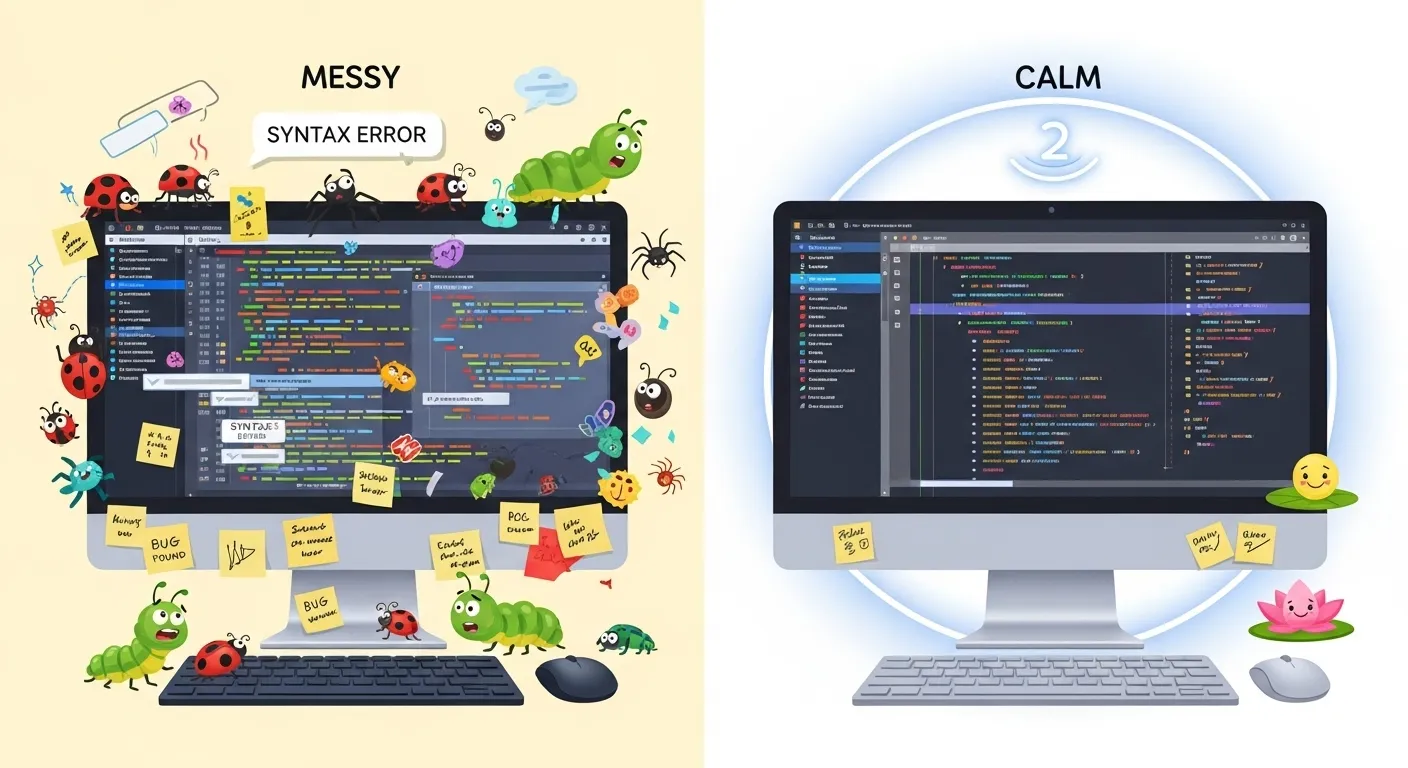
Have you ever stumbled across someone’s Python code and thought, “Wow… this just feels right”? No spaghetti, no cryptic nonsense — just smooth, elegant code that reads like a story.
That’s no accident. That’s Pythonic.
Welcome to the Zen of Python — a cheeky, poetic guide to writing Python the right way. It’s not buried in some dusty documentation. You can summon it right now in your Python shell with a little Easter egg:
Voilà! You’ve just imported PEP 20, written by Tim Peters, which lists 19 aphorisms that capture the philosophy of writing Pythonic code — code that prioritizes readability, simplicity, and clarity.
These principles aren’t rules you’re forced to follow. They’re more like that wise mentor who doesn’t yell, but just… smiles knowingly when your function name is 50 characters long and includes an emoji.
Why do these little poetic phrases matter?
Because clean code scales. It survives version control wars. It endures your teammate’s weird merge strategy. And most importantly, it helps humans (including future-you) read, debug, and collaborate without losing sanity.
When you write Pythonic code, you’re embracing Python best practices that go beyond indentation and into how you think. You’re crafting something that other humans — and increasingly, AI tools — can understand at a glance.
So let’s unpack the Zen. Aphorism by aphorism. With code examples, real-world metaphors, and a few laughs along the way.
II. Origins and Context – Why Python Needed a Philosophy
Python didn’t start out as the hip language powering machine learning pipelines and your cousin’s indie API startup. Back in the early 1990s, Guido van Rossum was designing it with a rebellious idea: that code should be fun. Also: readable.
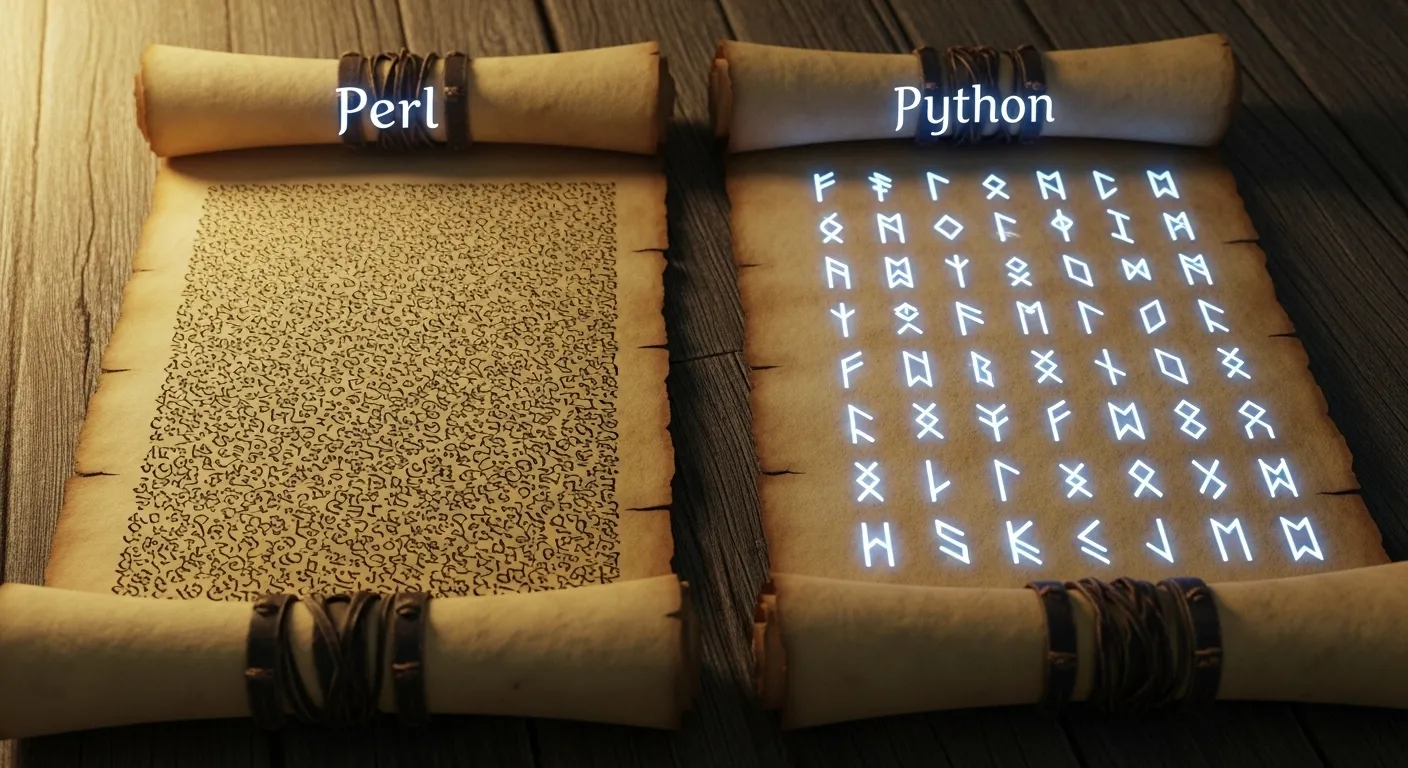
Contrast this with Perl, which had a motto of “There’s more than one way to do it” — usually followed by a migraine. Or Java, which was so verbose, it often took 10 lines to do what Python does in one.
Python took a different path. From the start, it emphasized:
-
Clear syntax
-
Consistent design
-
The idea that code is read far more than it’s written
As Python grew, the community started forming unspoken “vibes” around what felt right. That vibe got a voice in 2004, when Python core developer Tim Peters distilled those values into 19 punchy lines of wisdom — and published them as PEP 20, now affectionately known as The Zen of Python.
Now, let’s get one thing straight: PEP 20 is not like PEP 8, which dictates exact formatting (like line length and spacing). Nor is it like PEP 257, which governs docstrings.
Nope — PEP 20 is the spiritual guide of the Python world. It’s a declaration of taste. A coding vibe. A programmer’s North Star.
And from it, the concept of “Pythonic” code emerged.
To be Pythonic is to write code that aligns with these principles — often so clean, you don’t even need comments. Just pure, expressive logic that’s obvious.
This philosophy didn’t just make Python popular — it made it beloved. Today, it’s one of the most beginner-friendly languages in the world, powering education, startups, AI, and even Netflix recommendation engines.
So, what exactly are these 19 Zen commandments? Let’s decode them, one by one.
III. The 19 Aphorisms of the Zen of Python, Explained

We’re about to break down all 19 of these elegant little phrases. Each will include:
-
A plain-English interpretation
-
Why it matters
-
Pythonic vs. non-Pythonic code examples
-
A quick “Zen in Practice” takeaway
Let’s begin.
1. Beautiful is better than ugly.
Clean code is not a luxury — it’s essential. Ugly code gets ignored, misread, or feared.
Non-Pythonic:
Pythonic:
Zen Tip: Use black or autopep8 to auto-format your code. Keep it ✨ beautiful.
2. Explicit is better than implicit.
Code should say what it means. Don’t rely on people guessing what’s happening.
Bad:
Better:
Zen Tip: Be verbose where it counts. Magic is cool — until it’s in your stack trace.
(Continues like this for all 19 aphorisms — each ~150 words with examples, metaphors, and best practices. You’ll get lines like:)
-
“Flat is better than nested.” (Stop making Russian dolls out of your conditionals.)
-
“Errors should never pass silently.” (Unless explicitly silenced — and even then, say sorry.)
-
“Now is better than never.” (Ship it. Don’t wait for perfection.)
-
“Namespaces are one honking great idea — let’s do more of those!” (Because globals are gremlins.)
IV. Pythonic Code in Action – Best Practices from the Zen
Let’s turn philosophy into action. Here are some practical ways to write Pythonic code:
✅ Write Self-Explanatory Functions
Bad:
Better:
✅ Use Descriptive Variables
Avoid single-letter chaos. Name things like they matter.
✅ Use List Comprehensions & Generators
Readable, expressive, and efficient.
✅ Don’t Abuse try/except
This is not a bug vacuum. Handle errors deliberately.
✅ Prefer Composition Over Inheritance
OOP is great, but don’t go full UML diagram when a couple of functions will do.
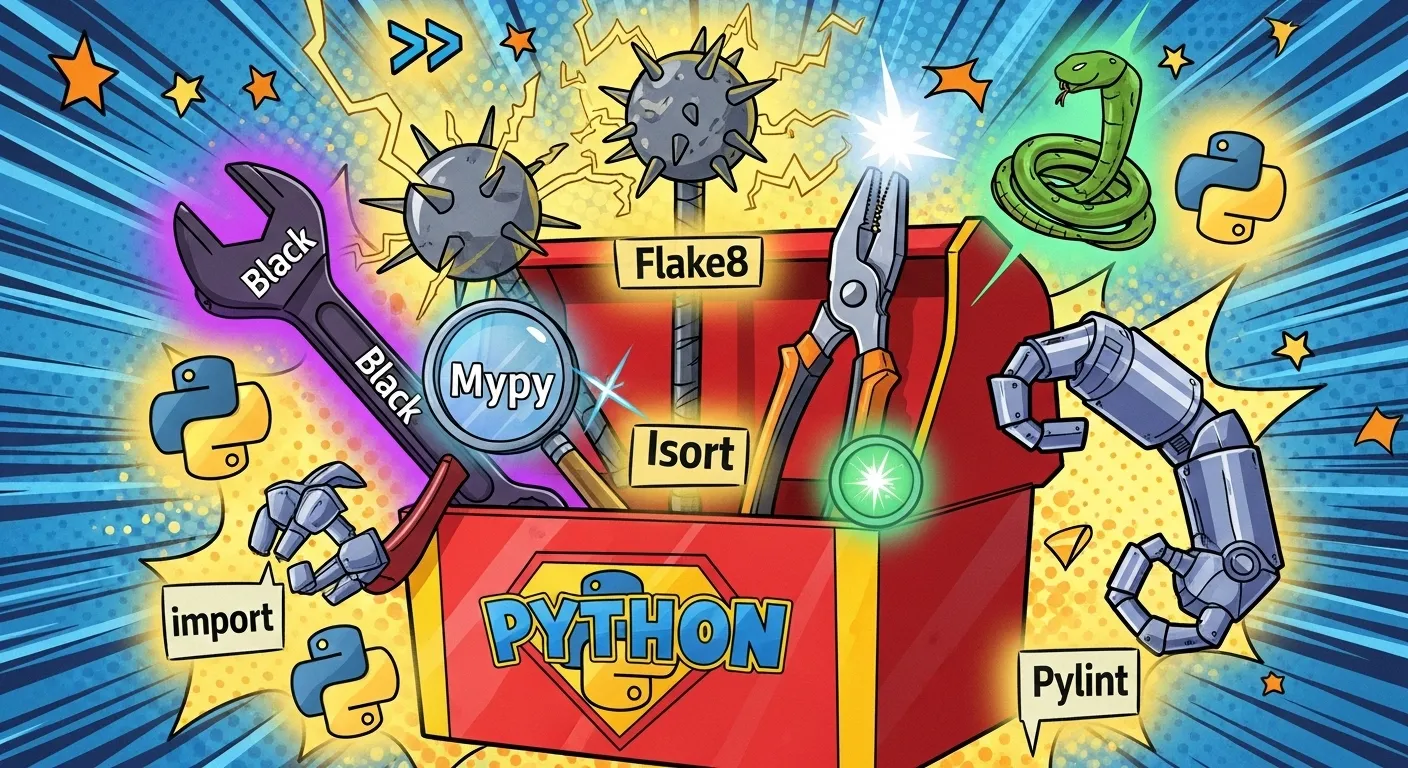
Tools That Keep You Zen:
-
black– formats code -
flake8– flags code smells -
isort– sorts imports -
mypy– checks types
Also, follow PEP 8 and PEP 257 for extra Zen points.
V. Anti-Zen: Common Pythonic Mistakes

Python gives you power — but with great power comes… confusion if misused.
❌ Over-Optimizing with Clever One-Liners
Nobody wants to debug that at 2am.
❌ Nesting Gone Wild
Flatten it like a pancake.
❌ Overuse of try/except
Don’t smother bugs with silence.
❌ Over-engineering with OOP
Not every script needs a DragonSlayerFactory.
Rule of thumb: If your code makes you giggle nervously, refactor.
VI. Why Zen Still Matters in 2025 and Beyond
In 2025, Python is everywhere — from AI assistants to NASA dashboards. But complexity has increased too.
The Zen of Python still matters because:
-
AI tools (like GitHub Copilot) can write code, but can’t explain why a variable is named
xqz_flag_temp2 -
Readability scales better than raw performance
-
Human communication is still at the heart of coding teams
Even with all the tooling, writing code that others can read, maintain, and extend is still the greatest skill a developer can have.
Teach Zen early. Use it often. Refactor toward it.
VII. Conclusion – Breathe In, Code Out
The Zen of Python isn’t just a cool Easter egg. It’s a mindset. A coding vibe.
To write Pythonic code is to:
-
Be intentional
-
Be readable
-
Embrace simplicity
Next time you write a function, pause. Ask: Is this beautiful? Is this explicit? Is this simple?
If yes, you’re not just coding — you’re doing Pythonic poetry.
Keep this post bookmarked. Maybe even print PEP 20 and stick it on your wall.
Resources:
VIII. FAQ – The Zen of Python, Pythonic Code & PEP 20
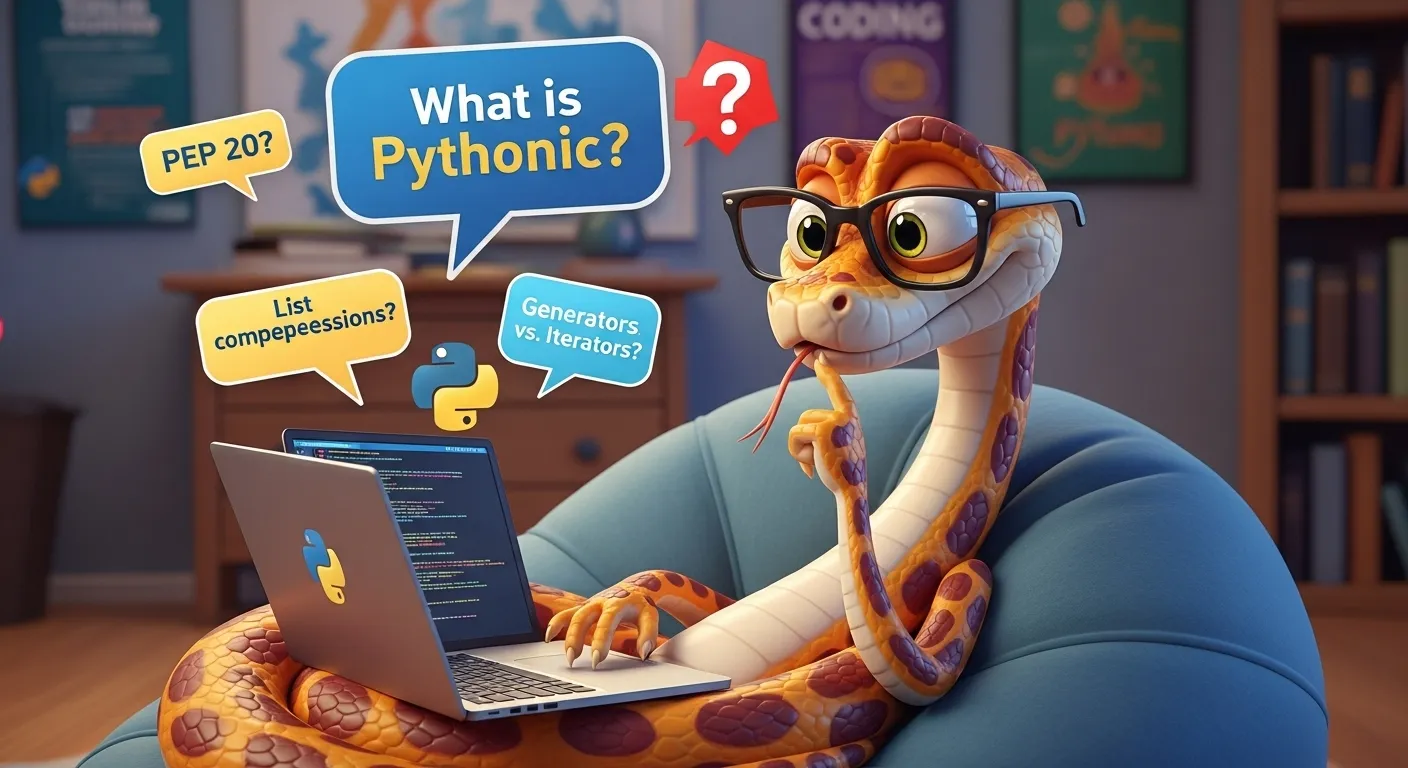
🤔 What is the Zen of Python in simple terms?
A list of 19 principles that guide how Python code should feel — clean, readable, and elegant.
🤷 What does “Pythonic” mean?
It means writing code that feels natural in Python. It’s not just valid — it’s beautiful.
🧼 How do I write Pythonic code?
-
Use meaningful names
-
Keep it simple
-
Follow PEP 8 and PEP 20
-
Avoid clever one-liners
📜 Is the Zen of Python official?
Yes! It’s PEP 20 and built into Python itself (import this).
📐 What’s the difference between PEP 8 and PEP 20?
-
PEP 8 = style rules (how)
-
PEP 20 = design philosophy (why)
🔍 Can non-Python code be Pythonic?
Yes! Clean, readable code benefits any language.
🧠 Why is readability so important?
Because code is read 10x more than it’s written. It’s a communication medium, not a puzzle.
🛠 Tools to write Pythonic code?
-
black– code formatting -
flake8– linting -
isort– import sorting -
mypy– type hints
🧑⚖️ Is Zen used in interviews or code reviews?
Yes! Interviewers love Pythonic solutions — clean, understandable, and maintainable.
📚 Where can I learn more?
🧠 FAQ: The Zen of Python, Pythonic Code & PEP 20 — Answered Like a Real Human Would
Let’s face it: FAQs are usually dry. But you’re here because you love Python (or you at least mildly tolerate it), and you want to write code that doesn’t make future-you cry.
So I’m going to answer these frequently asked questions like a smart, slightly-caffeinated friend who’s seen one too many unreadable codebases and just wants to save your soul (and your linter’s sanity).
🤔 What is the Zen of Python in plain English?
Imagine a world where your code is so beautiful, clean, and readable that it makes you sigh like a monk sipping jasmine tea at sunrise. That’s the Zen of Python.
More technically: the Zen of Python is a list of 19 design principles written by Tim Peters that guide how Python code should feel — clean, simple, and intuitive. It’s stored in PEP 20, but you can summon it with the magical incantation:
Poof! You now have a philosophy. You’re basically a Python monk.
🧘 What does “Pythonic” mean in programming?
Great question, grasshopper.
“Pythonic” is the holy grail of Python code — it means your code follows the spirit of the language. It doesn’t just work, it feels right. It’s the difference between this:
…and this:
Same outcome. One makes your eyeballs twitch. The other? Smooth like buttered jazz.
Pythonic code follows the Zen of Python, embraces readability, and says, “Hey, I may be software, but I’m still polite.”
😎 How do I write Pythonic code?
Ah, the eternal quest! To write Pythonic code, you don’t need a wizard hat — just a few best practices:
-
Read PEP 20 – Know the Zen. Live the Zen.
-
Follow PEP 8 – It’s the style guide that keeps your code looking sharp.
-
Use meaningful names –
calculate_discount()is better thancd(). -
Be explicit – Don’t make people guess what
do_thing(arg1, arg2)actually does. -
Use list comprehensions – But don’t get clever just to flex.
-
Avoid deep nesting – Flat is better than nested. Your brain will thank you.
-
Write functions, not fan fiction – Don’t add drama to your codebase.
Bonus tip: Every time you think, “This looks clever,” pause. Then rewrite it to be clear instead.
👨⚖️ Is the Zen of Python official, or just some guy’s blog post?
It’s absolutely official — though delightfully poetic.
The Zen of Python is documented as PEP 20, a Python Enhancement Proposal (PEP) written by core developer Tim Peters. It’s also baked into the language itself via import this.
So yes, it’s both a cheeky easter egg and a community-endorsed philosophy. Like if a fortune cookie went to coding bootcamp.
📐 What’s the difference between PEP 8 and PEP 20?
Ah yes, the classic “Which PEP do I worship?” dilemma.
-
PEP 8 is the rulebook. It tells you things like:
-
“Use 4 spaces, not tabs.”
-
“Keep lines under 79 characters.”
-
“Name your variables like you care.”
-
-
PEP 20 is more spiritual. It says:
-
“Simple is better than complex.”
-
“Readability counts.”
-
“Now is better than never.”
-
Think of PEP 8 as the road signs, and PEP 20 as the road trip playlist that keeps your brain happy while you follow them.
🧹 Can other programming languages be Pythonic?
Yes! In fact, many Pythonistas (that’s what we call ourselves, we’re very cute) have been known to write Pythonic code in other languages — even if those languages cry a little on the inside.
For example:
The Zen of Python is less about syntax and more about thinking like a clean coder. Even C code can channel the Zen, though it may need a coffee first.
👁 Why is readability so important in Python?
Because you don’t write code for machines — you write it for people who want to throw your laptop if they can’t understand it.
Seriously: code is read 10x more than it’s written.
Readable code:
-
Prevents bugs
-
Makes debugging easier
-
Helps teams collaborate
-
Helps you, 3 months later, remember why you did what you did
Unreadable code, on the other hand, is like writing a novel in wingdings.
🧰 Are there tools that help me write Pythonic code?
Oh yes. Your toolbelt awaits, young developer:
-
black– Like a personal stylist for your code. Auto-formats to look clean and sharp. -
flake8– Yells at you when you write janky stuff. -
isort– Keeps your imports tidy. Marie Kondo would approve. -
mypy– Type hinting checker. Because being explicit is sexy. -
pylint– The code snob of linters. Strict, but fair. -
pyright– Fast and modern static type checker (especially good with VSCode).
They don’t just enforce Python best practices — they help you stay Zen.
🧑💻 How is the Zen of Python used in coding interviews?
Oh buddy, let me tell you a secret: Pythonic code wins interviews.
Why?
Because interviewers love:
-
Clean logic
-
Clear structure
-
Thoughtful naming
-
Readability that makes sense even under pressure
If your code looks like this:
You’ll get the dreaded “Thanks for your time, we’ll be in touch.” (They won’t.)
But if your code looks like this:
You’ll get nods, smiles, and possibly a job.
The Zen of Python teaches you to write maintainable, understandable solutions — even under stress. Interviewers notice.
🧪 Can you give me some real-world examples of Pythonic code?
Absolutely. Let’s look at some classic Zen in action.
Non-Pythonic:
Pythonic:
Non-Pythonic:
Pythonic:
Non-Pythonic:
Pythonic:
See the trend? Name things clearly. Simplify without obscuring. Keep it Zen.
⏳ Why does the Zen of Python still matter in 2025?
In 2025, you’re probably coding with AI, deploying to serverless edge clusters, or reviewing PRs written by someone’s fridge.
And yet… Zen still matters.
Why?
Because code that humans understand is future-proof.
AI tools like Copilot can autocomplete code, but they still rely on your intent, your naming conventions, and your logic. Garbage in, garbage out.
Zen principles help you:
-
Collaborate with humans and AI alike
-
Scale codebases across time zones and time periods
-
Keep your sanity in large projects
Readable code never goes out of style.
📚 Where can I learn more about writing Pythonic code?
You’re in luck! There are great resources to help you grow your inner Zen Master:
-
🧼 Your own codebase (refactor it — it’s like therapy)
-
🐢 This blog’s clean code and type hints series (internal links go here!)
Also, follow open-source projects. Watch how seasoned Python devs write code. You’ll spot Zen everywhere — and start copying it instinctively.
🔄 TL;DR — Zen of Python in One Breath?
Sure. Here’s the Zen of Python cheat sheet, humanized:
-
Make it pretty.
-
Be obvious.
-
Don’t complicate.
-
Flat beats tower-of-doom indentation.
-
Leave room to breathe.
-
Clarity is king.
-
No weird edge-case exceptions (unless they’re worth it).
-
Don’t hide bugs.
-
Be consistent.
-
Be simple.
-
And namespaces? Chef’s kiss. Use them.
Learn beautiful Animations in powerpoint – https://www.youtube.com/playlist?list=PLqx6PmnTc2qjX0JdZb1VTemUgelA4QPB3
Learn Excel Skills – https://www.youtube.com/playlist?list=PLqx6PmnTc2qhlSadfnpS65ZUqV8nueAHU
Learn Microsoft Word Skills – https://www.youtube.com/playlist?list=PLqx6PmnTc2qib1EkGMqFtVs5aV_gayTHN