1. Introduction: Why Language Choice Still Matters
So it’s 2025. We’ve got AI agents writing emails, designing slides, and even debugging code. No-code tools can whip up websites in minutes. And you’re probably wondering, “Do I really need to learn to code anymore?”
Short answer? Yes.
Long answer? Yes, especially with Python (Python Programming)?.
Despite the automation explosion, programming remains one of the most empowering skills you can learn. But let’s be real—choosing your first language can feel like picking the right wand in Harry Potter. Too heavy and you’ll give up. Too niche and you’ll hit a dead end.
That’s why Python is still sitting comfortably on the programming throne in 2025. It’s beginner-friendly without being babyish. Powerful without being overwhelming. And still one of the most in-demand skills in tech, science, data, and even art.
This guide is your friendly, no-fluff walkthrough of why Python still reigns supreme, how it fits into today’s job market, and how you can start learning it right now—no CS degree or beard-stroking required.
Let’s dig in.
2. Python at a Glance: What Makes It Special?
Python is often described as “executable pseudocode.” It looks like English, reads like a story, and lets you focus on solving problems instead of wrangling syntax.
🟢 Simple Syntax, Big Power
Here’s a mini taste:
That’s it. No curly braces, semicolons, or weird symbols.
Python’s gentle syntax means you spend more time thinking logically and less time debugging tiny typos. For beginners, this is huge.
📦 Comes With Batteries
Python ships with a vast standard library. Need to read a file, scrape a website, or send an email? There’s likely a built-in module for that. And if not, you’ll find thousands of open-source libraries just a pip install away.
🎛️ Interactive & Instant Gratification
Python plays nicely with Jupyter Notebooks, VS Code, PyCharm, and online REPLs. You can write a line, run it, see results. That real-time feedback loop makes learning feel like playing.
Whether you’re printing your first string or plotting complex graphs with matplotlib, Python lets you see progress fast. And in 2025, that’s even more important with our TikTok-trained attention spans.
3. Use Cases in 2025: Python Is Everywhere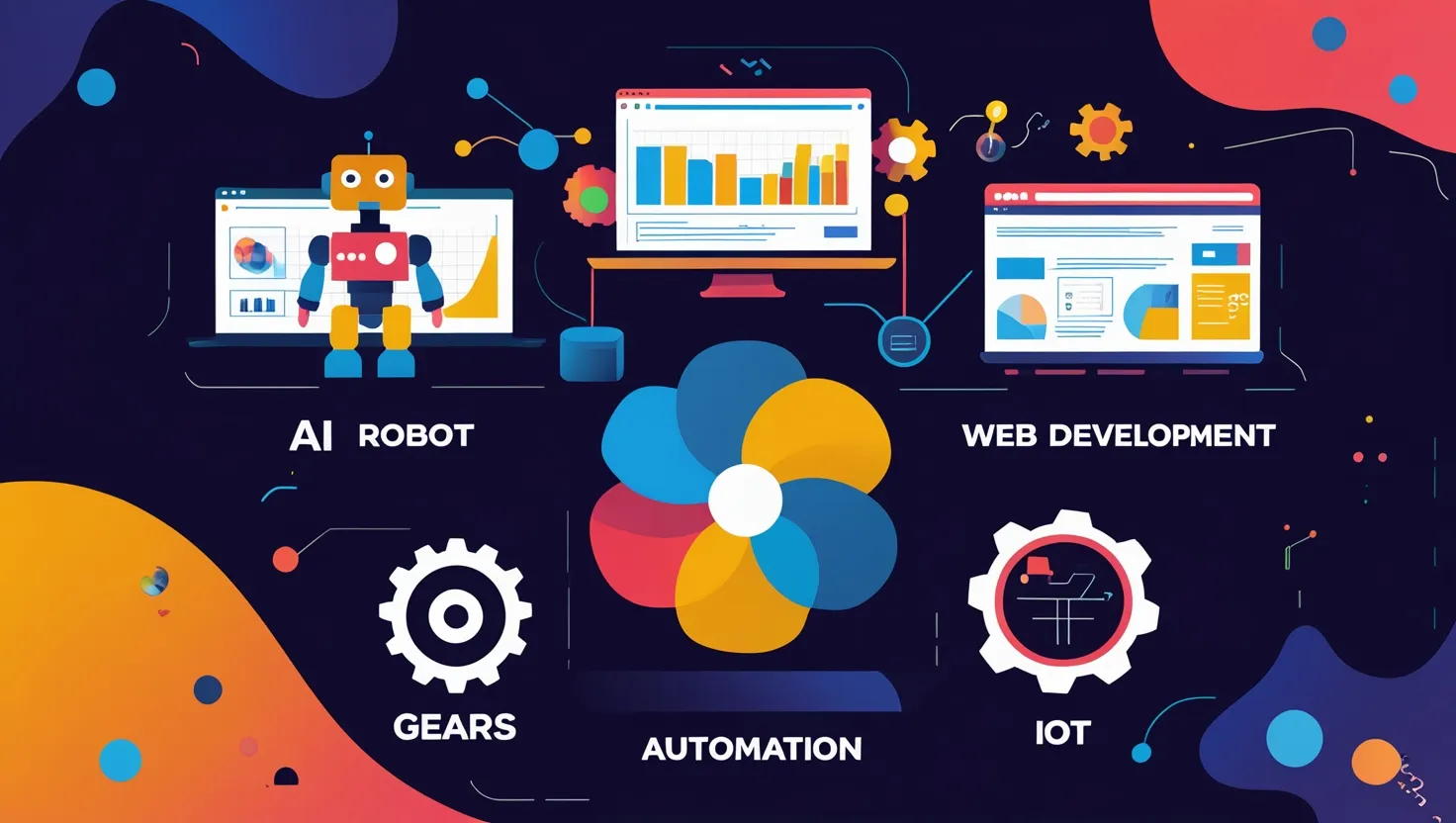
If languages were celebrities, Python would be Beyoncé. It’s not just popular—it’s everywhere.
🤖 AI & Machine Learning
Python is the default language for AI/ML. Whether you’re using TensorFlow, PyTorch, or scikit-learn, Python is the glue that holds it all together. Chatbots, recommendation engines, self-driving tech—Python’s behind it.
📊 Data Science & Analytics
Tools like pandas, NumPy, and matplotlib turn Python into a spreadsheet-slaying, chart-churning machine. Want to visualize COVID trends? Predict stock prices? Clean messy Excel sheets? Python’s got your back.
🌐 Web Development
Python powers websites like Instagram, Reddit, and Dropbox using frameworks like Django and Flask. In 2025, FastAPI is trending for lightning-fast APIs. Backend? Python can do that.
🛠️ Automation
Python is a productivity ninja. Automate emails, rename files, scrape prices, or build bots. In a world of repetitive digital tasks, Python is your personal assistant.
🧠 IoT, Education & Games
From MicroPython on Raspberry Pi to controlling robots or teaching kids programming, Python scales from Lego-level to NASA-level. And yes, Python can make games too (check out pygame).
🔍 Real-World Examples
-
Netflix uses Python for content recommendations.
-
NASA uses it for spacecraft control scripting.
-
Spotify runs analytics pipelines on Python.
In short, Python isn’t just a beginner tool—it’s a Swiss Army knife for modern tech.
4. Python vs Other Languages: What’s Changed in 2025?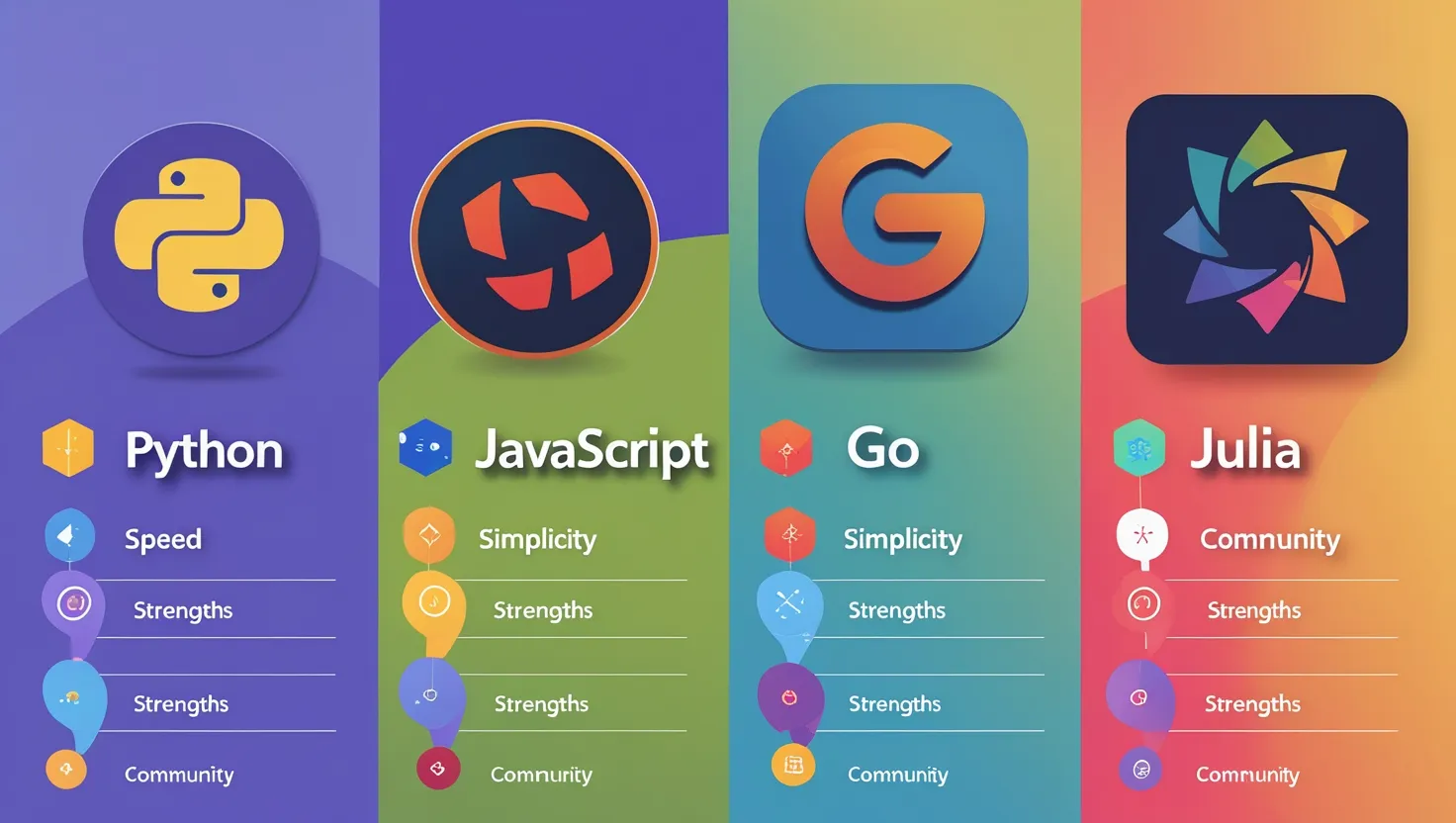
Let’s talk competition. Python isn’t the only cool kid on the block, but it’s still one of the most practical.
| Language | Strengths | Weaknesses |
|---|---|---|
| Python | Easy, versatile, huge community | Slower than compiled languages |
| JavaScript | Ubiquitous in web frontends | Async quirks, messy callbacks |
| Rust | Super-fast and safe | Steep learning curve |
| Go | Great for concurrency | Minimalist, sometimes too much |
| Julia | Math-heavy niches | Smaller ecosystem |
Why Python Wins for Beginners
-
Lower mental overhead.
-
Amazing documentation and community.
-
Useful in many domains, not just one.
Yes, Rust might outperform Python in raw speed. But you’re not building a game engine on day one. You’re learning. And Python is still the smoothest on-ramp to that journey.
5. The Python Job Market in 2025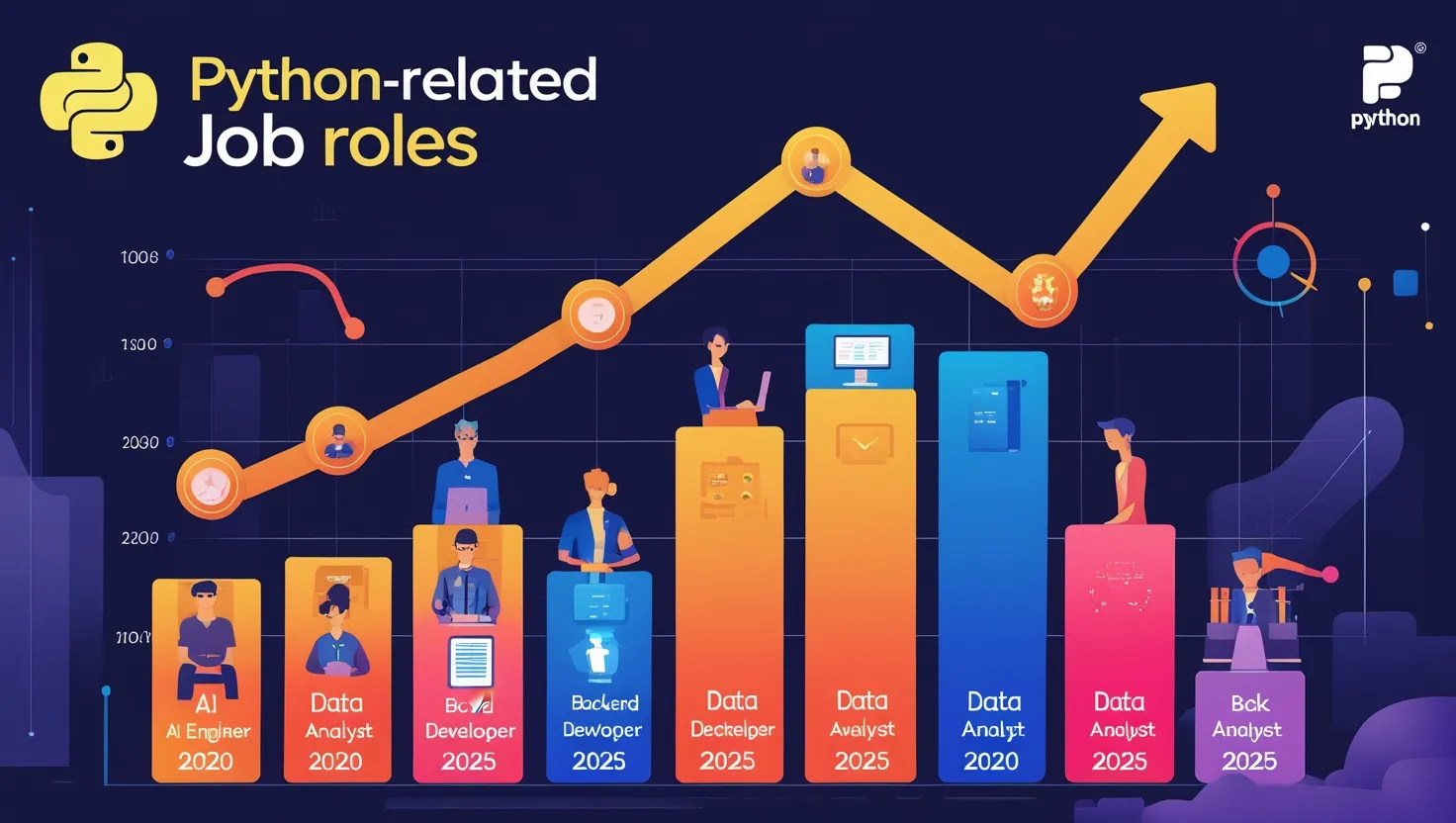
Let’s get real: learning to code isn’t just about fun—it’s often about landing a job.
🔥 In-Demand Python Roles
-
Data Analyst
-
AI/ML Engineer
-
Backend Web Developer
-
Automation Engineer
-
DevOps & SRE roles
Python pops up in job descriptions across industries—from finance to healthcare to edtech.
📈 Growth & Salary Trends
A quick look at job platforms in 2025 shows a steady increase in Python-tagged roles. Entry-level salaries range from $55K–$85K, with experienced roles hitting $120K+—and many are remote.
🧑💻 Freelancing & Side Hustles
From scraping real estate data to building dashboards for clients, Python freelancers are thriving on platforms like Upwork and Fiverr. You don’t need to be an expert—just useful.
Python opens doors to flexible, cross-functional careers in tech—whether you want to climb the corporate ladder or build your own thing.
6. Python in Education and Bootcamps
Ask any programming instructor what language they use to teach—and most will say Python without hesitation.
🏫 Why Educators Love Python
Python is like the training wheels of coding—but in a good way. The syntax is so intuitive that even 10-year-olds can build games with it. There’s no need to explain strange punctuation or complex boilerplate before getting to the fun part.
Instant feedback = instant motivation. That’s what makes Python perfect for schools, bootcamps, and self-paced learners.
🧑🎓 Python in Bootcamps
Even in 2025, major coding bootcamps like General Assembly, Flatiron School, and Le Wagon still use Python as their starter language. It’s not just beginner-friendly—it leads straight to jobs in data science, backend development, and automation.
🌐 Python in Online Courses
From Coursera to edX, and Codecademy to freeCodeCamp, Python dominates intro programming courses. Even Code.org introduces kids to Python basics. And many AI literacy courses for non-tech professionals now include Python snippets to help explain concepts more tangibly.
Learning Python today isn’t just for future coders—it’s for educators, marketers, analysts, and anyone who wants to speak “tech” in a data-driven world.
7. Python’s Ecosystem in 2025: What’s New?
Think Python peaked back in the 2010s? Think again. It’s still evolving—just like you.
🚀 Python 3.13+ Goodies
The latest version (Python 3.13 or later) brings:
-
Faster startup times
-
Better memory handling
-
Structural Pattern Matching (think: smarter
switchstatements)
It’s modern, clean, and even more efficient—without sacrificing simplicity.
🌐 PyScript: Python in the Browser
Imagine writing web apps entirely in Python, no JavaScript needed. That’s what PyScript allows you to do. It’s still growing, but it’s a big deal in 2025 for Pythonistas who want to dabble in frontend work.
🤖 Copilot & AI Integration
With GitHub Copilot, AI-assisted coding is now a daily reality. Python is one of the best-supported languages. From writing docstrings to suggesting whole functions, AI tools supercharge productivity without replacing your brain.
💻 Python Workflows in VS Code
VS Code continues to dominate as the top IDE for Python. Integrated Jupyter support, Copilot extensions, and seamless debugging tools make it a playground for both beginners and pros.
💡 Cool Python Features You Didn’t Know (2025 Edition)
-
match-casepattern matching -
Type hinting for better autocomplete
-
async/await for concurrency
-
Built-in profiling tools
Python’s ecosystem is thriving—and it’s just as beginner-welcoming as ever.
8. Python Is Beginner-Friendly… but Grows With You
One of Python’s most underrated strengths? It’s not a dead-end. It grows with you.
🎒 Easy to Start
You start with:
Then maybe a calculator. Then a to-do app. Then a portfolio website. The ramp is gentle, but it never flattens out.
🧱 Learn Advanced Concepts Gradually
When you’re ready, Python teaches you:
-
Object-oriented programming
-
Testing and debugging
-
Async and concurrency
-
Web frameworks like Django/Flask
-
Data pipelines and cloud integration
Here’s a mini OOP example to show the growth path:
🌱 From Hobbyist to Pro
Whether you want to build hobby projects, freelance websites, AI models, or full-stack apps, Python has your back. The skills transfer across roles and industries.
Python doesn’t box you in. It sets you free.
9. How to Start Learning Python in 2025?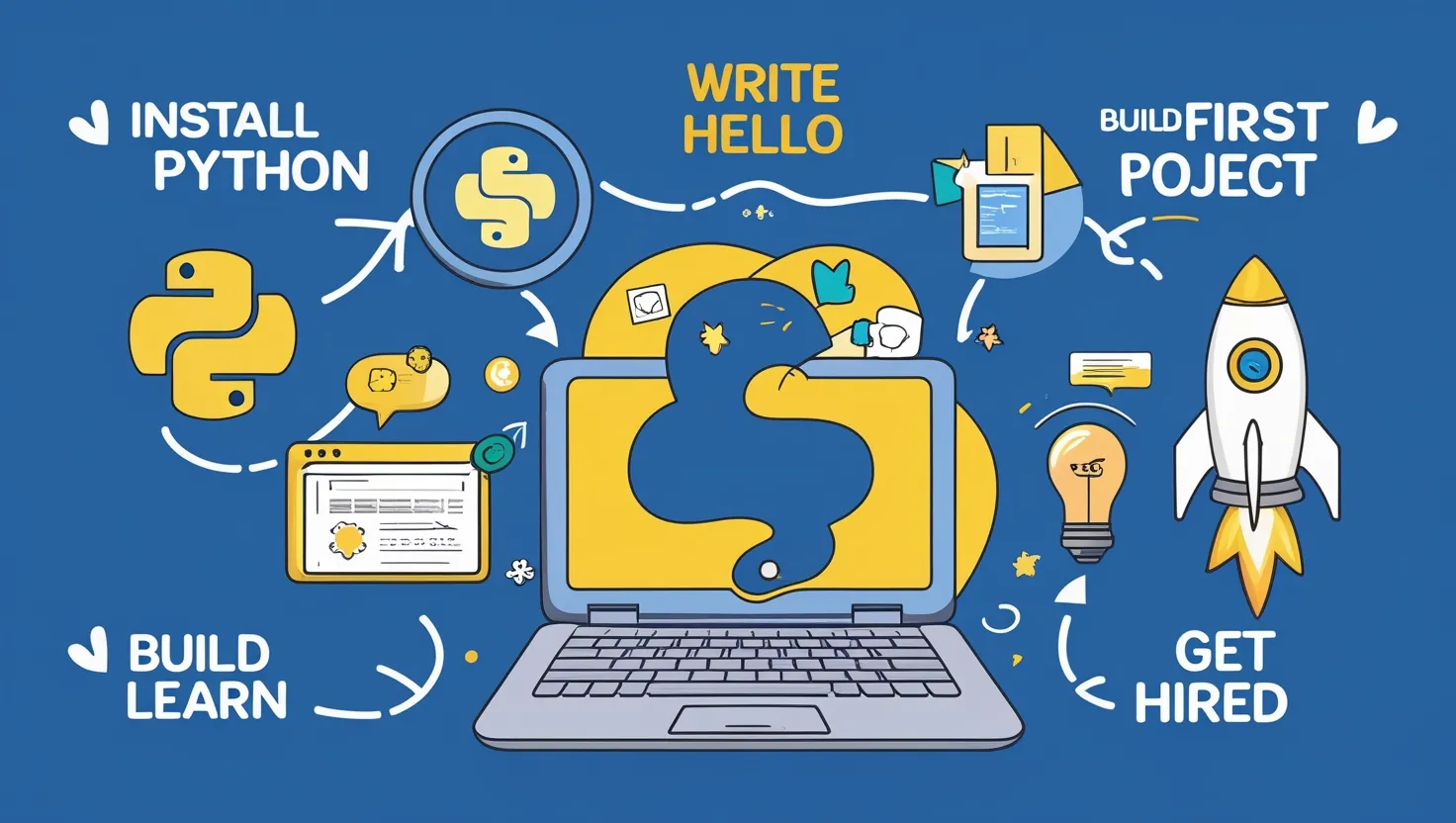
So, you’re sold. Now what?
🔧 Step 1: Set Up Your Environment
-
Install Python 3.13+
-
Download VS Code
-
(Optional) Install Anaconda for data science
-
Try JupyterLab for interactive coding
🌐 Step 2: Pick Your Learning Path
| Free Options | Paid Options |
|---|---|
| freeCodeCamp | Udemy courses (highly rated) |
| Codecademy (free tier) | Coursera Specializations |
| Python.org tutorials | RealPython Pro / Educative.io |
Choose what fits your budget and pace.
💡 Step 3: Build Your First Project
Start small—but build something useful.
-
A calculator
-
A web scraper that tracks deals
-
A personal finance tracker
-
A to-do app with a simple UI
✅ CTA: Build your first Python project in under 30 minutes—no prior experience needed. Try it in your browser on Replit!
Once you see your code working, you’ll be hooked.
10. Conclusion: Still the Best First Step Into Tech
Here’s the bottom line:
Python is timeless. In 2025, it’s just as relevant as ever—if not more. It’s friendly to beginners, loved by pros, and respected by employers.
Whether you want to automate your life, dive into AI, build web apps, or just understand how the digital world works—Python is your golden ticket.
You don’t need to be a genius. You don’t need to quit your job. You just need curiosity, a keyboard, and a few free hours.
Start learning today. Future You will thank you.
🔗 Helpful Links & Resources
Internal Resources:
External Links:
11. FAQs: Common Beginner Questions About Python
Let’s face it: starting anything new comes with a LOT of questions. Learning Python is no different. Whether you’re a complete beginner or just Python-curious, this FAQ section covers everything you secretly want to know—but were too afraid to ask in a developer forum. 😉
❓ Is Python still relevant in 2025?
Yes, yes, and… yes again. Despite being over 30 years old, Python is not only surviving—it’s thriving.
In 2025, Python continues to:
-
Power AI tools and automation scripts
-
Dominate data science and machine learning
-
Serve as a beginner’s dream in education and bootcamps
-
Support APIs, web apps, dashboards, and even microcontrollers
It’s like the Swiss Army knife of programming languages. Just because it’s readable doesn’t mean it’s basic.
💼 Can I get a job just by learning Python?
Short answer? Yes. Longer answer? Yes, but with context.
Python opens doors in several entry-level fields:
| Role | Python Use |
|---|---|
| Data Analyst | Pandas, NumPy, Matplotlib |
| QA Tester | Automation scripts, unit testing |
| Backend Developer | Django, Flask, FastAPI |
| DevOps Assistant | Writing infrastructure automation tools |
| Junior AI/ML Engineer | With some math and scikit-learn |
You’ll boost your employability if you pair Python with:
-
SQL (for data roles)
-
Git (version control)
-
APIs (for web work)
-
Projects (seriously—your GitHub is your portfolio now)
So yes, Python alone can land you a job—but Python + problem-solving + curiosity = gold.
⌛ How long does it take to learn Python?
It depends on your goals and pace. Here’s a general breakdown:
| Goal | Timeline |
|---|---|
| Understand basics | 2–4 weeks |
| Build small projects | 1–2 months |
| Be job-ready (with portfolio) | 3–6 months |
| Transition careers | 6–12 months (with focus + consistency) |
💡 Pro tip: It’s better to learn a little consistently (like 30 minutes/day) than cram for hours once a week.
🧒 Is Python good for kids or teens?
Absolutely—and not just because it’s “simple.”
Python’s syntax is so readable that kids can jump into real-world coding concepts without crying over semicolons. Many STEM and robotics curriculums already use Python for:
-
Turtle graphics 🐢
-
Game development (like Pygame)
-
Raspberry Pi experiments
-
Building chatbots and smart devices
For teens interested in game development, AI, or building tools, Python gives them a solid launchpad without the frustration of more complex languages.
📚 Bonus: Python also boosts logic, math, and problem-solving skills—critical for school and life.
🌐 Do I need to know other programming languages before Python?
Nope! Python is perfect for absolute beginners.
In fact, starting with Python is often better than starting with C++ or Java because:
-
You see results faster
-
You write less code to do more things
-
You avoid early burnout caused by confusing syntax
Once you’re comfortable with Python, you’ll find it easier to learn other languages like JavaScript, Java, or C#. It’s a gateway—not a limitation.
💻 What’s the best platform or IDE for Python in 2025?
Great question! There’s no one-size-fits-all answer, but here’s a handy cheat sheet:
| User Type | Recommended Tool |
|---|---|
| Total beginner | Thonny or Replit (in-browser) |
| Hobbyist | VS Code with Python extension |
| Data lover | JupyterLab (for notebooks) |
| Web developer | VS Code + Flask/Django plugins |
| Professional | PyCharm (JetBrains), VS Code, or even Vim/Neovim |
🔥 Hot in 2025: PyScript lets you run Python in the browser—think HTML + Python = 🔥 web magic.
🧰 Do I need a powerful computer to learn Python?
Not at all. Python runs beautifully on modest machines. You can even code:
-
On a Chromebook (using Replit or JupyterLab online)
-
In the cloud (Google Colab, Kaggle)
-
On mobile (with apps like PyDroid or Juno)
That said, if you’re doing heavy-duty data science or AI training later, you may want access to a good GPU or use cloud platforms like AWS, Google Cloud, or Paperspace.
📦 What is a Python “library” and do I need to learn them all?
A Python library is like a toolkit someone else built for you.
Want to make a graph? There’s a library.
Want to scrape websites? Library.
Build a game? Yep—library.
Here are some popular ones (don’t worry, you’ll learn them as needed):
| Area | Libraries |
|---|---|
| Data Science | pandas, numpy, matplotlib |
| AI/ML | scikit-learn, TensorFlow, PyTorch |
| Web Dev | Flask, Django, FastAPI |
| Automation | Selenium, BeautifulSoup, pyautogui |
| Games | Pygame, Arcade |
💡 You don’t need to memorize them. Just Google them when the need arises.
🐍 Is Python too slow for serious applications?
Here’s the truth: Python is not the fastest language, but it’s often “fast enough.”
Speed only matters in:
-
Game engines
-
High-frequency trading
-
Real-time embedded systems
For 95% of business, AI, web, and data applications, Python is more than fast enough—and it often speeds up development time, which is even more valuable.
And for performance-heavy tasks, you can combine Python with C/C++ or use JIT compilers like Numba.
🧪 What’s the difference between Python 2 and Python 3?
This one’s easy: Only learn Python 3.
Python 2 is officially deprecated (since 2020), and Python 3.13+ is where all the cool new features live in 2025. You’ll get:
-
Cleaner syntax
-
Better performance
-
Structural pattern matching (
match-case) -
Improved type hinting and debugging tools
So yeah—Python 3 is your jam.
📚 Is there a “right” way to learn Python?
No “one path” fits everyone, but here’s a golden 5-step plan:
-
Understand the basics: variables, loops, conditionals, functions
-
Build mini-projects: calculators, to-do apps, guess-the-number games
-
Explore a niche: data science, web dev, automation—whatever excites you
-
Make something real: your portfolio site, a script to clean your inbox, etc.
-
Share your work: GitHub, LinkedIn, or dev communities
Stick to learning by building and you’ll never feel stuck.
🧑🎓 Should I take a course, read a book, or watch YouTube?
Why not all three?
Here’s what works well in 2025:
-
Courses (interactive & structured):
Coursera’s “Python for Everybody” is legendary.
Udemy, Codecademy, and Educative.io also shine. -
Books (for depth):
“Automate the Boring Stuff with Python” remains a classic.
“Python Crash Course” is great too. -
YouTube (for quick wins):
FreeCodeCamp, Programming with Mosh, and Tech With Tim are all top-tier.
Mix and match based on your learning style. Podcasts and Discord communities also help!
📈 How do I track my progress while learning?
Gamify it! Try:
-
100 Days of Code Challenge – Share your journey on X/Threads
-
LeetCode or HackerRank – For problem-solving
-
Replit Bounties – Build and earn
-
Build in public – Post project updates on LinkedIn or dev.to
Seeing progress makes the process addictive.
🔐 Is Python safe? What about cybersecurity?
Python is safe to use, but like any language, it’s only as secure as the code you write. That’s why security principles matter—especially if you’re:
-
Scraping the web
-
Writing login systems
-
Handling user data
To stay secure:
-
Validate inputs
-
Avoid hardcoded passwords
-
Use secure libraries
-
Understand basic cybersecurity concepts
And yes—Python is used in ethical hacking and cybersecurity training, too! (Look up the “Python for Hackers” path.)
🌟 Do real companies use Python?
They sure do. In 2025, companies still use Python for mission-critical tasks:
-
Netflix – automates tasks and manages data pipelines
-
Google – uses it internally for scripts and testing
-
Spotify – for backend services and data analysis
-
Instagram (Meta) – Django and machine learning
-
NASA – simulations, automation, and research
If it’s good enough for space programs, it’s good enough for your first side project.
🎓 Do I need a degree to get a Python job?
Nope. More and more companies care about skills > diplomas.
What helps:
-
A portfolio of projects
-
A GitHub with clean, working code
-
Contribution to open source
-
Certifications (optional, but useful)
Want bonus points? Document your learning on LinkedIn or Medium. Show, don’t just tell.
💰 Can I make money freelancing with Python?
Yes—and some people do it full-time.
Here are services Python freelancers offer:
-
Web scraping & automation
-
Flask/Django web apps
-
API integrations
-
Data analysis & dashboards
-
AI model development
Start on platforms like Fiverr, Upwork, or Toptal—or find niche gigs via Reddit, LinkedIn, or dev Discords.
🧘 Will I enjoy learning Python?
This may sound cheesy—but yes, most people do.
Why?
-
It gives quick wins (like seeing “Hello, World” in seconds)
-
It solves problems you care about (automate that Excel report!)
-
It unlocks creative flow (build a game, a bot, or a story generator)
-
It teaches problem-solving (and that feels powerful)
Learning Python is like leveling up your brain—with fewer tears and more “aha!” moments.
🏁 Final Thought
Python is not just a programming language—it’s a problem-solving mindset. Whether you’re 13 or 73, coding your first app or automating your day job, Python helps you go from passive tech user to active tech creator.
So go ahead. Open your terminal or browser. Type print("Hello, Python!").
That simple line could be the first step to changing your career—or your life.