Introduction
If you still think a customer’s journey looks like a straight line—ad → click → purchase—let me introduce you to 2025. Today’s customer journey is less like a tidy map and more like the tangled mess of cables behind your TV. People bounce between TikTok, emails, websites, and apps before even considering pulling out their credit card.
Learn beautiful Animations in PowerPoint – Click Here
Learn Excel Skills – Click Here
Learn Microsoft Word Skills – Click Here
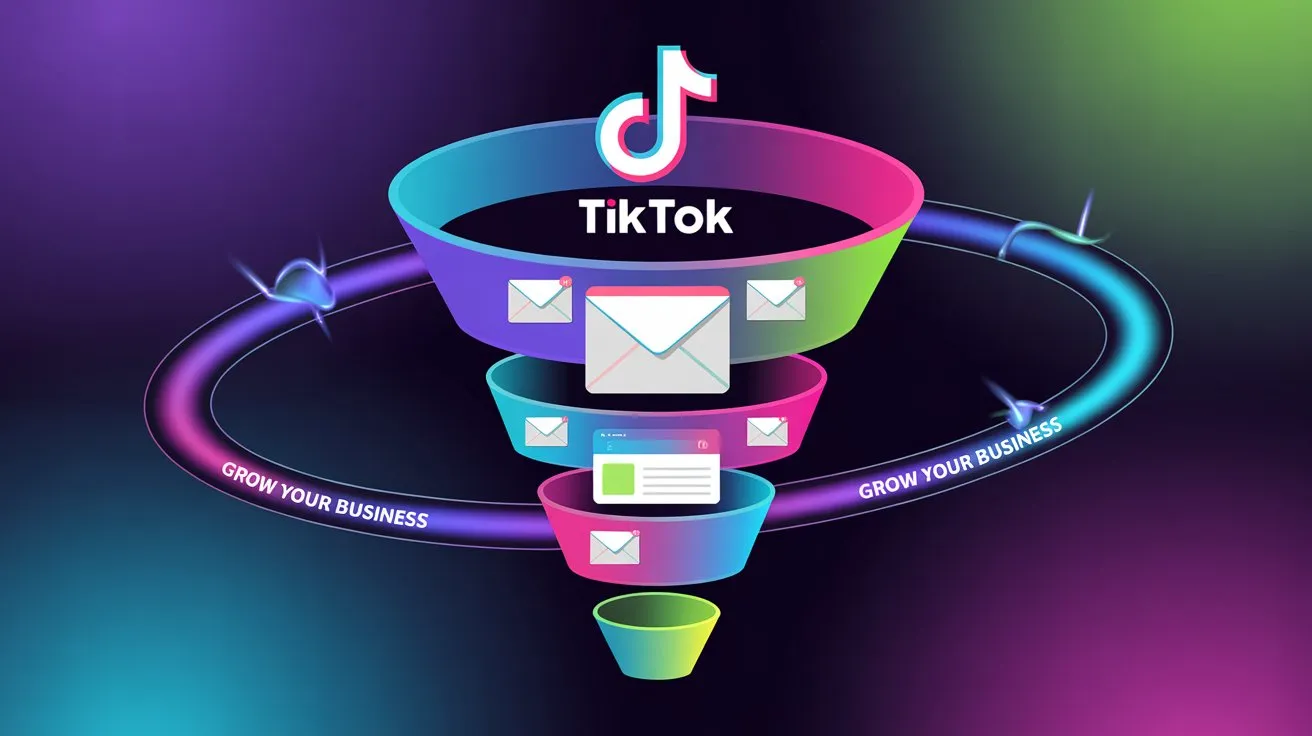
That’s where multi-platform funnels come in. In plain English? It’s the art (and science) of connecting different channels—like TikTok marketing funnels, email sequences, and CRM integration—so customers glide effortlessly from discovery to decision without falling into the black hole of “forgot about your brand.”
Why does this matter? Because modern customer journeys are anything but linear. A Gen Z shopper might see a TikTok skincare hack, sign up for a discount email, ignore three of your messages, then suddenly convert after a personalized CRM-powered reminder. Meanwhile, a B2B buyer could stumble upon your SaaS explainer video on TikTok (yes, B2B is on TikTok too), download your lead magnet, get nurtured via email, and finally book a demo thanks to your CRM nudging sales at the perfect time.
Here’s the catch: if your channels don’t talk to each other, you’re leaving money on the table. Imagine building hype on TikTok, only for your emails to sound generic, or worse—your CRM doesn’t know the lead exists. That’s not a funnel; that’s a leaky bucket.
In this article, we’ll explore:
-
Why multi-platform funnels are the future of digital marketing (hint: single-channel campaigns are dinosaurs 🦖).
-
How TikTok drives discovery, email nurtures relationships, and CRM seals the deal.
-
A step-by-step breakdown of each funnel stage—awareness, engagement, nurture, conversion, and retention.
-
The tools, strategies, and even some juicy real-world case studies to help you avoid rookie mistakes.
So buckle up. By the end, you’ll know exactly how to build a seamless customer journey that feels natural to your audience, boosts ROI, and makes you look like a cross-channel marketing wizard.
Why Multi-Platform Funnels Are the Future of Digital Marketing
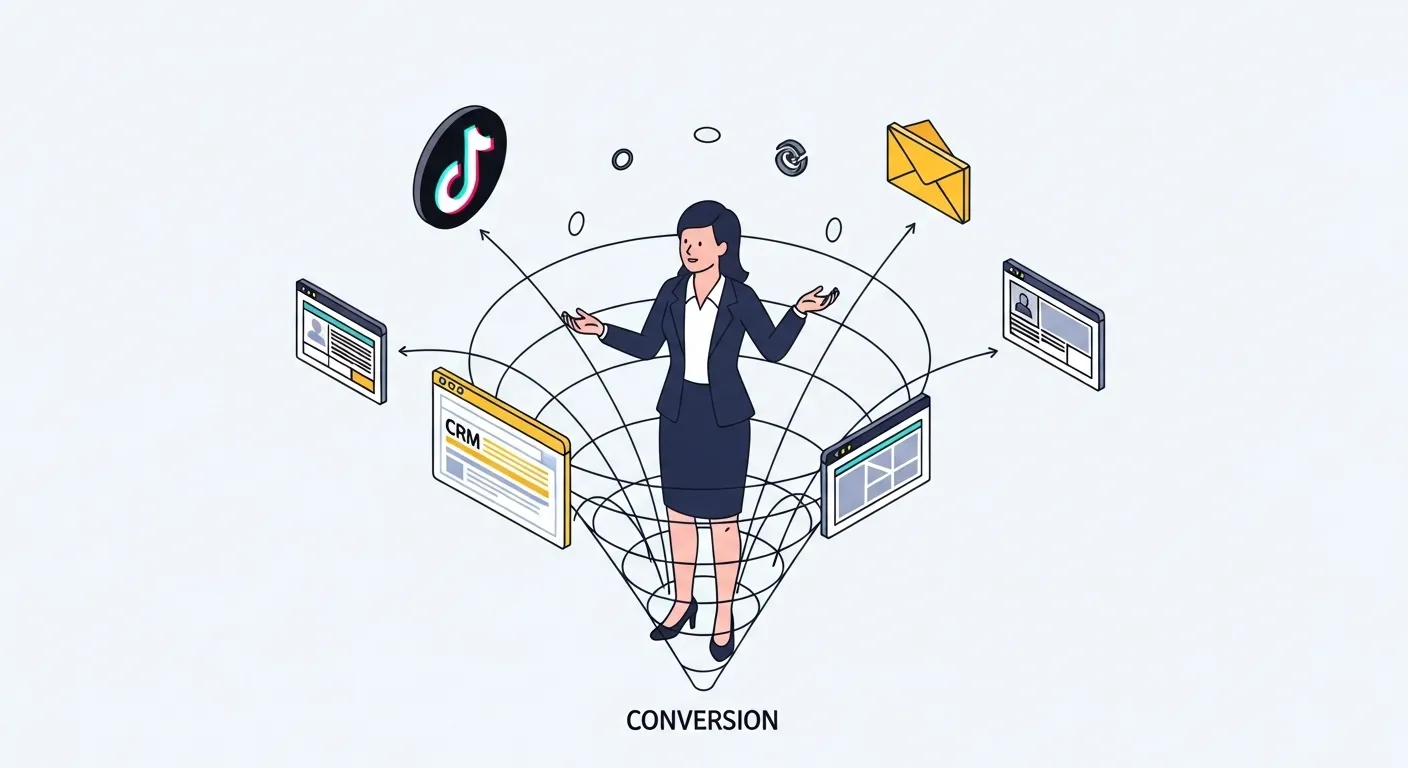
There was a time when marketers could get away with blasting one campaign on one channel and calling it a day. Run a Facebook ad, get some clicks, and boom—sales. But those days are about as current as floppy disks. Today, people expect omnichannel marketing funnels that meet them wherever they are, whether that’s scrolling TikTok at 2 AM, skimming an email during lunch, or getting a perfectly timed CRM reminder that makes them say, “Okay fine, take my money.”
From Single-Channel to Omnichannel Experiences
The shift from single-channel campaigns to multi-platform funnels didn’t happen overnight. It’s been fueled by fragmented attention spans and the sheer number of touchpoints in the modern customer journey. Studies show it takes 7–13 interactions before someone buys from a brand. That means relying on just TikTok, or just email, is like expecting a one-hit wonder to build a career. You need a whole setlist.
Instead of isolated marketing silos, omnichannel marketing funnels connect discovery, engagement, nurture, and conversion into one cohesive experience. The key word here is seamless. When your TikTok, email, and CRM work together, customers don’t feel like they’re jumping between random platforms—they feel like they’re moving through one smartly designed journey.
TikTok: The Discovery Engine
Let’s talk TikTok. The app isn’t just about dances and memes anymore—it’s one of the most powerful top-of-funnel discovery engines on the planet. The TikTok algorithm serves up niche content to hyper-specific audiences, making it perfect for introducing your brand to people who didn’t even know they needed you.
Whether it’s skincare hacks, B2B productivity tips, or unboxing videos, TikTok is where curiosity sparks. Think of it as the party where your brand gets introduced to new friends. But here’s the thing: TikTok is rarely the closer. You don’t usually see someone watch one TikTok and immediately buy a $2,000 SaaS product. That’s where the rest of the funnel kicks in.
Email: The Engagement & Retention Engine
After TikTok grabs attention, email marketing keeps the conversation going. Email is where fleeting interest turns into actual engagement. Why? Because once someone gives you their email, they’ve essentially said, “Okay, I trust you enough to let you in my inbox.”
Here’s where you can deploy customer journey mapping through segmented campaigns—whether it’s welcome sequences, educational drips, or VIP offers. While TikTok’s job is to get the spark, email’s job is to fan the flame. And when done right, email isn’t just about selling; it’s about building trust, delivering value, and keeping your brand top of mind.
CRM: The Backbone of Personalization & Automation
Now, let’s talk about the unsung hero: the CRM (Customer Relationship Management system). If TikTok is the spark and email is the flame, the CRM is the fireplace that keeps it all under control. Without it, things get messy fast.
A CRM like HubSpot, Salesforce, or Klaviyo is where you centralize all the data—TikTok ad leads, email behaviors, purchase history—and use it to personalize every future interaction. This is where CRM automation kicks in: smart workflows that trigger at just the right time. A cart abandonment reminder? A tailored upsell? A re-engagement campaign for “almost lost” leads? That’s your CRM doing the heavy lifting.
The Payoff: Benefits of Multi-Platform Funnels
So why put in the effort to build a TikTok to CRM funnel instead of just winging it? Here’s the ROI:
-
Higher conversions & ROI: Every touchpoint is designed to move leads closer to the sale.
-
Better attribution: You actually know which channel drove the conversion.
-
Long-term retention: Customers aren’t just acquired; they’re nurtured, upsold, and retained.
-
Personalization at scale: Data from the CRM means you’re not guessing—you’re tailoring.
-
Competitive edge: Let’s face it, most brands still run disjointed campaigns. A seamless omnichannel marketing funnel makes you look like the cool kid who figured it out.
At the end of the day, the future isn’t about “TikTok vs. email vs. CRM.” It’s about “TikTok and email and CRM”—all stitched together to create a cross-channel customer journey that feels effortless for the user and powerful for the business.
Understanding Each Funnel Stage
The beauty of multi-platform funnels is that each stage has its own role, but they all connect to form a seamless, cross-channel funnel. Think of it like a relay race: TikTok runs the first leg, email grabs the baton, and CRM finishes strong with a sprint across the finish line. Miss one handoff, and the whole race falls apart.
Let’s break it down.
3.1 Awareness: TikTok as a Discovery Engine
Every funnel starts with awareness, and right now, TikTok is the discovery engine of the internet. Its algorithm is scarily good at knowing what people want (sometimes before they know it themselves). That’s why the platform has become a top-of-funnel powerhouse.
Why TikTok works at this stage:
-
Virality baked in: The “For You” page isn’t chronological—it’s algorithmic. That means even small creators or brands can go viral overnight.
-
UGC magic: User-generated content feels authentic and relatable, which is exactly what sparks initial interest.
-
Trends as currency: Jumping on trending sounds or formats can get your brand in front of thousands (or millions) quickly.
Best TikTok content types for awareness funnels:
-
Quick tutorials or how-to’s (“3 ways to style this dress”)
-
Story-driven content (“POV: You found the skincare product that actually works”)
-
UGC-style reviews and testimonials
-
Lighthearted trend-jacking (as long as it aligns with your brand)
And don’t forget TikTok Ads. With TikTok Pixel tracking, you can not only measure conversions but also retarget users across the funnel. That’s your bridge from discovery to deeper engagement.
3.2 Engagement: Transitioning from TikTok to Email
Getting someone’s attention is great. But in funnel terms, it’s like getting a first date—you still need a way to follow up. That’s where email steps in.
TikTok makes it surprisingly easy to capture leads thanks to TikTok Lead Gen Ads, which let users share their info without leaving the app. Or, you can drive them to a landing page with a lead magnet—a discount, free resource, or exclusive content that feels irresistible.
Best practices for TikTok → Email transition:
-
Simple landing pages: Keep them mobile-friendly, short, and focused. TikTok users aren’t filling out a 12-field form.
-
Clear value exchange: Whether it’s 10% off or a free ebook, the “why” has to be obvious.
-
Compliance check: Always consider GDPR and CAN-SPAM. Nothing kills trust faster than spammy or shady email practices.
This stage is all about lowering friction. Your TikTok got the “yes,” now email is how you keep the conversation going.
3.3 Nurture: Email Marketing as the Middle Funnel
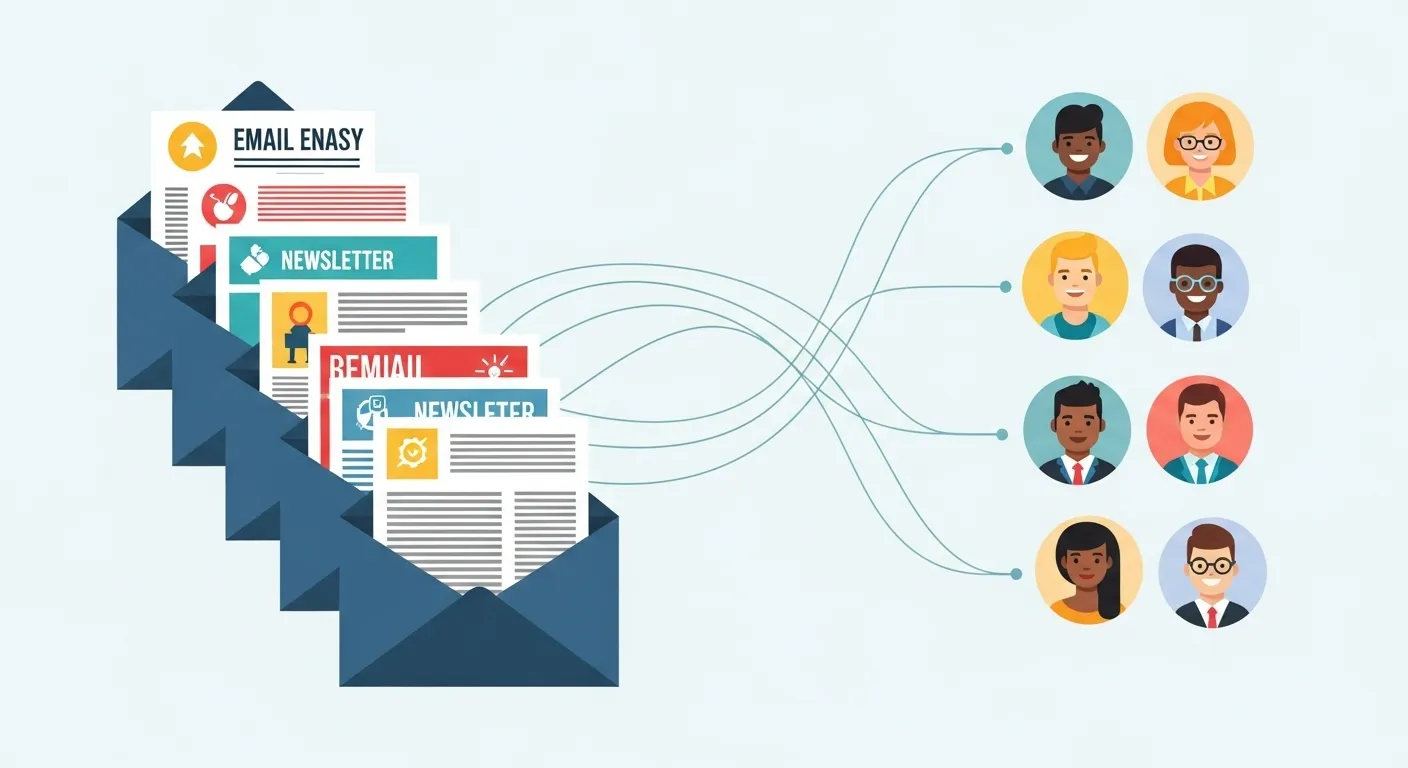
Now comes the middle funnel: nurturing. This is where email marketing shines. You’ve got the lead’s contact info, but now you need to prove your brand is worth sticking around for.
Here’s where email nurture sequences come into play. Some essentials:
-
Welcome series: Roll out the red carpet. Introduce your brand, mission, and value.
-
Drip campaigns: Educate with tips, guides, or behind-the-scenes content that deepens trust.
-
Re-engagement flows: For subscribers who ghosted you, send a clever “we miss you” sequence.
The key is segmentation and personalization. Your CRM (we’ll get to that in a sec) can segment based on behavior: Did they click? Did they buy? Did they abandon a cart? Every email should feel like it was written for that person, not a faceless subscriber.
And don’t underestimate the power of storytelling. Sharing case studies, success stories, or even founder notes makes emails more human, not just transactional. Remember: nurture is about building trust, not just pushing offers.
3.4 Conversion & Retention: CRM Integration
At the bottom of the funnel sits your CRM—the central nervous system of your marketing. This is where CRM automation connects all the dots: TikTok leads, email engagement, purchase history, customer support tickets, and more.
Why CRM matters at this stage:
-
Centralized hub: Whether it’s HubSpot, Salesforce, or Klaviyo, your CRM stores the entire customer journey in one place.
-
Sales + marketing alignment: Your sales team knows exactly when a lead is warm and ready. No more guessing.
-
Customer lifetime value (CLV) tracking: Beyond the first purchase, you can track upsells, renewals, and long-term retention.
Retention is often the forgotten child of funnels, but with the right CRM setup, it becomes a goldmine. Automated win-back campaigns, tailored product recommendations, and loyalty rewards keep customers coming back—and spending more.
In short: TikTok creates the spark, email builds the relationship, and CRM locks it in for the long haul.
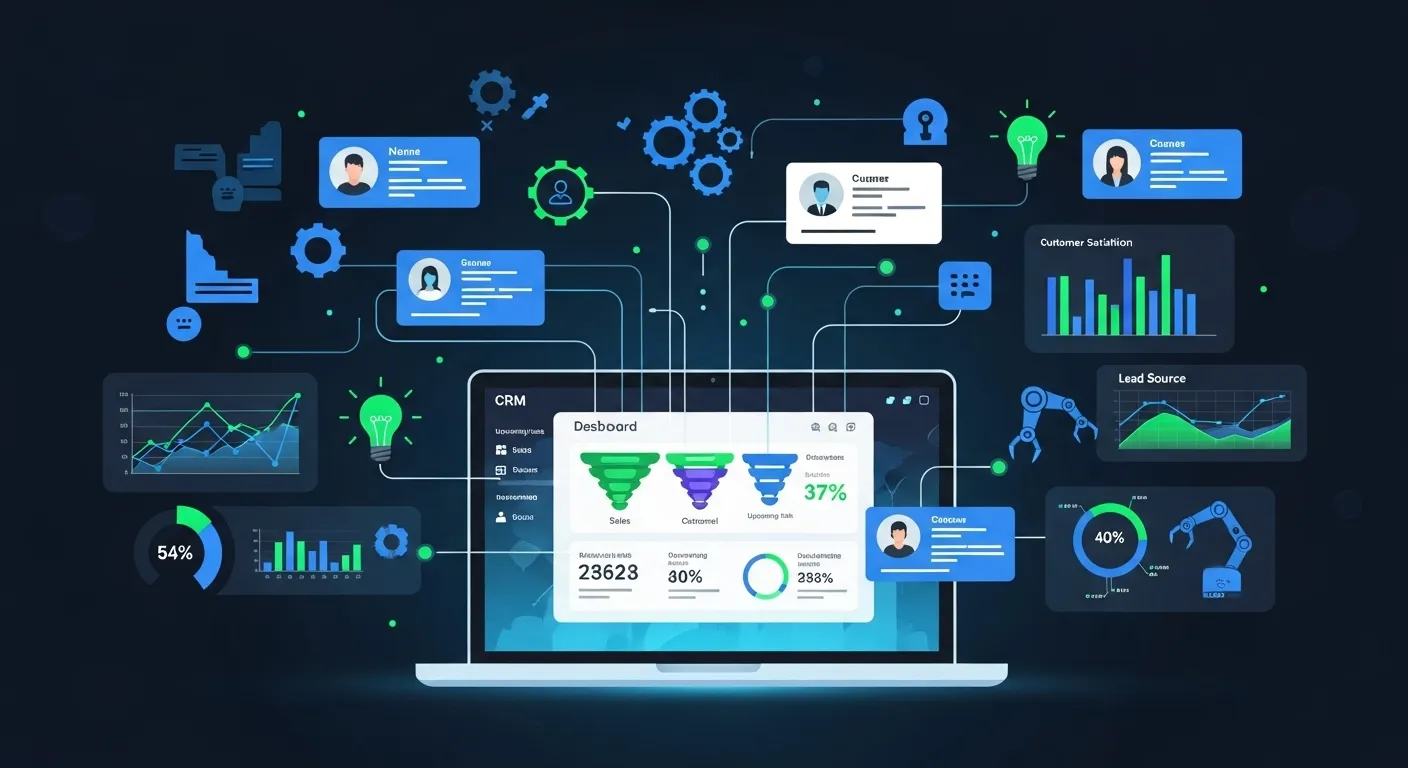
Designing a Seamless Multi-Platform Funnel
Okay, so we’ve established that TikTok is the spark, email is the conversation, and the CRM is the engine room keeping everything humming. But how do you actually stitch these channels into one seamless customer journey instead of a Frankenstein funnel? The answer lies in smart planning, obsessive tracking, and friction-free design.
Step 1: Funnel Blueprint — TikTok → Email → CRM
Let’s start with the funnel skeleton:
-
TikTok (Awareness): Use organic content or TikTok Ads to introduce your brand and get eyeballs. Think: UGC-style videos, how-to’s, or trend-based hooks.
-
Lead Capture (Engagement): Push TikTok viewers toward a low-friction opt-in. Options include TikTok Lead Gen Ads, or directing them to a landing page with a lead magnet (discount, free guide, or exclusive offer).
-
Email Nurture (Middle Funnel): Once you’ve got the email, launch nurture sequences: welcome series, drip campaigns, personalized offers.
-
CRM Automation (Conversion + Retention): Sync lead data into your CRM. This is where you track touchpoints, assign scores, align sales with marketing, and deploy personalized automation.
Think of it as a well-choreographed dance: every platform knows its steps, and nobody steps on anyone’s toes.
Step 2: Use UTM Parameters & Tracking
Funnels without tracking are like flying blindfolded. You need to know exactly which TikTok ad, landing page, or email triggered a conversion. That’s where UTM parameters and pixels come in.
-
TikTok Pixel: Tracks conversions from TikTok campaigns.
-
UTM parameters: Add these to links in TikTok bios, ads, and emails so you know which content drove traffic.
-
CRM attribution reports: Tie everything back together to see the true ROI of each touchpoint.
This lets you do customer journey mapping in real-time: Did the lead come from a TikTok tutorial? Which email did they click before buying? Without this, your funnel looks seamless on the outside but is actually chaos on the inside.
Step 3: Personalization at Every Touchpoint
Here’s the kicker: a funnel isn’t really “seamless” unless it feels personal. Generic funnels are the quickest way to lose people.
-
On TikTok, personalize through niche-specific content. Speak directly to your target persona, not “everyone.”
-
In emails, use segmentation (behavior-based triggers like clicks, cart abandons, or product preferences). Nobody wants to feel like just another subscriber.
-
Inside the CRM, build automation that reflects customer behavior. Example: if someone buys Product A, trigger a cross-sell campaign for complementary Product B.
The more your funnel feels like a 1:1 journey, the smoother the ride.
Step 4: Avoid Funnel Friction
Imagine this: a customer loves your TikTok vibe, clicks to your landing page, and… the branding looks totally different. Or the copy is stiff and formal compared to your playful TikToks. That’s what I call “funnel whiplash.”
To keep things seamless:
-
Maintain consistent voice & design across TikTok, landing pages, emails, and CRM-driven outreach.
-
Mobile-first design: TikTok users are mobile-first, so don’t kill conversions with clunky desktop-only forms.
-
Fewer clicks, better UX: Every extra click is a chance to lose someone. Streamline the path to email sign-up and purchase.
Step 5: Learn from Real-World Funnel Mapping
Some brands are already doing this brilliantly:
-
E-commerce stores that run TikTok UGC ads → capture emails with “10% off your first order” → nurture with a three-part welcome series → upsell via CRM.
-
B2B companies using TikTok thought-leadership clips → offering free reports → nurturing via email → syncing warm leads in Salesforce for sales outreach.
The difference? Their funnels don’t feel like funnels. They feel like natural customer journeys. That’s what makes them seamless.
Bottom line: A multi-platform funnel blueprint is part art, part science. The art is making the journey feel natural and engaging. The science is all about tracking, personalization, and eliminating friction. Do both well, and your customers won’t feel like they’re moving through a funnel at all—they’ll just feel like they’re having a great experience with your brand.
Tools & Tech Stack for Multi-Platform Funnels
Here’s the thing about multi-platform funnels: you can have the best strategy in the world, but if your tech stack looks like a jumble of duct-taped tools, it’s going to leak like a broken faucet. The magic happens when your TikTok, email, and CRM tools play nicely together. Luckily, 2025’s digital marketing toolbox is stacked. Let’s walk through the essentials.
TikTok Business Manager + TikTok Pixel
First up, your TikTok marketing funnel needs a strong foundation inside TikTok’s own ecosystem.
-
TikTok Business Manager: Think of this as mission control. It’s where you manage ads, audiences, and creative performance.
-
TikTok Pixel: This is non-negotiable. Installing the pixel on your site or landing page lets you track conversions, build retargeting audiences, and measure ROI. Without it, you’re basically flying blind.
Pro tip: Combine the pixel with event tracking (like “add to cart” or “sign up”) to get granular data that syncs beautifully with your CRM later.
Email Marketing Platforms
Once you’ve captured a lead, you need an email tool that can nurture without annoying. Enter the email marketing platforms:
-
Klaviyo: Beloved by e-commerce brands for its segmentation and dynamic product feeds.
-
ActiveCampaign: Excellent for automation-heavy funnels. Its visual workflow builder is a dream for mapping nurture sequences.
-
Mailchimp: The classic, beginner-friendly option. Great if you’re just starting out, though less advanced than Klaviyo or ActiveCampaign.
Each of these integrates with TikTok Lead Gen Ads, meaning those shiny new TikTok leads flow straight into your email list—no messy CSV exports required.
CRM Platforms
Here’s where the funnel levels up. A CRM is the glue that binds TikTok discovery and email engagement into one unified customer journey.
-
HubSpot: Ideal for companies that want sales + marketing alignment, with baked-in automation.
-
Salesforce: Enterprise-ready with deep customization (and a learning curve).
-
Zoho CRM: More affordable but surprisingly powerful for SMBs.
-
Klaviyo (again): Not just email—its CRM functionality for e-commerce is underrated.
With the right CRM, you can score leads, personalize outreach, and calculate customer lifetime value (CLV). This is where CRM automation turns a good funnel into a great one.
Integration Middleware
Now, what if your tools don’t talk to each other? That’s where integration middleware saves the day.
-
Zapier: The Swiss Army knife of integrations. Want TikTok leads to auto-populate in Salesforce? Zapier can do it.
-
Make (formerly Integromat): A bit more technical but allows for advanced, multi-step workflows.
-
Native Connectors: Many platforms now have direct integrations (e.g., TikTok → HubSpot). Always check before adding another tool.
These tools prevent the dreaded “manual spreadsheet shuffle” that kills funnel efficiency.
AI-Powered Funnel Optimization Tools
And because it’s 2025, let’s sprinkle in some AI. AI tools are revolutionizing funnel optimization by predicting customer behavior, personalizing at scale, and running split tests faster than humans ever could.
-
Seventh Sense: AI-powered email send-time optimization.
-
Drift or Intercom: AI chatbots that tie into your CRM for real-time lead qualification.
-
Phrasee: AI that writes (and optimizes) subject lines better than most copywriters would like to admit.
With AI layered on top of your funnel, you’re not just reacting—you’re predicting.
The takeaway? Building a multi-platform funnel isn’t about having all the tools—it’s about choosing the right mix that plays together seamlessly. TikTok drives awareness, email nurtures, CRM personalizes, and middleware + AI stitch it all into one frictionless machine.
Or to put it simply: your funnel is only as strong as your tech stack.
Case Studies & Real-World Examples
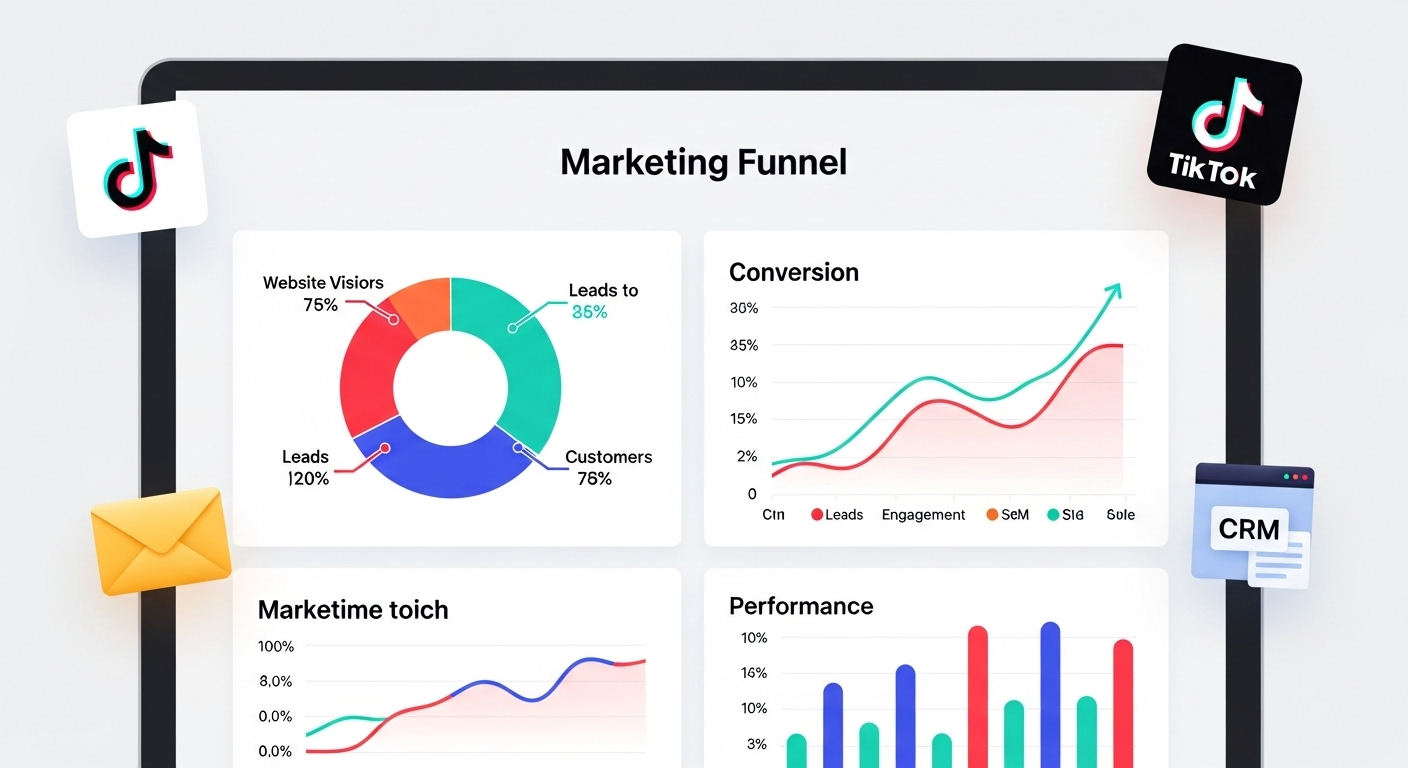
Strategies and frameworks are great, but nothing hits harder than real-world proof. Let’s walk through three brands—one e-commerce, one B2B SaaS, and one creator-led business—that nailed their multi-platform funnels. Spoiler: none of them relied on a single channel. Each used TikTok, email, and CRM together to create a seamless customer journey that converted.
Case Study 1: E-Commerce Brand Using TikTok UGC + Klaviyo Email + HubSpot CRM
The challenge: A DTC skincare brand struggled with high CAC (customer acquisition costs) and low repeat purchase rates. They had viral TikToks but couldn’t retain customers beyond the first sale.
The funnel setup:
-
Awareness (TikTok): The brand leaned into TikTok UGC ads. Instead of polished commercials, they used raw, relatable videos from micro-influencers showing before-and-after results. These ads blended in with native TikTok content and hit the discovery sweet spot.
-
Engagement (Email Capture): TikTok ads linked to a landing page offering “10% off your first order.” Simple, mobile-friendly, and optimized with TikTok Pixel.
-
Nurture (Email): New leads entered a Klaviyo welcome series—3 emails over 5 days. The sequence included skincare tips, a founder story, and social proof from happy customers.
-
Conversion + Retention (CRM): Leads synced into HubSpot, where the CRM tracked purchase behavior. Abandoned cart sequences, cross-sells (“If you bought cleanser, here’s the moisturizer”), and loyalty campaigns boosted retention.
The results:
-
CAC dropped by 18% thanks to TikTok’s efficient targeting.
-
Repeat purchase rates jumped 27% because CRM-driven upsells kept customers engaged.
-
LTV (lifetime value) increased 33% in just 6 months.
Takeaway: UGC-powered TikTok ads + email nurture + CRM personalization = an omnichannel marketing funnel that doesn’t just acquire but retains.
Case Study 2: B2B SaaS Funnel from TikTok → LinkedIn Retargeting → Email Nurturing → Salesforce CRM
The challenge: A mid-sized SaaS startup wanted to reach new audiences but struggled to stand out in the overcrowded LinkedIn ad space. Their target buyers were younger marketing managers—aka TikTok natives.
The funnel setup:
-
Awareness (TikTok): The brand ran educational TikToks explaining marketing pain points (“Why your attribution is broken”) in snappy 30-second clips. These videos positioned them as thought leaders.
-
Engagement (Cross-Channel Retargeting): Using TikTok Pixel + LinkedIn Ads, they retargeted TikTok viewers with LinkedIn Sponsored InMail and carousel ads offering a free industry report.
-
Nurture (Email): Report downloads triggered a drip campaign: first, a “thanks for downloading” email, followed by 3 emails diving deeper into case studies and product capabilities.
-
Conversion + Retention (CRM): Salesforce captured every touchpoint. The CRM assigned lead scores (based on TikTok views + email engagement) and flagged high-scoring leads for sales outreach.
The results:
-
LinkedIn retargeting ads achieved 40% lower CPC than cold campaigns.
-
Email open rates averaged 38% (industry benchmark: ~22%).
-
SQLs (sales-qualified leads) increased by 22% quarter-over-quarter.
Takeaway: B2B funnels aren’t limited to LinkedIn. Pairing TikTok awareness with LinkedIn + email nurture, and closing the loop with Salesforce, turned casual TikTok viewers into enterprise demos.
Case Study 3: Creator-Led Brand Monetization Funnel
The challenge: An influencer in the fitness space wanted to monetize her TikTok following without alienating fans. She needed a funnel that turned followers into paying customers of her workout program.
The funnel setup:
-
Awareness (TikTok): She posted workout snippets, motivational tips, and transformation stories. All content pointed to a “Free 7-Day Workout Plan” offer.
-
Engagement (Email Capture): TikTok bio link → landing page → free plan in exchange for email.
-
Nurture (Email): A sequence of motivational emails, client testimonials, and educational tips nurtured trust. By Day 5, she pitched her paid 12-week program.
-
Conversion + Retention (CRM): Using Klaviyo as her CRM, she segmented her list: free users, trial converters, and paying customers. She automated upsells for nutrition plans and sent retention campaigns to boost renewals.
The results:
-
20% of free plan sign-ups converted to the paid program within 2 weeks.
-
Email accounted for 65% of revenue (compared to just 10% from TikTok direct sales).
-
Upsells increased customer lifetime value by 42%.
Takeaway: Even creators can build a multi-platform funnel. The secret isn’t selling on TikTok directly—it’s capturing emails, nurturing, and letting the CRM handle segmentation + upsells.
Metrics That Matter Across Funnels
Across all three examples, success wasn’t measured by vanity metrics (views, likes, or followers). The KPIs that really mattered were:
-
CAC reduction (cheaper to acquire customers)
-
Conversion rates (how many leads actually buy)
-
Customer lifetime value (CLV/LTV) (retention + upsells)
And guess what? All three brands saw significant improvements once they stitched TikTok, email, and CRM into one cohesive system.
Common Mistakes in Multi-Platform Funnels
Building a multi-platform funnel sounds glamorous—TikTok at the top, emails in the middle, CRM at the bottom. But in reality, many marketers end up creating more of a spaghetti mess than a seamless journey. Here are the most common mistakes I see (and how to avoid them).
1. Not Syncing Data Between Platforms
Imagine running amazing TikTok ads, capturing leads, but never syncing them into your email platform or CRM. That’s like getting phone numbers at a party and then… never saving them. Data silos are funnel killers.
The fix: Use direct integrations (TikTok → Klaviyo, TikTok → HubSpot) or middleware like Zapier/Make to ensure every lead flows where it needs to. A funnel only works if the data actually moves.
2. Over-Emailing or Irrelevant Nurture Flows
We’ve all been there: you sign up for a discount code and suddenly your inbox is treated like Times Square on New Year’s Eve. Too many emails—or worse, irrelevant ones—turn leads off faster than you can say “unsubscribe.”
The fix: Focus on segmentation and personalization. Send fewer, smarter emails that reflect actual behavior. If someone hasn’t engaged in weeks, a gentle re-engagement is better than carpet-bombing them with promotions.
3. Ignoring Mobile-First Funnel Design
Here’s the thing: TikTok is a 100% mobile-first platform. If your landing page or email looks great on desktop but janky on mobile, congrats—you just lost 80% of your leads.
The fix: Always design mobile-first. That means short forms, large buttons, and emails that don’t require zooming in like you’re reading fine print on a cereal box.
4. Poor Attribution Tracking
Ever looked at a conversion and thought, “Did this come from TikTok, email, or my sales team’s magic?” Without proper tracking, you’re guessing—and guessing kills optimization.
The fix: Use UTM parameters, TikTok Pixel, and CRM attribution reports. When every click is tagged and tracked, you can actually see which channel pulled its weight.
5. Treating Each Platform in Isolation
This is the rookie move: TikTok runs on autopilot, email does its own thing, and CRM is just a dusty database. The result? Disjointed messaging and missed opportunities.
The fix: Think of your funnel as one conversation happening across platforms. TikTok teases the story, email develops it, and the CRM personalizes it. The customer should feel like they’re moving through one cohesive journey—not flipping channels.
Bottom line: Multi-platform funnels fail when they’re built like silos instead of systems. Sync your data, respect your audience’s inbox, design for mobile, track everything, and—above all—make sure every platform is playing the same tune. Do that, and you won’t just avoid mistakes—you’ll be miles ahead of most brands still fumbling in the dark.
Advanced Strategies for Funnel Optimization
So you’ve built your shiny multi-platform funnel. TikTok is pulling in leads, email is nurturing them, and your CRM is doing its automation magic. Great start. But here’s the truth: funnels are never “done.” They’re living, breathing systems that need constant tweaking to squeeze out more ROI. Let’s talk about advanced strategies that separate average funnels from chef’s kiss funnels.
Retargeting Across TikTok, Meta, and Google
Most people don’t buy on first touch. That’s why retargeting is your secret weapon. TikTok already lets you retarget viewers who engaged with your videos or ads, but why stop there?
-
Cross-platform retargeting: Sync your TikTok Pixel data with Meta (Facebook/Instagram) and Google Ads. This way, someone who saw your skincare tip on TikTok might see a reminder on Instagram or YouTube later.
-
Multi-step retargeting: Don’t serve the same ad on every platform. Use sequencing. Example: TikTok introduces the product, Meta reinforces social proof, and Google Ads seals the deal with an offer.
This approach keeps your brand top-of-mind without being creepy (nobody likes to feel stalked by the same ad 17 times a day).
Predictive Analytics Inside CRM
Your CRM automation isn’t just a storage unit—it’s a crystal ball if you know how to use it. With predictive analytics, you can:
-
Forecast churn risk and trigger re-engagement before a customer ghosts you.
-
Predict upsell opportunities based on past purchases.
-
Use lead scoring models that weigh TikTok engagement + email clicks to predict who’s closest to converting.
This is how you go from reactive marketing to proactive funnel management.
Hyper-Personalization Using AI
Remember when personalization meant adding “Hi [First Name]” to an email? Cute, but outdated. In 2025, personalization is about delivering content and offers tailored to real-time behavior.
-
Email: AI tools like Phrasee or Seventh Sense optimize subject lines, send times, and even tone.
-
TikTok Ads: Dynamic Creative Optimization (DCO) tests dozens of variations and serves the best-performing one.
-
CRM workflows: Instead of one-size-fits-all drip campaigns, AI can trigger unique sequences based on customer attributes.
Hyper-personalization doesn’t just boost conversions—it makes customers feel like your brand gets them.
Multi-Step Split Testing
Split testing isn’t new, but most marketers stop at the basics: subject lines, ad creatives, or CTA buttons. The real magic is in multi-step testing across the funnel.
-
On TikTok: Test hook styles (story vs. trend-jacking) and measure which drives more clicks to your landing page.
-
On Landing Pages: Test lead magnet offers (discount vs. freebie) and form designs.
-
In Email: Go beyond subject lines—test narrative formats (storytelling vs. product-focused) and CTA placements.
-
In CRM: Test the timing of automation triggers (cart abandonment emails after 1 hour vs. 24 hours).
By optimizing every stage, you compound small wins into massive performance gains.
Leveraging TikTok Influencers as TOFU Traffic Sources
Here’s a power move: instead of relying only on your brand account, use TikTok influencers to fuel top-of-funnel (TOFU) traffic.
-
Micro-influencers (10k–50k followers) often outperform big names because their content feels more authentic.
-
Influencer-driven content can be whitelisted into your TikTok Ads Manager, allowing you to run paid campaigns with their face but your targeting.
-
Funnel tip: Route influencer traffic to a custom landing page + email capture, then sync into your CRM for personalized follow-up.
Influencers become the awareness stage engine, while your funnel does the heavy lifting of nurture and conversion.
The bottom line: Advanced funnel optimization isn’t about adding more tools or complexity. It’s about using retargeting, AI, hyper-personalization, testing, and influencer traffic to make your funnel smarter and smoother. Done right, your funnel evolves from a marketing machine into a revenue compounding engine.
Future of Multi-Platform Funnels
If you think today’s multi-platform funnels are complex, just wait. The future isn’t just about stitching TikTok, email, and CRM together—it’s about smarter, faster, and more privacy-conscious funnels that feel almost psychic to the customer. Let’s peek into what’s next.
AI & Machine Learning as Funnel Architects
Right now, AI is optimizing subject lines and running A/B tests. In the near future, it will design entire funnels. Picture this: an AI analyzes TikTok engagement data, predicts which leads are high intent, and then auto-generates a custom email sequence synced into your CRM. No human guesswork, just machine-driven efficiency.
Even lead scoring will go predictive. Instead of “clicked 3 emails = hot lead,” AI will factor in TikTok watch time, email behavior, and purchase history to decide when sales should jump in. That means fewer missed opportunities and less wasted time.
Predictive CRM + Smart Automation
CRMs are already powerful, but they’re becoming brainier. Imagine your CRM nudging you: “This lead has a 78% chance of converting in the next 10 days. Trigger an upsell campaign now.” That’s not sci-fi—it’s predictive CRM at work.
Smart automation will also reduce funnel lag. Instead of static drip campaigns, sequences will adapt in real-time. A lead binge-watches your TikToks? They’ll get a faster sequence. Someone ignores emails? The CRM will automatically switch them to SMS or retargeting. Funnels won’t just be automated—they’ll be adaptive.
Short-Form → Long-Term Relationship Funnels
Short-form video (like TikTok) will continue to dominate awareness, but the real innovation will be in connecting that snackable content to long-term loyalty. Funnels will evolve from “viral video → quick sale” into “viral video → ongoing relationship.”
Expect more brands to build community-driven nurture flows: private Discord groups, exclusive email clubs, and CRM-triggered loyalty programs that keep customers engaged long after the first conversion.
Web3, Data Privacy & the Cookieless Future
Here’s the curveball: data privacy. With cookies crumbling and regulations tightening, tracking customers across platforms will get trickier. The solution? First-party data. That means funnels will rely even more on TikTok lead generation, email opt-ins, and CRM data enrichment.
And yes, Web3 will play a role. Imagine funnels where customers own their data and trade it for perks, discounts, or NFTs. Instead of brands scraping cookies, customers will willingly share information in exchange for real value. That shifts the power dynamic and makes trust the new currency.
Bottom line: The future of multi-platform funnels is smarter (AI-driven), more adaptive (predictive CRM), more relationship-focused (short-form to long-term), and more ethical (privacy-first). Brands that embrace these shifts won’t just keep up—they’ll build funnels that feel invisible, natural, and customer-first. And that’s the kind of funnel people actually want to move through.
Conclusion: Time to Build Your Seamless Funnel
If you’ve made it this far, give yourself a high-five 🖐️ — you now know that multi-platform funnels aren’t just a fancy marketing buzzword, they’re the new reality of digital marketing. Gone are the days of linear, single-channel journeys. Today’s customers discover you on TikTok, nurture with your emails, and convert (and stay loyal) through your CRM.
Here’s the takeaway:
-
TikTok is your discovery engine—sparking curiosity and attention.
-
Email marketing is your relationship builder—turning leads into engaged prospects.
-
Your CRM is the backbone—personalizing, automating, and tracking the entire journey.
When these systems work together, you don’t just have a funnel—you have a seamless customer journey that feels natural to the buyer and profitable for the brand.
But let’s be honest: it’s easy to fall into traps. Siloed data, over-emailing, ignoring mobile, or bad tracking can turn your funnel into a leaky bucket. The smart play is to build with integration, personalization, and consistency at the core.
The brands that win in the future will be those that combine creativity (TikTok), connection (email), and intelligence (CRM) into one cohesive ecosystem. Add AI, predictive analytics, and influencer-driven awareness on top? You’re looking at funnels that don’t just convert—they compound.
So here’s your call-to-action: stop thinking channel by channel. Start mapping customer journeys that stretch across platforms. Whether you’re an e-commerce brand, SaaS company, or creator-led business, the sooner you embrace multi-platform funnels, the sooner you’ll build relationships that last—and revenue streams that scale.
The funnel of the future is seamless, smart, and customer-first. Time to build yours. 🚀
SEO-Friendly FAQs
1. What is a multi-platform marketing funnel?
A multi-platform marketing funnel is a customer journey that stretches across different channels instead of relying on just one. For example, a user might discover your brand on TikTok (awareness), sign up for your newsletter (engagement), receive personalized email sequences (nurture), and then convert via your CRM-powered checkout flow (conversion & retention). Unlike single-channel funnels, multi-platform funnels create a seamless customer journey that feels natural, consistent, and personalized.
2. How do you connect TikTok leads to a CRM?
Connecting TikTok leads to your CRM is all about integration and automation. TikTok’s Lead Gen Ads can collect user data (like name and email), which can then be synced directly to your CRM (HubSpot, Salesforce, Zoho, etc.) using tools like Zapier, Make, or native connectors. Once in the CRM, you can trigger email nurture sequences, score leads, and track behavior across the funnel. In short: TikTok pulls them in, your CRM keeps them moving.
3. Is TikTok effective for B2B funnels?
Surprisingly, yes. While TikTok is known for B2C and viral content, B2B brands are tapping into it for top-of-funnel (TOFU) awareness. Think explainer videos, quick industry tips, or storytelling that builds authority. Pair that with retargeting (LinkedIn + email + CRM nurturing), and TikTok becomes a powerful entry point for even complex B2B customer journeys.
4. What’s the best CRM for TikTok and email marketing integration?
The “best” CRM depends on your stack. For e-commerce brands, Klaviyo pairs beautifully with TikTok + email. For scalable B2B funnels, HubSpot and Salesforce offer robust integrations and automation. Zoho is a solid budget-friendly option. The real key is ensuring your CRM plays nicely with both your email marketing platform and TikTok Lead Gen Ads so data flows seamlessly.
5. How can I track performance across TikTok, email, and CRM?
Tracking performance comes down to attribution and UTM tagging. Add UTM parameters to every TikTok ad and landing page link. Inside your email platform, track open, click, and conversion metrics. Then, let your CRM act as the central hub where all this data syncs together. With proper setup, you’ll be able to see how many leads TikTok drove, how email nurtured them, and how CRM closed the sale—giving you true cross-channel funnel insights.