Introduction
If LinkedIn were a person, it would be that one friend who somehow shows up at every networking event, knows everyone’s job title and career goals, and still manages to land a promotion before dessert. In other words: LinkedIn has cemented itself as the undisputed king of B2B lead generation—and in 2025, that crown isn’t going anywhere.
For years, marketers treated LinkedIn like a digital Rolodex crossed with an ad billboard: spam a few InMails, drop a whitepaper link, and wait for leads to trickle in. Fast forward to today, and the game has radically changed. The platform has evolved from a stiff corporate directory into a thriving ecosystem where professionals aren’t just polishing résumés—they’re consuming content, joining communities, and making buying decisions in real time.
And here’s the kicker: with AI now running behind the curtain, personalization is no longer a “nice-to-have.” It’s the price of entry. Spray-and-pray lead gen strategies? Dead. Trust-based, precision-driven, value-led approaches? Very much alive.
So, what’s fueling success on LinkedIn in 2025? It boils down to three core pillars:
-
Advanced Targeting – Harnessing AI-driven insights, predictive analytics, and hyper-granular segmentation to reach the right buyers at the right time.
-
Thought Leadership – Building credibility and influence so buyers don’t just know your brand—they trust it enough to invite you into their decision-making process.
-
Dark Social – Leveraging the invisible but powerful world of private shares, DMs, and community chatter that’s driving more B2B pipeline than attribution dashboards care to admit.
Here’s the thesis: businesses that master these three strategies won’t just generate leads—they’ll dominate B2B pipelines in an AI-driven, trust-first marketing landscape. Everyone else? Well… they’ll be left polishing their outdated InMail templates while their competitors feast on warm, high-intent opportunities.
The Current State of LinkedIn Lead Generation in 2025
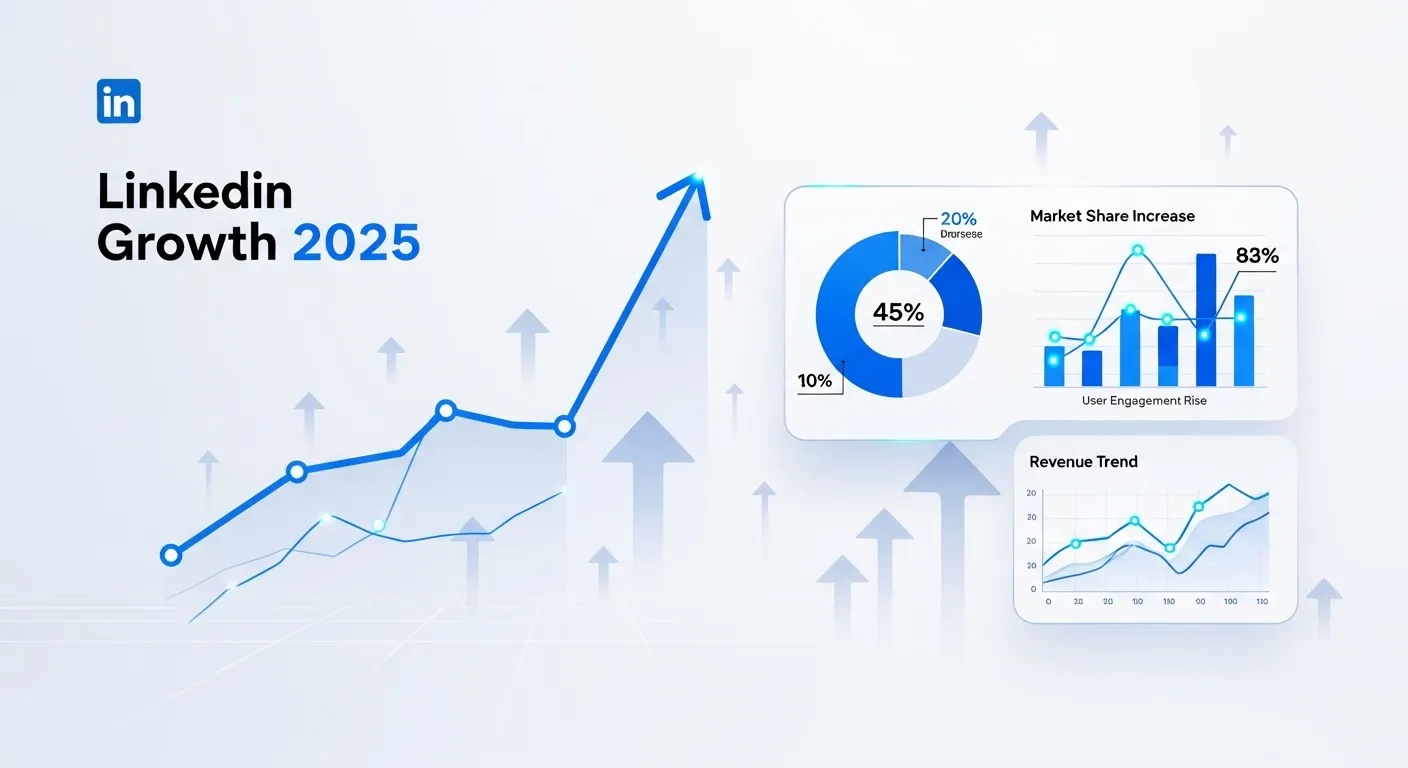
Let’s start with some cold, hard numbers (because who doesn’t love a stat-laden icebreaker?): LinkedIn now boasts over 1 billion members worldwide, with nearly 65 million decision-makers logging in regularly. Engagement is at an all-time high, thanks to LinkedIn’s shift toward being a true content and community platform rather than just an online résumé archive. And if you’re wondering where the money is—LinkedIn’s ad revenue is projected to surpass $7.5 billion in 2025, making it one of the most profitable playgrounds for B2B marketers.
 So what’s changed about LinkedIn lead gen in the last couple of years? In a word: everything.
From Spray-and-Pray to Smart and Personal
The era of blasting InMails like digital confetti is over. Buyers are savvier than ever, and they can spot a copy-paste outreach message from ten inboxes away. What used to work—volume-driven campaigns, cold pitches, generic ads—now lands you squarely in the “ignore” pile.
Instead, AI and automation have completely reshaped how marketers approach lead gen. We’re talking hyper-personalized campaigns that adjust messaging based on buyer intent signals, industry trends, and even subtle career shifts. Tools integrated directly with LinkedIn’s ecosystem can flag when someone’s likely to be in-market, when a company just got funding, or when a prospect quietly updated their skills to match a new project. That’s the kind of precision today’s B2B marketers live for.
Quality > Quantity
Gone are the days of chasing vanity metrics like “number of leads captured.” In 2025, the mantra is clear: quality trumps quantity. One warm, well-nurtured lead who trusts your brand is worth ten cold connections who clicked “accept” just to clear their notifications.
LinkedIn itself has leaned into this shift. Its algorithm now rewards meaningful engagement—comments, shares, and saves—far more than clicks or impressions. And guess what? That aligns perfectly with the rise of community-driven and trust-based lead generation.
The Death of Cold Outreach (and the Rise of Communities)
Let’s be blunt: cold outreach is dying. Nobody wants to be ambushed in their DMs with a 200-word pitch sandwiched between a fake compliment and a Calendly link. Buyers want relationships, not interruptions.
Instead, the winners on LinkedIn in 2025 are those building micro-communities, sparking conversations, and nurturing trust. From niche LinkedIn Groups 2.0 to interactive newsletters and live events, lead gen is less about “selling” and more about showing up consistently as a trusted voice.
The Bigger Picture
Put simply: LinkedIn lead gen in 2025 is smarter, slower, and infinitely more effective. It’s about precision targeting, human connection, and authentic thought leadership—all backed by the power of AI. The businesses leaning into this shift aren’t just collecting leads; they’re building sustainable B2B pipelines fueled by trust and long-term relationships.
Those still clinging to outdated tactics? They’re slowly realizing that an inbox full of ignored InMails isn’t a pipeline—it’s a graveyard.
Advanced Targeting on LinkedIn

If LinkedIn targeting in 2015 was like using a dartboard blindfolded, and 2020 was like finally turning the lights on, then 2025 is like having an AI-powered, data-hungry robot arm that hits bullseyes while sipping your coffee. Advanced targeting has gone from “nice campaign trick” to the foundation of all successful LinkedIn ad strategies.
The days of tossing ads at generic job titles are over. Now, with AI, predictive analytics, and deep CRM/ABM integrations, LinkedIn has become a precision-marketing machine that lets you find the right buyers before they even know they’re buyers.
Let’s break it down.
3.1 Evolution of LinkedIn Targeting Tools
Back in the day, LinkedIn targeting was simple: filter by job title, company size, and maybe location if you were feeling fancy. That was fine when lead gen was a numbers game, but in today’s quality-first B2B landscape, it feels as outdated as sending a fax invite to a webinar.
In 2025, LinkedIn targeting is powered by AI-driven audience insights. Instead of you manually guessing who your ideal buyers are, LinkedIn’s machine learning models analyze:
-
Career growth patterns (e.g., professionals who just moved from manager → director roles, signaling buying influence).
-
Behavioral intent signals (like what kind of posts they engage with, or if they’ve recently followed certain industry pages).
-
Company-level changes (funding rounds, leadership hires, tech stack adoption).
Even better, integrations with CRM and ABM platforms mean your Salesforce or HubSpot data isn’t just sitting idle—it’s actively enriching your LinkedIn campaigns. Imagine your CRM whispering in LinkedIn’s ear: “Hey, this account just opened three emails and clicked a case study.” LinkedIn then nudges those exact decision-makers with relevant ads. That’s predictive targeting in action.
3.2 Key Features in 2025
So, what are the shiny new toys in LinkedIn’s advanced targeting toolbox this year? Here’s what marketers are geeking out about:
AI-Enhanced Audience Segmentation
Forget job titles. Now you can slice audiences by professional interests, intent signals, and even career trajectory. Want to reach mid-level IT managers likely to become budget-holders in the next 12 months? Done. Want to find marketers who consistently engage with SaaS growth content? Easy.
Lookalike Audiences 2.0
Lookalikes used to mean “find me people kinda like this list.” Now it’s smarter, cross-industry matching powered by LinkedIn’s AI. For example, if your best customers are fintech compliance leaders, LinkedIn can find similar profiles in adjacent industries (say, healthcare or legal tech) who are facing the same compliance headaches.
Event-Based Targeting
Virtual events, webinars, and conferences have exploded—and LinkedIn is tapping in. You can now target users who registered for or attended specific events, even if they were hosted outside LinkedIn. Imagine following up with a precise campaign for everyone who just attended Gartner’s Cloud Security Summit. That’s not just targeting—that’s timing.
Hyper-Local + Hybrid Targeting
Even in a remote-first world, location still matters. LinkedIn has doubled down on hyper-local targeting, letting you engage professionals who work hybrid schedules in specific cities. Perfect if you’re, say, a co-working brand in Austin or a SaaS company hosting regional meetups.
3.3 Practical Implementation
Now, let’s get tactical. Advanced targeting isn’t just cool—it works, when you set it up right.
Step-by-Step: Building an Advanced Campaign
-
Define your ICP (Ideal Customer Profile) with AI tools: Plug in CRM + LinkedIn insights to identify shared traits of high-value accounts.
-
Layer segmentation: Combine job function + intent signals + career trajectory. For example: “Marketing Directors at Series B SaaS companies who engage with AI-related posts.”
-
Sync with ABM data: Import warm accounts from HubSpot/Salesforce to retarget with contextually relevant ads.
-
Experiment with formats: Use video ads for awareness, carousels for education, and conversational ads for decision-stage nudges.
Budgeting and Ad Formats
The myth? Advanced targeting requires huge budgets. The truth? Smarter targeting = less wasted spend. By focusing only on high-intent audiences, marketers are seeing 30–40% lower CPLs in 2025 compared to broad targeting.
-
Best formats: Carousel ads (education), video ads (awareness), and lead-gen forms (conversion).
-
Pro tip: Pair event-based targeting with Sponsored InMail to hit attendees while the topic is fresh.
KPIs Beyond CTR
Clicks and impressions are sooo 2020. In 2025, the real KPIs are:
-
Engaged reach (how many prospects consistently interact with your content).
-
Pipeline influence (opportunities influenced by LinkedIn campaigns, not just sourced).
-
Content saves and shares (because that’s how dark social starts brewing—more on that later).
The Takeaway
LinkedIn advanced targeting isn’t about showing your ads to more people—it’s about showing them to the right people at the right time with the right context. In 2025, the businesses that nail this aren’t just generating leads—they’re building predictable, AI-powered pipelines.
Or, to put it bluntly: while your competitor is still boosting ads to “CEOs in North America,” you’ll be sipping espresso while your campaigns nurture in-market buyers who actually want to talk to you.
Thought Leadership as a Lead Gen Powerhouse

If advanced targeting is LinkedIn’s GPS, then thought leadership is the charisma that gets you invited inside once you arrive. In 2025, people don’t just want a vendor—they want a guide, a teacher, and ideally, someone who doesn’t make them feel like they’re reading a corporate brochure written by a committee.
Welcome to the age where credibility, trust, and personality are the ultimate currency on LinkedIn. And the companies cashing in? They’re the ones doubling down on thought leadership.
4.1 The Rise of Thought Leadership on LinkedIn
Let’s state the obvious: buyers don’t buy from logos. They buy from people. Sure, your company page might have a sleek banner and a decent tagline, but in 2025, decision-makers are looking for voices, not brands.
Why? Because trust is scarce, and attention spans are scarcer. Endless automation, AI-generated spam, and the “everyone’s-an-expert-now” culture has made professionals skeptical. What cuts through the noise is a real human perspective that offers insights, challenges assumptions, and sparks conversation.
In other words: people buy from people they trust. And on LinkedIn, thought leadership is the fastest way to build that trust at scale.
4.2 Building a Thought Leadership Strategy
So how do you actually become a thought leader without sounding like you’re auditioning for a TED Talk? Here’s the playbook.
Define Your Personal Brand Voice
Your personal brand isn’t a list of buzzwords—it’s how people feel when they read your posts. Are you the data-driven strategist? The bold contrarian? The approachable mentor? Pick a lane, and stay consistent.
Pro tip: The most effective voices on LinkedIn in 2025 are the ones that blend authority with vulnerability. Sharing lessons from mistakes builds credibility faster than humble-bragging about quarterly wins.
Use Diverse Formats
-
Long-form posts: Great for storytelling and big-picture insights.
-
Carousels: Perfect for step-by-step breakdowns or frameworks.
-
Newsletters: Build a loyal following with deeper dives into niche topics.
-
LinkedIn Live: Host interviews, AMAs, or behind-the-scenes chats.
Leverage Employee Advocacy Programs
The unsung hero of thought leadership? Your team. Empower employees to share, comment, and create content in their own voices. A single CEO post might spark interest, but a chorus of authentic voices builds community-level trust that algorithms love.
4.3 Formats That Convert Leads
Now, let’s get practical: what types of thought leadership content actually move the needle from “that’s interesting” to “let’s book a demo”?
Storytelling vs. Data-Driven Insights
Both work—but the magic is in the mix. A story about how a client overcame a common industry challenge feels relatable. Pair it with a data-backed insight (“78% of teams saw ROI in under 6 months”), and you’ve got content that appeals to both heart and head.
Original Research, Case Studies, and Frameworks
Posting opinions is easy. Posting evidence sets you apart. Whether it’s proprietary survey results, client success stories, or a unique methodology, original content positions you as the expert everyone wants to reference.
Short-Form Video + Interactive Content
If 2023 was the year of “everyone tries video,” 2025 is the year of video that actually converts. Short, digestible clips of 60–90 seconds—paired with interactive elements like polls, AMAs, or comment-driven Q&As—keep audiences engaged and signal to LinkedIn’s algorithm: this content matters.
4.4 Scaling Thought Leadership
The question most leaders eventually ask is: “This is great, but how do we scale beyond one person?” Answer: strategically amplify without diluting.
Personal Branding for Leaders
CEOs, founders, and sales leaders aren’t just figureheads—they’re magnets for visibility. Their personal profiles often outperform company pages by a wide margin. In 2025, organizations are actively investing in ghostwriting, coaching, and brand strategy for execs.
Getting Buy-In from Leadership Teams
Not every exec is thrilled about posting on LinkedIn. The trick? Tie thought leadership directly to pipeline metrics. Show how a VP’s single post generated 200 qualified inbound conversations, and suddenly everyone’s calendar has “LinkedIn content time” blocked out.
Blending Company Pages with Individual Profiles
Think of company pages as the hub and employee profiles as the spokes. The page shares overarching narratives and big announcements, while individuals add commentary, context, and personality. Together, they extend reach far beyond what’s possible alone.
The Takeaway
Thought leadership in 2025 isn’t fluff—it’s a lead gen engine. By building credibility, humanizing expertise, and scaling influence across employees and executives, businesses can turn LinkedIn from a branding tool into a revenue-driving powerhouse.
Or to put it in blunt LinkedIn terms: while your competitors are still pushing gated PDFs, you’ll be generating inbound leads by simply sharing smart insights over coffee.
Dark Social and Hidden Influence on LinkedIn
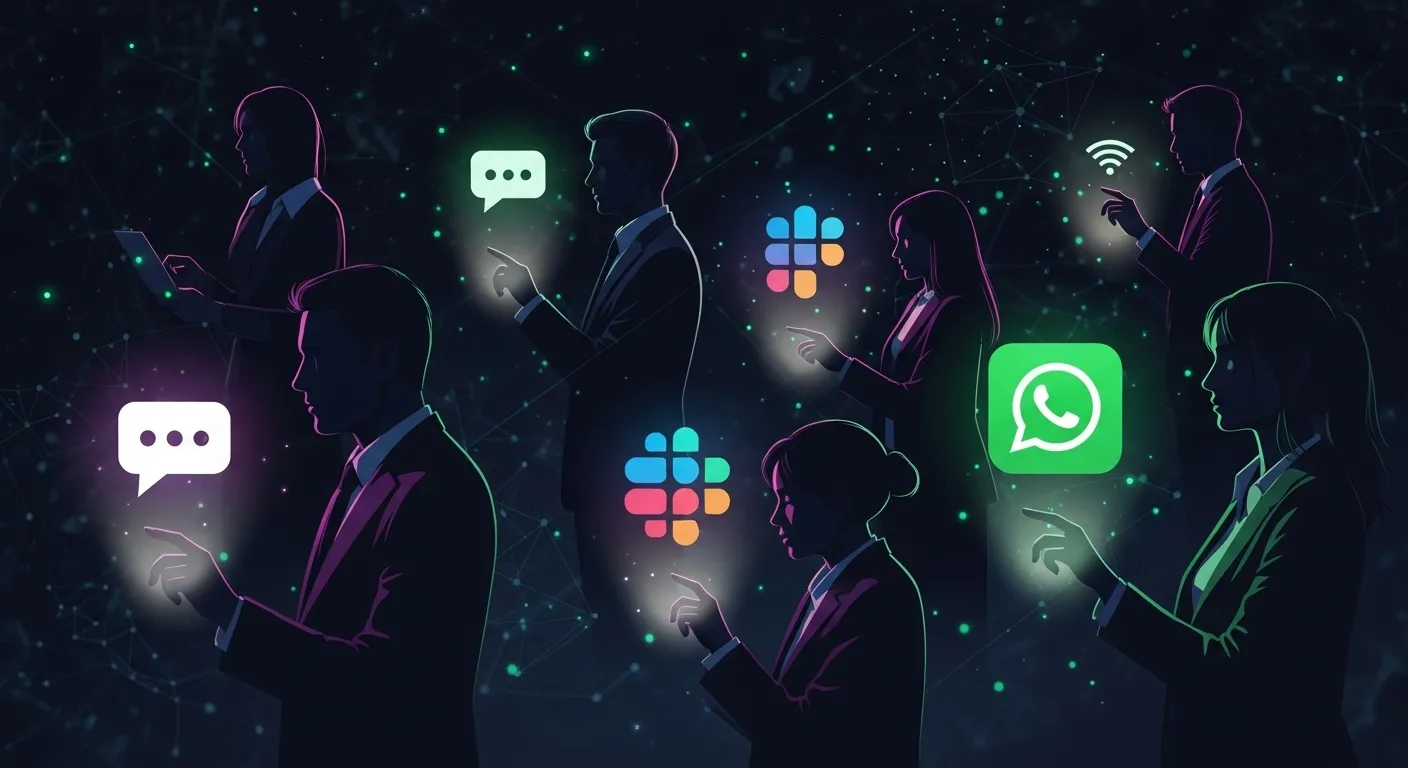
If advanced targeting is about precision and thought leadership is about trust, then dark social is about everything happening in the shadows while your attribution dashboard looks clueless. It’s the LinkedIn equivalent of being at a party where someone says, “Oh, I heard about you from a friend”—but you’ll never know who that friend was.
Marketers in 2025 are finally admitting what they’ve quietly known for years: some of the best leads don’t come from ads you can track. They come from private conversations, unseen shares, and invisible influence. Welcome to the world of dark social.
5.1 What is Dark Social?
Dark social sounds like a secret society where marketers wear cloaks and chant about CTRs, but it’s actually much simpler. It refers to all the content sharing, referrals, and conversations that happen off-platform or in private spaces—the ones analytics tools can’t trace.
Think about it:
-
A VP screenshots your LinkedIn post and drops it in a Slack channel.
-
A CMO shares your case study link in a WhatsApp group of peers.
-
A buyer quietly emails your post to their team, asking, “Should we look into this vendor?”
None of this shows up as “LinkedIn referral traffic” in your dashboard. But it’s happening all the time, and it’s driving serious pipeline.
5.2 How Dark Social Impacts LinkedIn Lead Gen
Here’s the kicker: your LinkedIn strategy fuels dark social even when you can’t measure it directly.
The Ripple Effect of Quality Content
That thoughtful post on AI in supply chain management? Maybe it only gets 50 likes, but three of those readers screenshot it and share internally. Two weeks later, you get an inbound demo request from a company you’ve never targeted. That’s dark social at work.
Why Attribution Models Struggle
Attribution models are built for neat, linear buyer journeys: ad click → form fill → sale. But B2B decisions are messy. Dark social is the invisible thread weaving through these messy journeys, making attribution reports look like Swiss cheese.
Private Groups and DMs
In 2025, private communities are exploding. Whether it’s Slack workspaces, Discord servers, or LinkedIn DMs, professionals are constantly sharing content behind closed doors. If you’re producing high-value insights, chances are your work is circulating in ways you’ll never see.
5.3 Strategies to Leverage Dark Social
So, how do you play the dark social game when you can’t measure every move? You lean into shareability, signals, and community.
Create Share-Worthy Content
The golden rule: if it’s not worth sharing in a group chat, it’s not fueling dark social.
-
Punchy frameworks and “how-to” guides.
-
Relatable memes or humor with professional insight.
-
Strong POV posts that spark debate.
Think of every post as something you’d want to send a colleague with the subject line: “This is exactly what we were just talking about.”
Track Indirect Signals
You may not see the share, but you’ll feel the ripple:
-
Sudden spikes in branded search traffic.
-
Inbound DMs that start with, “Someone recommended you.”
-
Higher-than-average event sign-ups without paid promotion.
These aren’t accidents—they’re dark social breadcrumbs.
Encourage Private Community Discussions
Marketers in 2025 are smart enough to meet dark social where it lives. That means:
-
Hosting private LinkedIn Groups 2.0 that are actually valuable (not just self-promo dumps).
-
Building Slack/Discord communities where your audience already hangs out.
-
Facilitating peer-to-peer conversations that naturally put your brand in the mix.
5.4 Dark Social + Thought Leadership
Here’s where the magic happens: dark social supercharges thought leadership.
Thought leaders don’t just post content—they spark conversations that travel off-platform. A sharp insight, a hot take, or a useful framework gets copied, pasted, and whispered about in private circles. That hidden influence is often what tips buying committees toward one vendor over another.
Case Example
A mid-sized SaaS company posts a LinkedIn article on reducing cloud costs by 40%. It gets decent engagement. But behind the scenes, that article is shared across three CIO Slack groups. Two months later, three enterprise accounts reach out “after hearing good things” about the company—none of which show up in attribution reports.
That’s dark social at its finest: invisible in analytics, invaluable in pipeline.
The Takeaway
Dark social may be invisible, but ignoring it is like ignoring gravity. It’s shaping how buyers talk, decide, and act on LinkedIn in 2025. The smartest marketers don’t waste time obsessing over pixel-perfect attribution—they focus on creating content and conversations so good, they can’t help but spread in the shadows.
In other words: stop chasing dashboards, start chasing influence. Your next deal might already be brewing in a WhatsApp group you’ll never be invited to.
Integrating the Three Pillars: A 2025 LinkedIn Lead Gen Framework
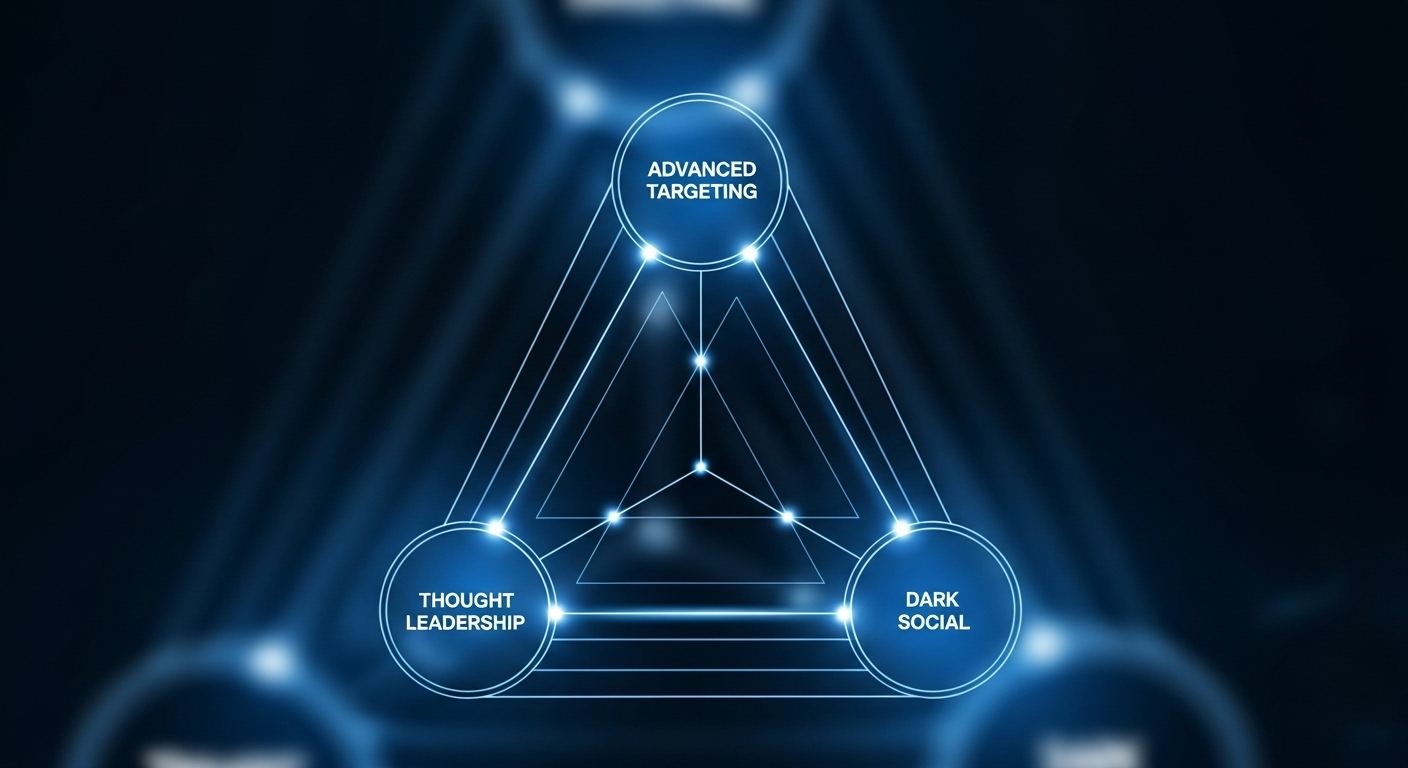
So far, we’ve explored the three big shifts redefining LinkedIn lead gen in 2025: advanced targeting, thought leadership, and dark social. Each one on its own is powerful, but when you stitch them together into a unified framework? That’s when LinkedIn stops being “just another channel” and becomes the heartbeat of your entire B2B pipeline.
Think of it like a three-course meal: targeting gets the right guests to the table, thought leadership serves the main dish of trust, and dark social sends them home raving to their friends. Skip one, and the experience feels incomplete.
Here’s how to put it all together.
Step 1: Define ICP with AI-Driven Targeting
Start by using LinkedIn’s advanced targeting tools to map your ideal customer profile (ICP). Don’t settle for broad strokes like “IT Directors in North America.” Instead, combine AI insights, CRM integrations, and intent signals to zero in on:
-
Buyers at accounts showing in-market behavior.
-
Professionals on career trajectories toward decision-making roles.
-
Companies experiencing triggers (funding, tech adoption, hiring sprees).
This ensures you’re not just fishing in the right pond—you’re casting where the fish are already biting.
Step 2: Build Trust with Consistent Thought Leadership
Once you’ve identified your audience, you need to give them a reason to actually care about you. That’s where thought leadership comes in.
-
Publish value-first content: insights, frameworks, or stories your audience can use immediately.
-
Blend formats: long-form posts for depth, carousels for clarity, video for relatability.
-
Humanize expertise: let leaders and employees share real experiences, not sanitized marketing fluff.
The goal? By the time your advanced targeting puts an ad in front of a prospect, they’ve already seen your CEO, CMO, or subject matter experts as trusted voices in their feed.
Step 3: Amplify Reach with Dark Social
Here’s where most companies stop—and where smart ones go further. Thought leadership doesn’t just sit on LinkedIn; it travels. By leaning into dark social, you multiply your reach in invisible but impactful ways.
-
Craft content worth sharing in private Slack/WhatsApp groups.
-
Track indirect signals like branded search spikes and inbound DMs.
-
Encourage employees and advocates to circulate content in their own communities.
Dark social is the silent amplifier of your targeting and thought leadership. Without it, your reach stays flat. With it, your influence grows exponentially—even if the analytics can’t capture it.
Practical Workflow Example
Let’s say you’re a fictional B2B SaaS company selling AI-driven security software. Here’s how you’d use the framework:
-
Targeting: Identify security directors at recently funded fintech companies who engaged with AI content in the last 90 days.
-
Thought Leadership: Publish a post from your CTO on “Why AI Security is the Next Compliance Battleground,” paired with a carousel framework on implementation best practices.
-
Dark Social: The post gets shared in a private CISO Slack group, sparking a conversation. Two members DM your sales team for a demo.
On paper, attribution says “organic inbound.” In reality, it was the framework at work: targeting → thought leadership → dark social.
The Takeaway
Advanced targeting ensures precision. Thought leadership builds credibility. Dark social amplifies influence. Together, they form a 2025 LinkedIn lead gen framework that doesn’t just generate leads—it generates momentum.
Because here’s the truth: in a trust-first, AI-driven B2B landscape, no single tactic wins alone. But when these three strategies are woven together, you stop chasing leads and start creating a pipeline that practically builds itself.
Challenges and Future Trends
If all this sounds like a LinkedIn utopia—AI targeting, thought leadership pipelines, dark social magic—let’s pump the brakes. The road to LinkedIn lead gen glory in 2025 isn’t without potholes. Marketers face a few serious challenges that will shape how the platform (and our strategies) evolve over the next few years.
Privacy Regulations & Ethical Targeting
First up: privacy. Regulators worldwide are tightening the reins on how platforms use personal and behavioral data. While LinkedIn’s AI-driven targeting feels like a marketer’s dream, it’s also under scrutiny. Companies need to balance precision with compliance—or risk the nightmare of fines and PR disasters.
In practice, that means ethical targeting will become the differentiator. Transparency in how you use data, and being clear about value exchange (“here’s why we’re reaching out, here’s what’s in it for you”), will separate trusted brands from the shady ones.
The Algorithm Balancing Act
LinkedIn’s algorithm is constantly evolving, and marketers live in its shadow. In 2025, the tension between paid vs. organic reach is sharper than ever. Organic posts can still perform incredibly well (especially thought leadership), but LinkedIn is clearly nudging more brands toward ad spend. The challenge? Keeping your content authentic while navigating a pay-to-play landscape.
AI-Generated Content & The Authenticity Risk
Generative AI is a blessing and a curse. On one hand, it’s fueling personalization, insights, and even creative production. On the other, it’s creating an authenticity crisis. If everyone’s posts sound like they were churned out by the same AI copy machine, audiences will tune out fast.
The winners will be those who blend AI efficiency with genuine human perspective—where content feels polished but still carries the unique fingerprints of real experience.
The Future: LinkedIn as a Creator-First Platform
Looking ahead, the writing’s on the wall: LinkedIn is shifting toward being a creator-first B2B platform. That means individuals, not company pages, will drive reach, influence, and trust. Expect more creator tools, better analytics for personal branding, and a stronger ecosystem that rewards people who build communities, not just campaigns.
For brands, this is both a challenge and an opportunity: invest in empowering your employees to shine, or risk becoming invisible in the feeds of tomorrow.
The Takeaway
The future of LinkedIn lead gen isn’t just about mastering tools—it’s about navigating regulation, algorithms, authenticity, and cultural shifts. Companies that adapt early will ride the wave. Those that resist? They’ll find themselves shouting into the void while the competition quietly wins the conversations that matter.
Conclusion
If there’s one thing 2025 has made clear, it’s this: LinkedIn isn’t just surviving—it’s thriving as the #1 B2B lead generation platform. But the rules of the game have changed.
The old playbook of blasting cold InMails, relying on vanity metrics, and treating LinkedIn like a glorified phone book? That’s dead. The winners in today’s AI-driven, trust-first landscape are the businesses that embrace precision, authenticity, and influence.
Let’s recap:
-
Advanced Targeting gives you sniper-level precision, ensuring you’re speaking to the right people at the right time.
-
Thought Leadership builds the trust and credibility that open doors algorithms never could.
-
Dark Social amplifies your reach in invisible but powerful ways, spreading your influence far beyond what analytics dashboards can measure.
Put them together, and you’ve got a framework that doesn’t just generate leads—it builds momentum. A self-sustaining pipeline where prospects don’t feel chased, they feel drawn in.
The choice for businesses in 2025 is simple: adapt or get left behind. Those who cling to outdated tactics will be stuck shouting into the void, while those who master targeting, trust, and hidden influence will dominate B2B pipelines.
Here’s the final thought: Success on LinkedIn has never been about hacking the algorithm—it’s about earning attention, building trust, and sparking conversations where they matter most. Do that, and you’re not just playing the LinkedIn game in 2025—you’re winning it.