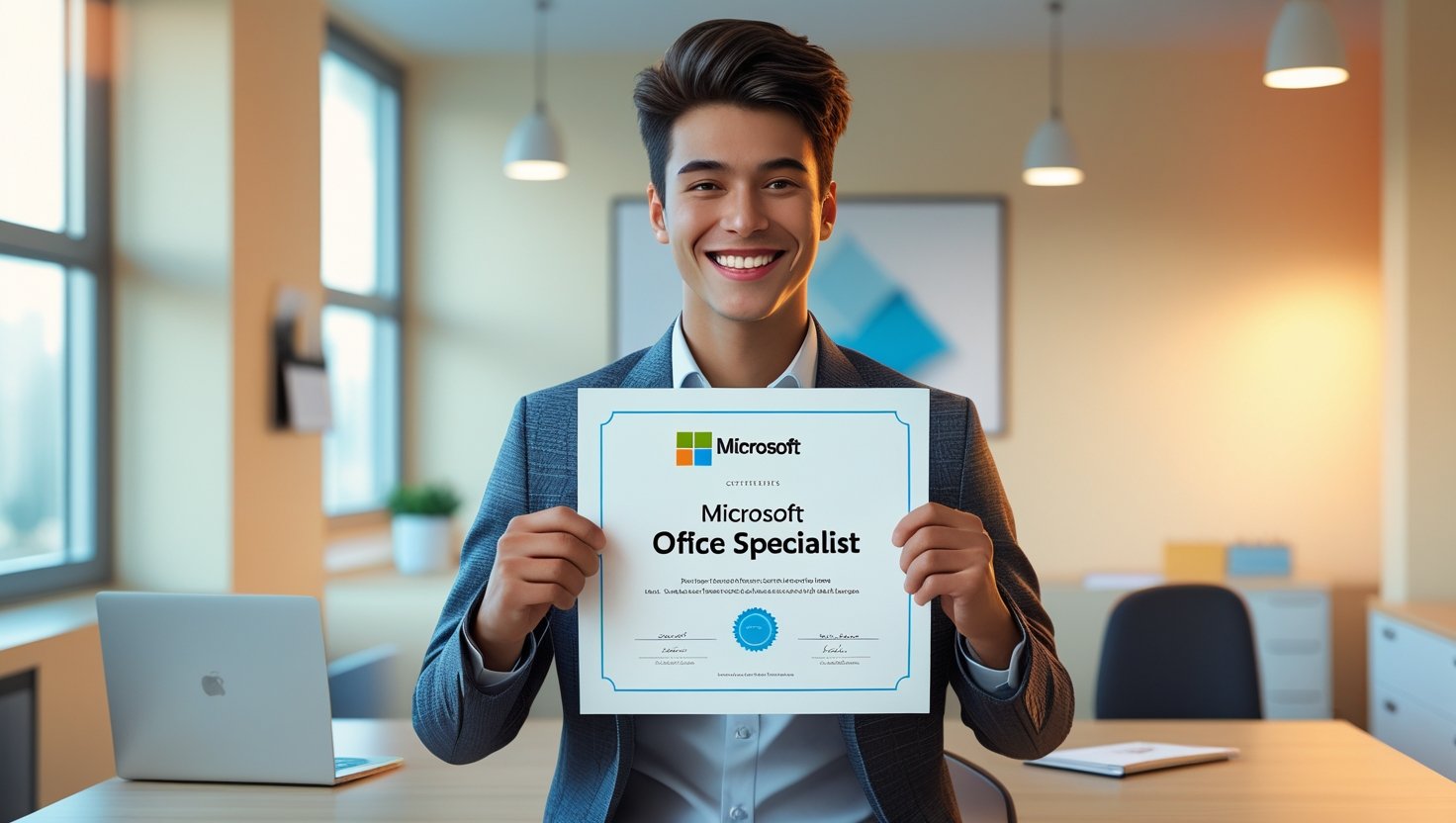
In today’s job market, proficiency with digital tools is practically a given – 92% of jobs now require some level of digital skill. At the heart of this trend, the Microsoft Office suite remains ubiquitous. In fact, a recent Canadian labor-market report found that Office tools (Excel, Word, Access, etc.) were mentioned in over 20% of job postings. These numbers mean that being able to use Excel to crunch numbers or Word to write reports isn’t just nice-to-have – it’s often a core requirement. Even an award-winning computer instructor observed that a seemingly “mundane” MOS skill – like quickly setting up a table in Word – once helped create a life‑saving poster in a missing-persons case.
So what does this mean for job seekers and career changers? Simply put: Microsoft Office Specialist (MOS) certification can serve as a powerful differentiator on your résumé. It’s a globally recognized credential that proves employers you can do the work – beyond just saying you’ve used these programs. In the sections below, we’ll explore major trends in how MOS certification helps people get hired and advance their careers, focusing on real examples in finance, marketing, and beyond. You’ll read about students landing their first jobs, professionals earning promotions, and career-changers pivoting into new roles – all leveraging MOS skills.
Standing Out in the Job Market with MOS Certification
Because nearly every workplace uses Office apps, being certified provides tangible proof of your abilities. Employers often prefer candidates who can hit the ground running with key software. In fact, one career blog notes that Office skills rank among the top in-demand workplace abilities. Certification signals to hiring managers that you not only know how to use Excel or Word, but that you took the initiative to validate your skills.
- Resume Differentiator: Think of MOS certification like a “badge of honor” on your résumé. Instead of merely claiming “proficient in PowerPoint,” you can legitimately say “Microsoft Office Specialist certified,” which instantly conveys expertise. As Kathleen Davisson, chair of curriculum at the University of Denver’s business school, explains: “When they’re competing against other students from other business schools, if all things are equal, [MOS] is a differentiator for our students”. In other words, even among talented candidates, the certification can make you stand out.
- Employer Recognition: The MOS credential is recognized worldwide by employers. Hiring managers see it and understand exactly what it means: this person has proven skills. In one survey by a professional training company, Microsoft Office skills were listed as the third-most desired skill in growing job listings (behind only communication). Today, that demand is even stronger. Having a MOS certification shows you’re committed to mastering these common workplace tools.
- Confidence and Credibility: Beyond the résumé, certification builds your confidence and credibility. Many certified individuals say they feel more self-assured tackling complex tasks. As one MOS-certified student put it, she could now “help people around [her] understand Microsoft programs and use them to their full extent”. This confidence not only improves performance on the job but also signals to employers that you’re ready for responsibility.
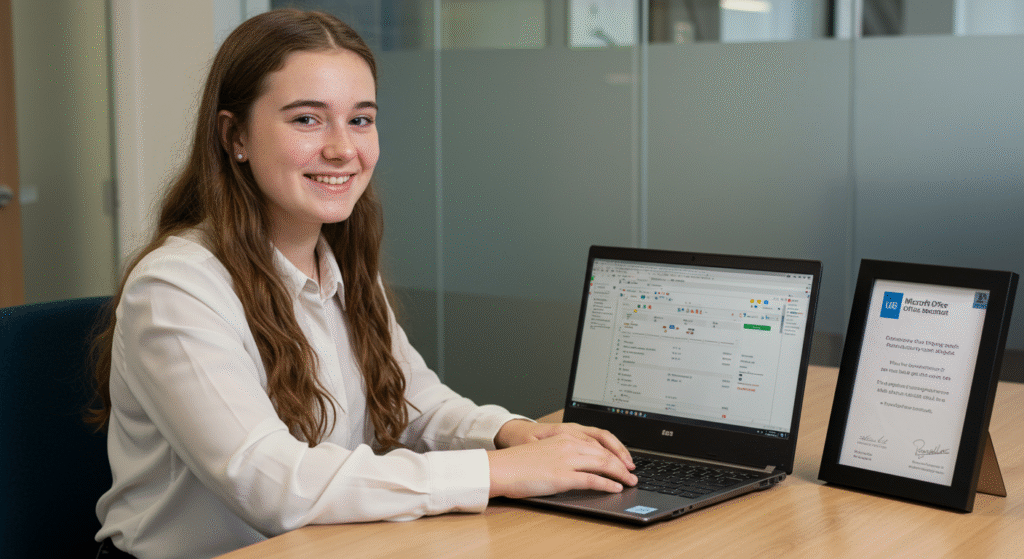
Consider the story of Ashley Masters, a senior in high school. Ashley earned nine MOS certifications by her junior year. She says these credentials “changed my life” – not least because they helped her land a full-time administrative job at age 15. After winning a national Excel competition, she posted the achievement on social media, and a local construction company hired her to train their staff in Excel. Within two weeks, they promoted her to a full-time role.
“My MOS certifications helped me obtain a full-time job at the age of 15,” Ashley explains, “and helped me find a career path I’m passionate about: business finance”. Her story is a striking example: a hiring manager saw her certifications and internship in finance as evidence she could manage real business data – even as a teenager.
Excel Mastery Opens Doors in Finance and Data Careers
In finance, accounting, and data analysis roles, Excel expertise is often a must-have. Financial analysts, accountants, and data-driven professionals routinely use spreadsheets for modeling, forecasting, and reporting. Today’s employers expect candidates to know more than just basic formulas. They want people who can whip up pivot tables, automate tasks with macros, and build clear data visualizations.

Ali Kahn holds a medal at the national MOS (Microsoft Office Specialist) Championship. Ali’s story shows how early Excel mastery can lead to big tech internships and career opportunities.
For instance, Ali Kahn – shown above after winning a national MOS competition – parlayed his Office skills into an internship at Amazon. As a college junior majoring in computer science and data science, Ali attributes much of his success to MOS certification. He notes, “My recruiter was really interested in my certifications,” and that the certifications “really helped” him secure his software engineering internship. Ali also points out that across industries there’s “a huge demand for students who know Microsoft Suite, especially Excel”. From organizing complex tables to managing databases, the Excel abilities he developed through MOS put him ahead in technical interviews.
In practical terms, finance jobs see MOS as proof of key skills. For example, university career guides explain that accountants “rely on Excel for financial analysis, budgeting, and forecasting,” and that “advanced knowledge of Excel functions and formulas is essential”. Imagine John, a recent college grad applying for an analyst role: when he listed “MOS: Excel Expert” on his résumé, hiring managers took notice, understanding immediately that he could handle large datasets and build the financial models their teams needed. Indeed, one hiring manager told students at his orientation that Excel know-how was a top criterion.
Key Takeaways for Finance Roles:
- Employers in finance often assume new hires will know Office — certification proves you really do.
- Excel skills (pivot tables, VLOOKUP, macros) are crucial for financial modeling and reporting.
- Real Story: Ali Kahn’s MOS-influenced internships and projects with complex spreadsheets landed him a standout position at Amazon.
- Stats: A policy report notes that Office skills appear in over 20% of job listings, making them even more common in finance postings.
By mastering Excel, many professionals report landing jobs or promotions they wouldn’t otherwise. Even at an internship with a mining company, a student credited his MOS preparation when he said he was doing projects “they hadn’t done in-house before” and tackling “a lot of work with Excel” involving complex formulas. In short, Excel certification can turn a nice-to-have into a job requirement that you’ve already checked off.
PowerPoint, Word and Marketing: Communicating with Confidence

While finance is famously tied to spreadsheets, marketing and communications careers lean heavily on Office tools too. Whether it’s pitching a campaign, writing proposals, or building client reports, marketing professionals use Word for documents, Excel for data tracking, and especially PowerPoint to craft persuasive presentations. Strong Office skills allow a marketer to work faster and present ideas more professionally – an advantage during competitive hiring processes.
- Marketing Edge: MOS certification covers PowerPoint, which is a marketer’s best friend for visuals. Knowing how to design compelling slides (animations, graphics, charts) means you can build campaign decks that catch a client’s eye. One training site notes that certified employees can “create killer presentations, perfect spreadsheets, and professional documents” – exactly the blend marketers need.
- Data Storytelling: Marketers increasingly rely on data (e.g. campaign metrics, social media analytics) to shape strategy. Certified Excel skills let you analyze this data yourself instead of outsourcing it, a huge plus. For example, a marketing coordinator might highlight on her résumé that she’s a “MOS: Excel Specialist” who tracks ROI and forecasts growth with confidence.
- Document Crafting: In advertising and PR, polished documents (press releases, brochures, brand guidelines) are commonplace. Word proficiency ensures those are flawless. As one MOS blog points out, certified people often become “the go-to person for all things Office” in their workplace – a coveted reputation for any team member.
A true-to-life composite: Emily was a recent grad who majored in communications. She sat at countless interviews with other similar candidates, but what set her apart was showing the recruiter her PowerPoint and Excel badges on LinkedIn. The hiring manager for a marketing agency later told her, “Your Office certifications convinced us you can hit the ground running on client projects.” This allowed Emily to skip extra training and join the team immediately designing promotional materials and tracking campaign results.
A marketing team meeting. Skills in Office apps help marketers analyze data and communicate strategy effectively.
Marketing roles thus benefit from MOS in terms of presentation skills and data handling. In fact, a career guide explicitly mentions Marketing Professionals as a key field: “Marketing professionals use Office tools to create promotional materials, manage campaigns, and analyze market data,” often using PowerPoint to pitch strategies and Excel to track performance. When recruiters see “MOS: PowerPoint Specialist” or “MOS: Word and Excel,” they know that candidate can produce polished work and manage the numbers behind marketing insights.
Administration and General Business: The Backbone of Operations
Not every Office Specialist ends up in finance or marketing. Many find success in administrative, human resources, or office management roles, where Microsoft Office is literally part of the job description. Administrative Assistants, for example, “use Microsoft Office daily to perform tasks such as scheduling, document preparation, and communication management”. MOS certification in Word and Outlook is often cited as especially valuable for such positions.
- Admin Professionals: If you’re aiming for an office manager or EA role, MOS can be your ticket. One blog notes that Office certifications make you the “go-to person” for document templates, advanced email management, or coordinating data across teams.
- HR and Operations: These roles frequently involve generating reports, creating employee handbooks (Word), and organizing data (Excel). Having MOS badges assures employers you’ll handle these tasks expertly.
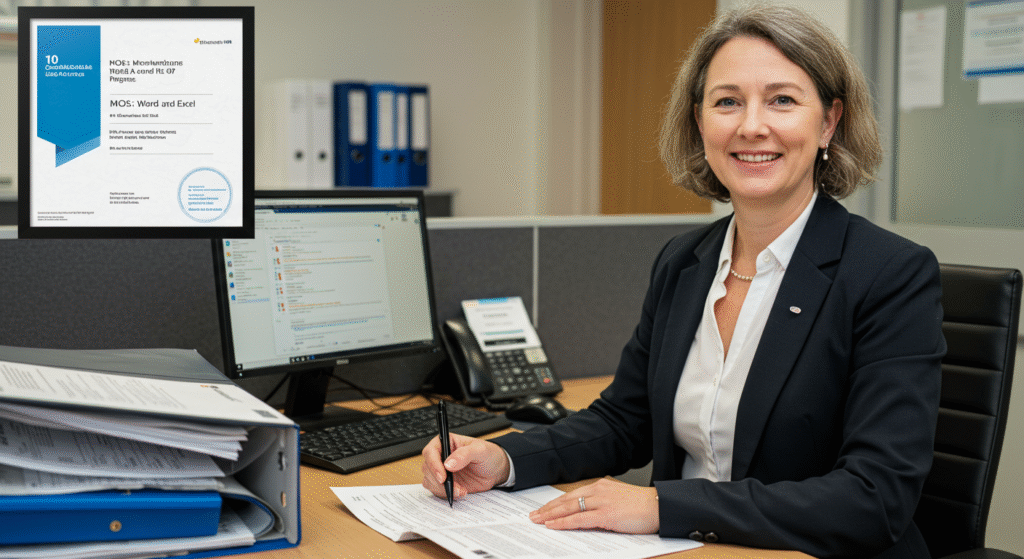
For instance, Sabrina R., who was enrolled in Arizona’s workforce retraining program, credits her MOS certification with landing her a full-time administrative job. On Arizona’s official career site she simply states: “I obtained my Microsoft Office Specialist certification and was hired full time”. Sabrina’s story reflects a common path: gaining certification, then immediately stepping into a stable role. Many workforce development agencies now highlight MOS as a key credential for office jobs, given stories like hers.
Even roles like teaching and data analysis intersect with Office skills. Teachers might need to manage grades in Excel or craft lesson slides in PowerPoint. A career guide lists Teacher as an example MOS career path, noting that Excel and PowerPoint “are particularly useful for organizing grades and creating engaging class presentations”. Data analysts – the ultimate spreadsheet users – are another obvious fit: they “use Excel and Access to collect, analyze, and interpret data”. So whether you’re filing paperwork or analyzing datasets, Office mastery is an asset.
Stories of Students and Career Changers
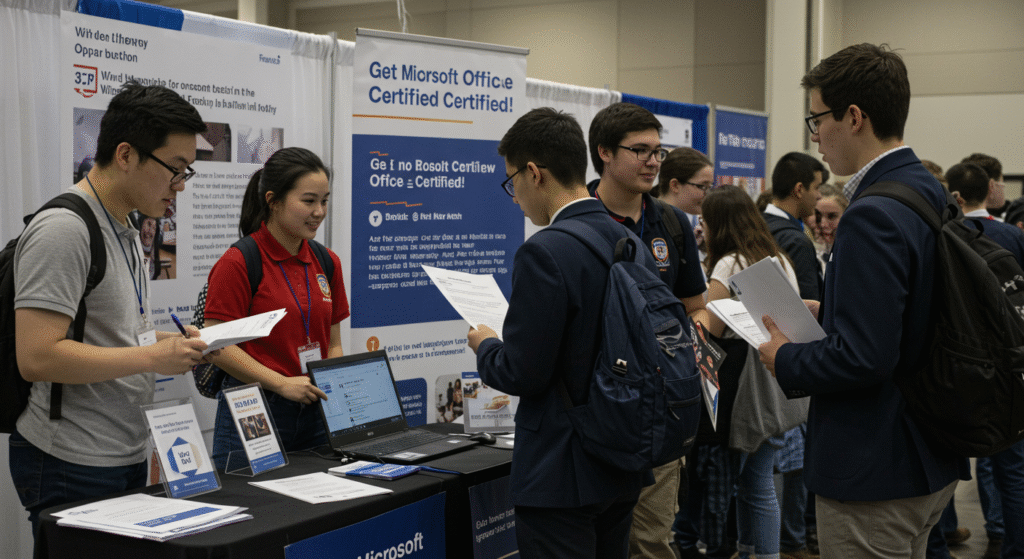
One of the most inspiring trends is how MOS certification helps young people and career changers alike. Schools and training programs are adopting MOS to prepare students for real jobs. High schools in Washington and Utah, for example, have integrated MOS into their curriculum with remarkable results: students “graduate with increased marketability, confidence, and the skills needed to succeed in the workplace”. In colleges, some business programs require Office certification for exactly this reason.
Ali Kahn, pictured with his MOS championship plaque, exemplifies how strong Office skills (especially Excel) can propel students from classroom competitions to tech careers.
As discussed, Ali Kahn’s trajectory shows how a student’s MOS success can springboard into industry internships. Likewise, many MOS champions start college and jobs earlier and stronger than their peers. Ashley Masters, the 15-year-old prodigy mentioned above, is a great example of a student leveraging certification for early employment. These stories aren’t unique outliers: MOS competitions and school programs around the world produce dozens of similar success tales every year.
For adult learners, MOS can be a fast track to a new career. Picture Carlos, a retail worker who wanted to move into office work. He decided to earn MOS certifications in Excel and Word during evening classes. When he applied for office jobs, he proudly mentioned them in his interviews. Employers were impressed that he had taken concrete steps to improve his skills. Within months, Carlos landed a position as a data entry specialist, whereas before he had struggled to get any callbacks. (This kind of story plays out in many communities: training programs often note that women and career-changers in shelters or correctional facilities go on to get jobs after MOS training.)
MOS has also helped professionals advance their existing careers. For example, an accountant might prepare for promotion by getting an Excel Expert certification, showing management he’s ready for larger projects. A marketing assistant might earn MOS in PowerPoint to become the department’s presentation guru and win a leadership role. One MOS graduate said that after certification she became “the employee that people turn to when they need help with a tricky Excel formula or [a] PowerPoint presentation”. In this way, MOS is not just for entry-level hires; it’s also a credential that mid-career professionals can use to demonstrate growth.
Key Points for Career Changers and Students
- Broad Applicability: Office certification isn’t limited to one industry. Whether you’re in healthcare, education, finance, or marketing, proficiency in Office tools is useful.
- Educational Programs: Many community colleges and workforce centers embed MOS training as part of professional development, citing higher job placement rates for their students.
- Confidence Booster: Multiple success stories emphasize how getting certified builds self-confidence – which in turn can make job interviews and networking easier.
- Real Story: Sabrina R. (Arizona) – “I obtained my MOS certification and was hired full time”, illustrating how an adult learner’s MOS can translate directly into employment.
- Student Competitions: Success in MOS competitions often leads to scholarships or internships (as in Ali’s case) and can direct students toward IT or business careers.
Industry Trends and the Future of Office Certification
The demand for basic Office skills remains high even as technology evolves. In fact, a 2023 analysis highlights that while cutting-edge skills like AI are growing quickly, “general office skills” (like Office proficiency) are still the most sought-after in the market. Employers value the combination of digital and soft skills: being tech-savvy and communicative. As one economist puts it, digital and interpersonal skills “commonly co-occur” in job postings.
Remote and Hybrid Work: The rise of remote work makes Office skills even more relevant. Tools like Word, Excel, PowerPoint, and Outlook are the glue that holds distributed teams together. Being certified can help assure a virtual employer you won’t struggle to onboard.
Global Recognition: Remember that MOS is recognized internationally. If you’re considering opportunities abroad, having this credential means hiring managers from Toronto to Tokyo understand your skill set. For example, Certiport (the MOS administrator) has noted global success stories of MOS learners. Students from Mexico to India report that their MOS certifications gave them confidence to pursue careers in fields like technical sales, banking, and beyond.
Career Ladder: Finally, MOS certification can be a stepping stone to higher certifications and career paths. Microsoft now offers role-based certifications (like for data analysis or project management) that build on MOS skills. By first mastering Office, you lay the groundwork for advanced learning in analytics (Power BI), cloud services, or even software engineering (as Ali’s story suggests).
Conclusion
Microsoft Office Specialist certification isn’t just a checkbox on a résumé – it’s a launchpad for careers across fields. As we’ve seen, certified individuals have landed jobs in finance, marketing, IT, education, and more, often faster than their peers. Their stories share common lessons: take initiative, prove your skills, and let the certification speak for you.
Whether you’re a student just starting out, a career-changer looking for a fresh start, or a professional aiming to climb higher, a MOS credential can be a concrete step toward your goals. These stories demonstrate that even in 2025, the ability to create an insightful Excel model or a polished PowerPoint is highly valued – and verifiable through certification. If you have your own MOS success story or career tip, we’d love to hear it! Please share your experiences or questions in the comments below. Your journey could inspire the next Office Specialist to turn certification into their next big opportunity.