Introduction: Why Are We Still Talking About C in 2025?
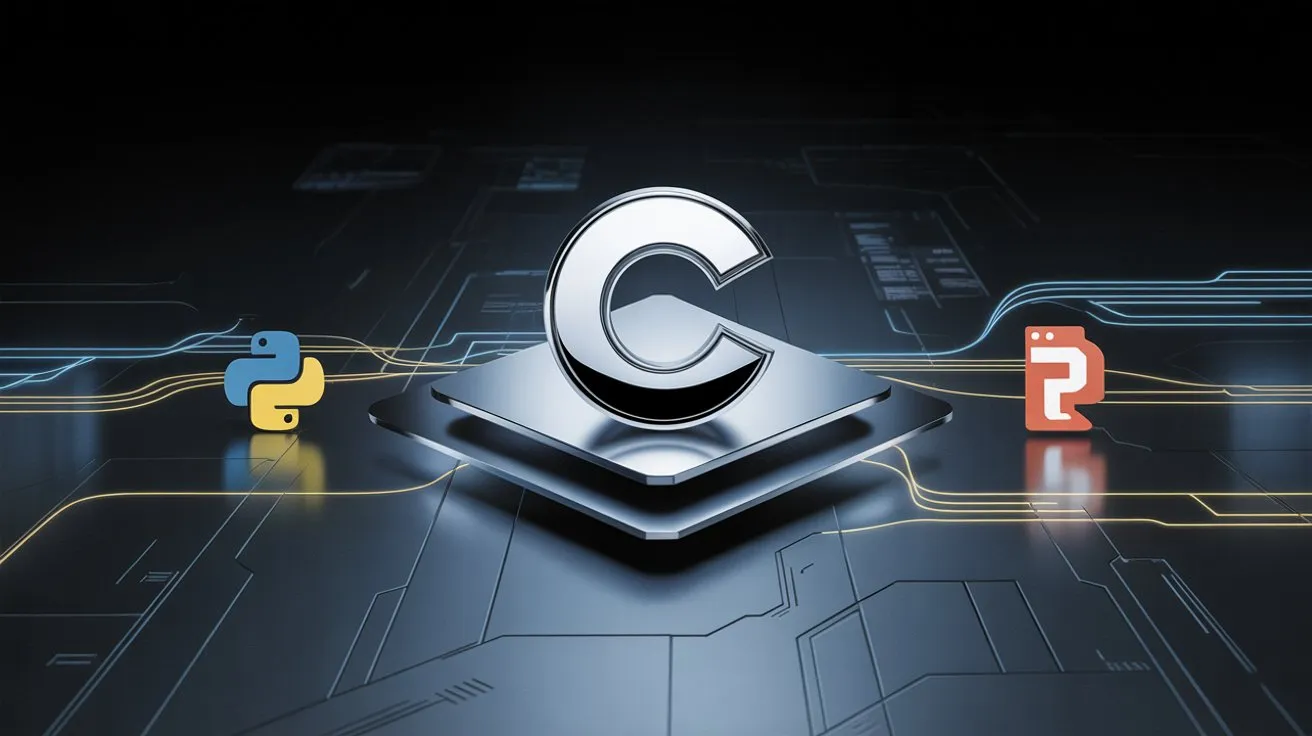
It’s 2025, and you’d think C programming would be a relic of the past, sitting in the dusty corners of tech history with floppy disks, dial-up tones, and Netscape Navigator. But nope. C is still here, still relevant, and still powering the world in more ways than most people realize. In fact, C’s staying power is kind of legendary—like the Nokia phone of programming languages. Unflashy? Maybe. Unkillable? Absolutely.
If you’re a student picking your first language, a seasoned developer wondering when to reach for C instead of Rust or Python, or a systems engineer dealing with embedded tech, you’ve probably asked yourself: “Is C even worth learning or using anymore?” Spoiler alert: It absolutely is. And not just for nostalgia.
In this blog, I’ll walk you through why C continues to matter in 2025—with practical examples, historical insights, performance comparisons, and a friendly breakdown of when to use it instead of flashier modern languages like Rust or Python. Whether you’re coding firmware or just trying to write leaner Python, this guide will give you clarity (and maybe even some laughs).
1. C Is Still the Backbone of Operating Systems and Embedded Systems
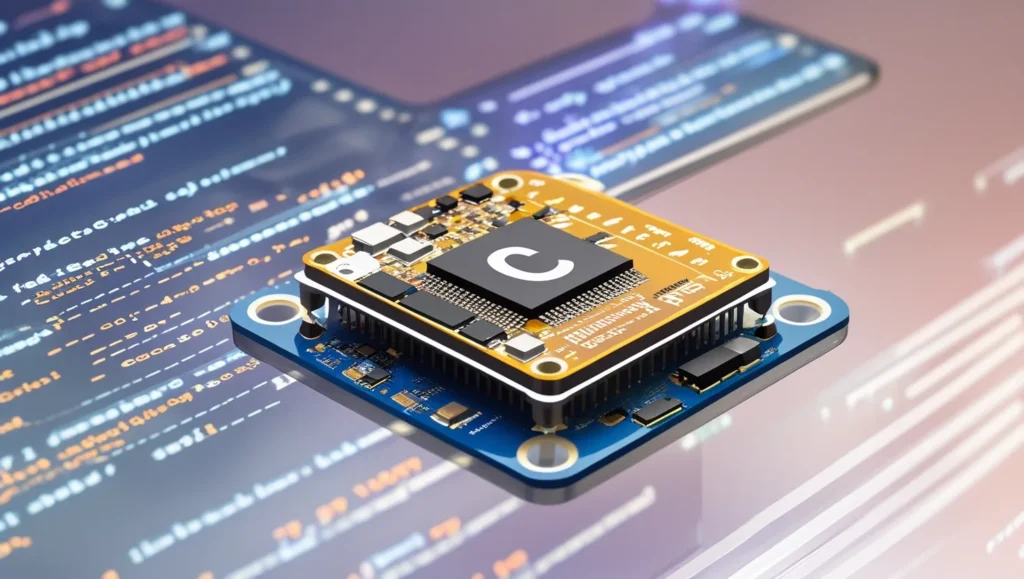
Let’s start with the obvious: C is the language of the machine. And in the realms where control and performance are critical, it’s still the default choice.
You may not see C when you use your devices, but behind the scenes:
- Linux, Windows, macOS kernels? All C.
- Real-time operating systems (RTOS) for satellites and drones? Mostly C.
- Firmware in IoT devices, routers, smart thermostats? Yep, C again.
Why? Because C gives you direct hardware access with low-level memory manipulation and minimal overhead. While Rust is growing in popularity thanks to its safety guarantees, C still reigns supreme in environments where you need tiny codebases, fast compile times, and decades of proven stability.
Real-World Example: The Mars Rover’s core firmware is written in C. Would you want to rewrite that in a brand-new language?
Takeaway: If you’re working close to the metal (hardware drivers, embedded firmware, custom chips), C is still your go-to language. It’s not just about power—it’s about trust.
2. C Is Fast—Blazing Fast (And Predictable)
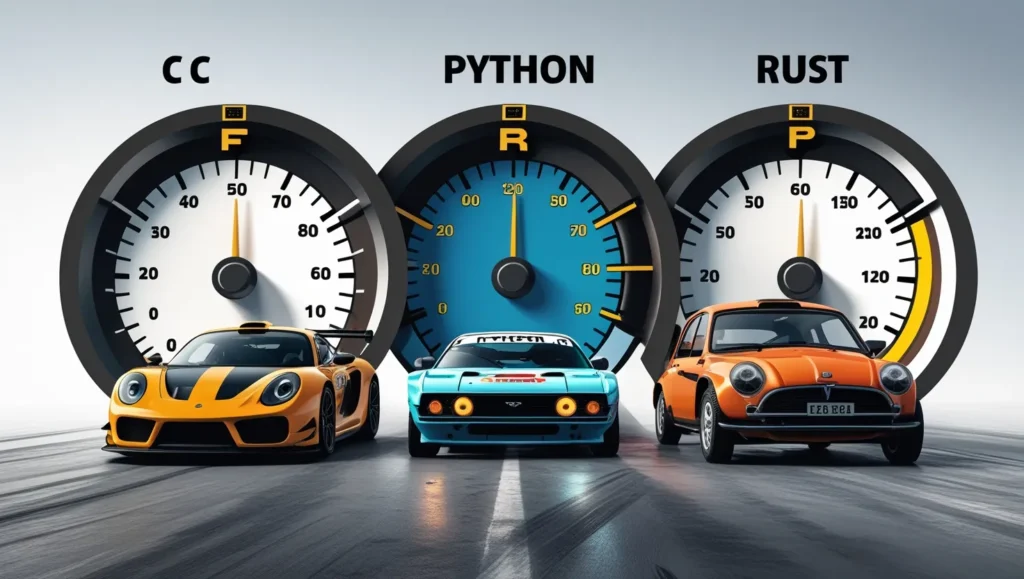
Let’s talk speed. C is like a race car without seatbelts—lightweight and dangerously fast. There’s no garbage collection, no virtual machine, no bloated runtime. Your code compiles directly to machine instructions. That means:
- Tiny binary sizes
- Zero startup delay
- Deterministic performance
This is crucial in domains like:
- Real-time systems
- Game development
- Graphics engines
- High-frequency trading
- Cryptographic libraries
Example: A real-time audio processing app may require microsecond or even nanosecond-level timing. C can handle this without choking on memory overhead or runtime exceptions.
Takeaway: Use C when performance is non-negotiable and timing matters. If you can’t afford a delay, you can’t afford to not use C.
3. C Is Portable and Cross-Platform Friendly
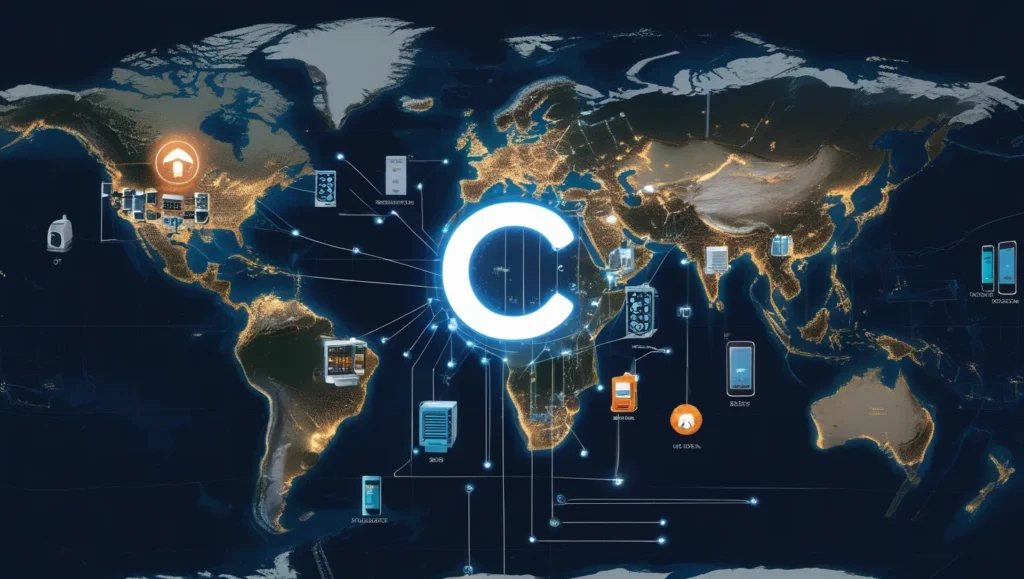
“Write once, compile anywhere.” Unlike Python, which depends on an interpreter, or Rust, which needs modern build systems, C simply requires a compiler—and there are C compilers everywhere.
C is used on:
- Mainframes
- Microcontrollers
- Smartphones
- Supercomputers
- Embedded Linux devices
And it’s often the first language ported to new hardware platforms. Because of its age and ubiquity, you can be sure that C has already been there, done that.
Example: Building a lightweight command-line tool that needs to run on Linux, Windows, macOS, and Raspberry Pi with minimal dependencies? C makes it ridiculously easy to cross-compile.
Takeaway: If you need ultra-portable code that works on nearly every device known to man (and a few still in space), C is the language to trust.
4. Legacy Systems Aren’t Going Anywhere

Despite all the innovation, most of the world runs on old code. Seriously.
C is deeply embedded in sectors like:
- Aerospace (NASA, Boeing)
- Telecom (network switches, base stations)
- Medical (MRI machines, pacemakers)
- Industrial automation (PLC controllers, robotics)
Rewriting all of this in a modern language would take decades, introduce risks, and cost billions. That means:
- Companies need C developers
- C expertise = job security
- Maintenance work is lucrative and important
Takeaway: Learning C can future-proof your career if you’re heading into industries with deep legacy footprints. Not all programming jobs are greenfield—and C developers are often the unsung heroes.
5. C Offers Total Control Over Memory (Which Is Rare These Days)
Modern languages abstract away memory to make life easier—and that’s great! Until you need more control.
With C, you get:
- Manual memory allocation (
malloc,free) - Pointer arithmetic (yeah, it’s tricky, but powerful)
- Stack vs heap management
This level of control is essential when:
- You’re working with limited RAM (embedded systems, sensors)
- You need consistent memory usage (real-time apps)
- You’re writing performance-critical code
Example: You’re building an app for an embedded device with only 16KB of RAM. Python would laugh in your face. C says, “Let’s get to work.”
Takeaway: When memory control is your top priority, C is still king. Knowing how to manage memory manually makes you a better coder in every language.
6. C Is Minimalistic and Understandable (Once You Get It)
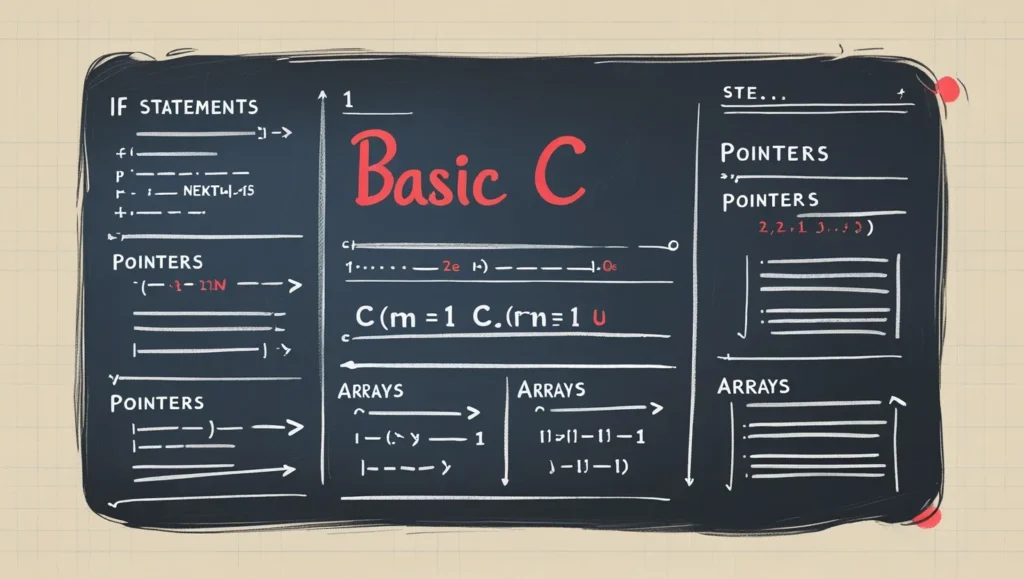
Python is beginner-friendly. Rust is safe. But C is honest.
It doesn’t hold your hand, but it doesn’t lie to you either. What you write is (almost always) what gets compiled. That transparency helps you:
- Understand memory layout
- Visualize the call stack
- Learn how variables and pointers work
It’s a minimalist language with just a handful of keywords, and no surprises. Great for learning:
- Data structures
- Algorithms
- File systems
- Compiler construction
Takeaway: Want to deeply understand what your code is doing under the hood? Learn C. It’s like learning manual before driving automatic—you appreciate both more.
7. The Ecosystem and Tooling Are Mature and Battle-Tested
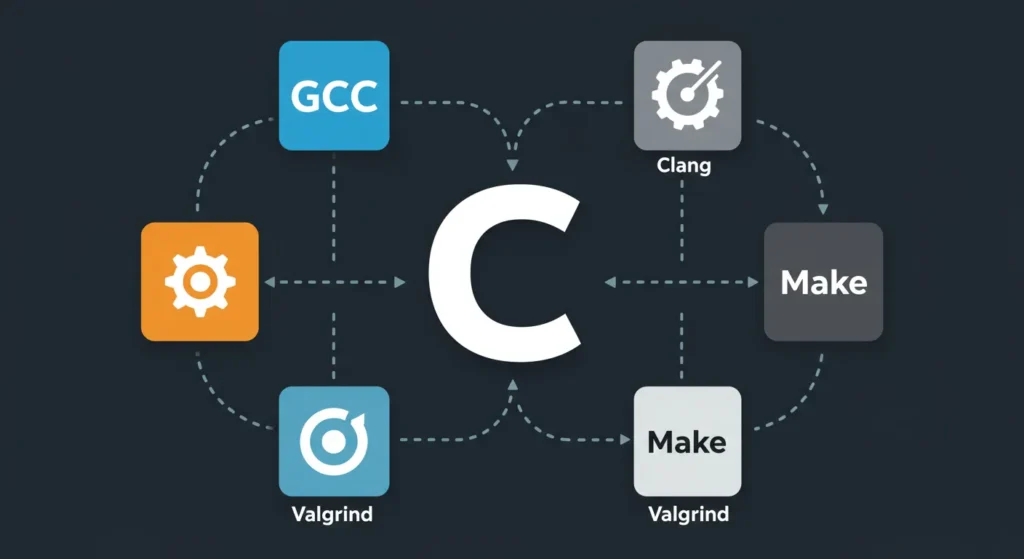
C has been around for over 50 years. That’s longer than the careers of many of today’s developers. And that maturity brings stability.
Tools that work flawlessly with C:
- GCC (GNU Compiler Collection)
- Clang
- Valgrind (memory debugging)
- GDB (debugging)
- Make/CMake (build systems)
Plus:
- A massive collection of well-maintained libraries
- Open-source projects you can study and contribute to
- Decades of community wisdom and documentation
Takeaway: If you want stability, proven libraries, and a massive knowledge base, C’s ecosystem delivers in spades.
So, When Should You Use C Over Python or Rust?
Let’s keep it practical. Here’s a cheat sheet:
| Use Case | Best Language |
|---|---|
| Teaching Programming Fundamentals | C |
| Scripting and Automation | Python |
| Memory-Safe System Programming | Rust |
| Embedded Systems | C |
| Machine Learning | Python |
| Performance-Critical Apps | C or Rust |
| Legacy Code Maintenance | C |
| Writing Device Drivers | C |
| Building Compilers | C or Rust |
| Reverse Engineering | C |
Bonus: Learning C Makes You Better at Python and Rust
This might sound ironic, but the best way to master high-level languages is to first learn a low-level one. C teaches you:
- How memory is managed (and mismanaged)
- What the stack and heap are
- How function calls and recursion actually work
When you go back to Python or Rust, you’ll:
- Write leaner code
- Avoid performance bottlenecks
- Appreciate abstraction layers
Takeaway: Even if you don’t use C every day, learning it makes you a stronger programmer overall. It’s a rite of passage for the serious dev.
Final Thoughts: C Isn’t Dead—It’s the Bedrock
In 2025, C is not some outdated dinosaur—it’s the granite foundation upon which modern tech still stands. Rust and Python are amazing, and they absolutely have their place. But C remains indispensable in specific domains: embedded systems, OS development, compilers, and legacy maintenance.
So, whether you’re writing code for a smartwatch, fixing up old legacy systems, crafting a lightning-fast audio engine, or building a rocket (literally), don’t count C out. It’s the language you might not always see, but you’re always standing on.
Have thoughts? Questions? Stories from the trenches of low-level programming? Drop a comment below or share this with your fellow devs. Let’s keep the conversation going!