

Learn beautiful Animations in PowerPoint – Click Here
Learn Excel Skills – Click Here
Learn Microsoft Word Skills – Click Here
Introduction: Why ROAS Alone Is Failing You in 2025
If you’re still bragging about your ROAS (Return on Ad Spend) as your primary KPI in 2025, I’ve got bad news: you’re playing checkers in a world that’s moved on to 3D chess.
Table of Contents
ToggleROAS was once the shiny object everyone obsessed over. “We spent $1,000, made $5,000—ROAS of 5! Pop the champagne!” But here’s the kicker: that number doesn’t tell the full story anymore. Not even close.
The Problem with ROAS Today
The digital marketing world has gotten a lot messier. Consumer journeys are now like spaghetti—cross-device, multi-channel, and influenced by countless micro-interactions. On top of that, privacy regulations (GDPR, CCPA, iOS14+) and the slow death of cookies mean your tracking isn’t just fuzzy—it’s borderline nearsighted.
And guess what? ROAS was never designed to handle this complexity. It’s a blunt instrument in a world that demands precision.
So, What’s the Solution?
Enter advanced attribution models: smarter, data-driven frameworks that give credit where it’s actually due. No more last-click nonsense. These models don’t just look at who showed up to the party last—they analyze who sent the invite, who brought the drinks, and who got everyone dancing.
What You’ll Learn in This Article
I’m going to break down the most effective attribution models in 2025, why they matter, and how you can implement them without pulling your hair out. We’ll cover everything from Data-Driven Attribution (DDA) to Marketing Mix Modeling (MMM) 2.0, and even how AI is rewriting the rules of attribution.
If you’re ready to move beyond vanity metrics and measure what truly matters, buckle up. This is your roadmap to attribution that actually works.
II. The Evolution of Marketing Attribution
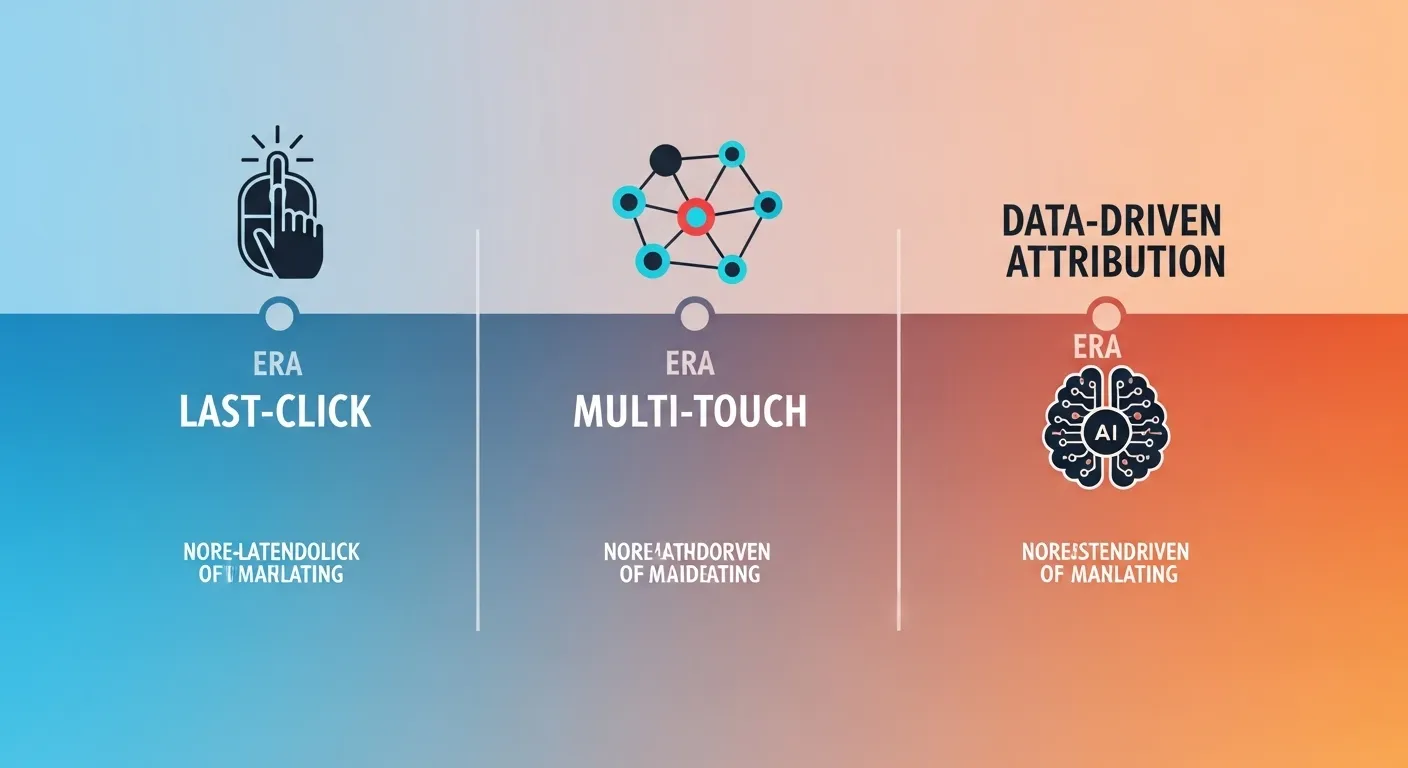
Let’s take a quick time machine ride, shall we? Strap in, because attribution modeling has gone through more glow-ups than a TikTok influencer.
A Brief History: From Caveman Metrics to AI Magic
Back in the early days of digital marketing (a.k.a. the Wild West of banner ads and pop-ups), attribution was simple: last-click wins. Whoever closed the deal got all the glory, like the friend who shows up at the end of a group project and takes the credit.
But then marketers realized, “Wait—what about all the other touchpoints that nudged the customer along?” Enter rule-based multi-touch attribution, where credit was split across several touchpoints using models like linear, time-decay, and position-based. Better? Sure. Perfect? Not even close.
Fast forward to the mid-2010s, and data-driven attribution (DDA) started stealing the spotlight. Machine learning models began crunching massive datasets to determine which channels actually drove value. Suddenly, attribution wasn’t just guesswork—it was science (well, mostly).
The Consumer Behavior Earthquake
Why all these changes? Because customers stopped behaving like predictable little robots. They became omnichannel ninjas.
-
They start on Instagram, research on YouTube, read reviews on Reddit, and finally convert after clicking a Google ad on their lunch break.
-
Cross-device journeys are now the norm. Your prospect might browse on a phone, add to cart on a laptop, and complete the purchase via voice command on their smart fridge (yes, that’s a thing now).
This spaghetti-like path makes single-touch models as useful as a chocolate teapot.
External Shifts That Broke the Old Rules
Then came the privacy revolution:
-
GDPR & CCPA made marketers rethink data hoarding.
-
Apple’s iOS14+ updates nuked granular tracking in apps.
-
Google’s cookie deprecation is basically pulling the rug out from under third-party tracking.
Translation: The old tracking tricks are gone. Your analytics now resemble Swiss cheese—full of holes.
Why Traditional ROAS is Failing in 2025
Now, let’s talk about the elephant in the room: ROAS.
It still looks pretty on dashboards, but here’s the harsh truth—it’s lying to you. ROAS only shows click-based, platform-reported data. It ignores:
-
Upper-funnel influence (awareness campaigns that never get the last click).
-
Cross-channel synergy (how your TikTok ads make your Google Ads cheaper).
-
Post-purchase behaviors like LTV (Lifetime Value).
In 2025, using ROAS as your North Star is like judging a symphony by its last note.
The Takeaway?
Marketing attribution has evolved because reality demanded it. The consumer journey is fragmented, privacy laws tightened the screws, and old-school metrics like ROAS just can’t keep up. If you’re still stuck on last-click or platform-reported ROAS, you’re optimizing for a world that doesn’t exist anymore.
III. ROAS vs. True Performance Metrics
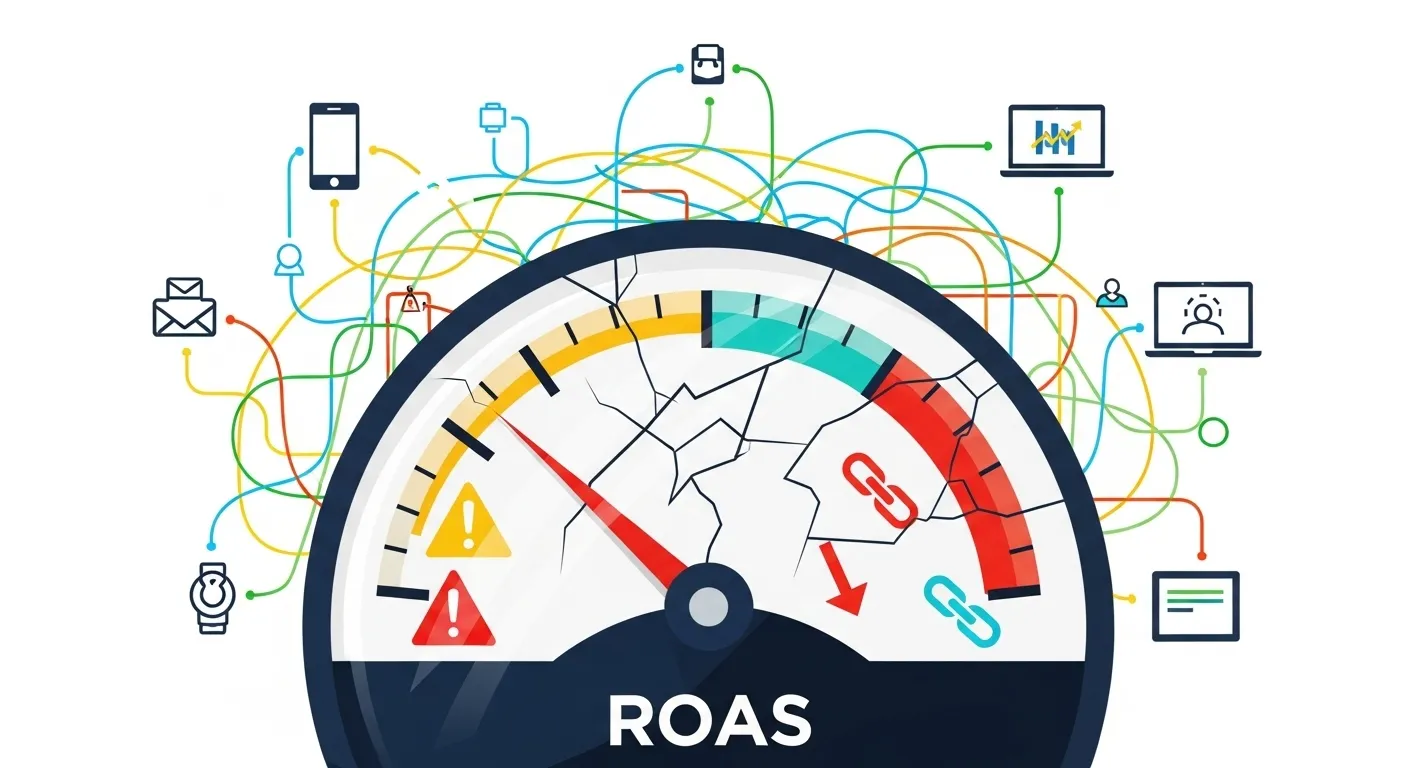
Let’s rip off the Band-Aid: ROAS is not the hero you think it is.
In fact, if you’re still obsessed with ROAS in 2025, you might be leaving millions on the table. Here’s why.
What ROAS Really Measures (And Why That’s a Problem)
On paper, ROAS (Return on Ad Spend) sounds perfect. It’s the simple ratio of revenue generated divided by ad spend. Spend $10,000 and make $50,000? Boom—ROAS of 5. Looks amazing, right?
Here’s the catch:
-
ROAS only measures click-based revenue, not actual business impact.
-
It ignores incrementality—the difference between what would have happened with ads versus without ads.
-
It’s easily inflated by branded searches or retargeting users who were already going to buy.
In other words, ROAS often measures how good you are at picking low-hanging fruit, not how good you are at growing the orchard.
The ROAS Obsession Trap
Brands that chase ROAS like it’s the holy grail often end up:
-
Underinvesting in top-of-funnel campaigns (because awareness rarely looks profitable in short-term ROAS).
-
Missing out on long-term growth by prioritizing short-term clicks.
-
Scaling too conservatively because a lower ROAS during aggressive growth is mistakenly seen as “bad.”
Pro tip: If your CFO is cheering because ROAS is 10x, you might actually be underspending and leaving market share wide open for competitors.
Beyond ROAS: The Metrics That Actually Matter in 2025
So what should we measure instead? Glad you asked. Here are the grown-up KPIs that have replaced ROAS for serious marketers:
✅ MER (Marketing Efficiency Ratio)
Think of MER as ROAS’s wiser cousin. It measures total revenue ÷ total marketing spend—across all channels. Why does this matter? Because customers don’t live in silos, and neither should your metrics.
Example: If your brand spends $500k on marketing and makes $2.5M in revenue, your MER is 5. Simple, holistic, and way harder to game.
✅ Incrementality
The million-dollar question: “Would this sale have happened without the ad?”
Incrementality testing answers that by comparing exposed vs. control groups. If 70% of your conversions would have happened anyway, your ads aren’t as magical as you think.
Tools like Meta Conversion Lift and Google Experiments make this easier (and trust me, they’ll humble you).
✅ Contribution Margin
Because revenue without profit is like a treadmill—you’re moving but not going anywhere. Contribution margin accounts for product costs, shipping, and fees. If you ignore this, you could be scaling unprofitably while patting yourself on the back for “amazing ROAS.”
Bottom Line
ROAS is a vanity metric in 2025. It’s like judging fitness by Instagram selfies instead of actual health stats. If you want sustainable growth, shift your focus to MER, incrementality, and contribution margin—because those metrics tell the truth.
IV. Advanced Attribution Models in 2025
Grab a coffee. This is the core section where we separate the rookies from the pros.
In 2025, “attribution” isn’t about picking a rule-based model from a dropdown menu—it’s about advanced, data-driven frameworks that actually reflect reality.
Here are the heavy hitters you need to know—and how to use them.
1. Data-Driven Attribution (DDA): Letting Machine Learning Do the Math

If last-click attribution is the flip phone of marketing, Data-Driven Attribution is the iPhone 15 Pro Max with AI built-in.
How It Works
DDA uses machine learning to assign credit to each touchpoint based on its actual contribution to conversions. Instead of guesswork or arbitrary rules, it looks at patterns in historical data and predicts how removing a touchpoint would impact conversion rates.
Think of it like a detective running simulations: “If we remove Instagram Stories, how many sales disappear? If email stays but paid search goes away, what changes?”
Pros
-
Accuracy: Adjusts dynamically as customer behavior evolves.
-
Fair Credit: No more over-crediting retargeting ads.
-
Works at Scale: Handles millions of data points effortlessly.
Cons
-
Data Hunger: Needs large conversion datasets to work well.
-
Black Box: Hard to explain to clients who want “simple answers.”
Best Use Cases in 2025
-
Mid-to-large brands with significant ad spend.
-
Businesses running multi-channel campaigns with consistent data collection.
Tools You’ll Love
-
Google Ads DDA: Now available at all spend levels (yay!).
-
Meta’s Conversion Modeling: Uses modeled data to bridge iOS14+ gaps.
2. Algorithmic Multi-Touch Attribution (MTA): The Upgrade to Rule-Based
Remember those old-school models—linear, time-decay, U-shaped? Those were rule-based MTAs—rigid and dumb. Algorithmic MTA, on the other hand, is like that friend who actually listens before giving advice.
What Makes It Different
Instead of fixed rules (like giving 40% credit to first click and 40% to last), algorithmic MTA uses machine learning to weigh each touchpoint based on statistical impact.
Example: If TikTok drives lots of assisted conversions that eventually convert via Google Search, TikTok will finally get the love it deserves.
Pros
-
More Accurate Than Rules: Captures nonlinear paths.
-
Channel-Specific Insight: Great for optimizing budgets across platforms.
Cons
-
Still Relies on Tracking: Safari and iOS updates limit precision.
-
Data Complexity: Implementation can overwhelm smaller teams.
Real-World Example
An e-commerce brand spending $2M/year on ads switched from last-click to algorithmic MTA. Result? They discovered that Pinterest was influencing 25% of purchases—despite only driving 5% of last-click conversions. Budget shift = 18% revenue lift in 3 months.
3. Incrementality-Based Attribution: The Gold Standard
If you only take ONE thing from this article, let it be this:
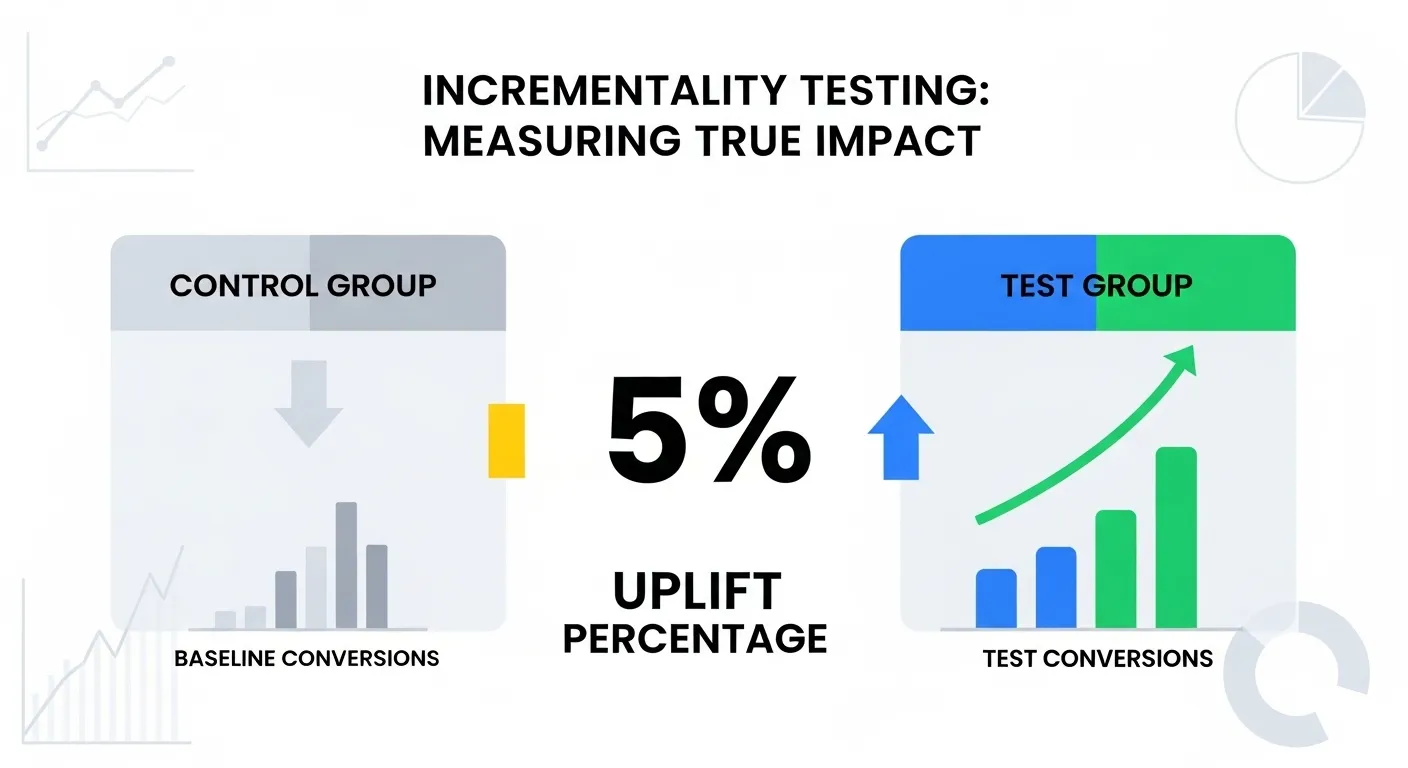
Incrementality testing is how you measure true ad impact. Period.
Definition
Incrementality asks: “What would have happened if we didn’t run these ads?” The difference between your test group (saw ads) and control group (didn’t) = your incremental lift.
Why It Matters
Every platform wants to take credit for sales. Incrementality cuts through that bias like a samurai sword.
Example: You spend $100k on Meta ads. Platform says you made $400k. Incrementality test shows only $150k of that was incremental. Suddenly your ROAS fairy tale looks different.
Methods
-
Geo-Lift Tests: Run ads in certain regions and hold out others.
-
Conversion Lift Tests: Platform-level tests (Meta & Google offer these).
Tools
-
Meta Conversion Lift
-
Google Ads Experiments
-
Third-party tools: Measured, Rockerbox.
4. Marketing Mix Modeling (MMM) 2.0: The Cookieless Hero
MMM isn’t new—it’s been around since Mad Men. But in a cookieless world, it’s having a glow-up.
What is MMM?
MMM analyzes historical data (spend, sales, seasonality) to estimate channel impact at an aggregated level. Unlike MTA, it doesn’t need user-level tracking—making it privacy-proof.
The 2025 Upgrade
Old MMM was slow and clunky. Modern MMM uses Bayesian models + cloud computing + AI to deliver near real-time insights.
Pros
-
Privacy-Safe: No cookies or PII required.
-
Holistic View: Includes offline media (TV, OOH) plus digital.
Cons
-
Lag Time: Still not perfect for day-to-day optimization.
-
Requires Expertise: Needs data scientists or strong analytics partners.
Real-World Application
A DTC brand layered MMM insights with platform data. Discovered that TV ads were boosting branded search by 40%—a synergy they’d been blind to. Budget allocation shifted, CPA dropped 12%.
5. Unified Measurement: The Holy Grail
If DDA, MTA, and MMM each tell part of the story, Unified Measurement is the director’s cut.
How It Works
Combines MMM (long-term, aggregate) with MTA (short-term, granular) and layers predictive modeling on top. You get:
-
Historical insights from MMM.
-
Path-level data from MTA.
-
Forecasting using AI-driven models.
Why It’s a Game-Changer
With unified measurement, you can answer:
-
Which channel drove last month’s growth?
-
What’s the optimal budget mix for next quarter?
-
How will cutting TikTok by 20% impact revenue?
Tools Emerging in 2025
-
Google’s Meridian Initiative (MMM + AI).
-
Analytics Partners & Measured for hybrid modeling.
-
Custom Python/R models for brands with strong data teams.
Key Takeaway
No single attribution model rules them all in 2025. The winners?
-
Use incrementality as their truth north.
-
Combine MMM + MTA for holistic visibility.
-
Layer AI and predictive modeling for future-proof decisions.
V. How AI is Transforming Attribution in 2025

If 2023 was the year AI wrote your ad copy and built your chatbots, then 2025 is the year AI takes over the messy, brain-melting job of attribution. And honestly? It’s about time.
Why AI is the Perfect Fit for Attribution
Attribution is like trying to figure out which friend convinced you to try sushi 10 years ago after a chain of texts, DMs, and awkward high school reunions. It’s complicated, nonlinear, and influenced by a million factors. Traditional models? They choke on this complexity.
AI, on the other hand, thrives on chaos. Feed it enough data, and it will happily:
-
Find patterns across millions of touchpoints.
-
Adjust credit dynamically based on real-time behavior.
-
Predict what will happen before it even does.
In short: AI doesn’t just analyze attribution—it predicts performance.
The AI Attribution Toolkit in 2025
Here’s how AI is shaking things up:
✅ Predictive Analytics for Forecasting
AI models now forecast channel ROI like a weather report.
Example: “If you increase TikTok spend by 20%, expect a 12% lift in revenue—but your CPA on Meta might go up by 8%.”
These predictive capabilities allow marketers to simulate budget scenarios without blowing real money first.
✅ Generative AI for Data Modeling
AI doesn’t just crunch numbers; it creates synthetic data to fill gaps caused by privacy restrictions (hello, cookiepocalypse). This makes attribution models more robust—even when first-party data is thin.
✅ Cross-Platform Modeling
Walled gardens like Meta, Google, and TikTok love hoarding their data. AI-driven attribution platforms now stitch together these isolated ecosystems using probabilistic matching and Bayesian inference, giving you a unified picture without violating privacy.
Examples of AI-Powered Attribution Platforms
-
Google’s Meridian: AI-enhanced MMM that updates weekly instead of quarterly.
-
Meta’s Advanced Conversion Modeling: Uses machine learning to predict missing conversions post-iOS14.
-
Rockerbox & Measured AI: Emerging independent platforms offering hybrid MMM + MTA with AI insights baked in.
Ethical Considerations: The “Black Box” Problem
AI attribution sounds sexy—until you realize it’s often a black box.
You input your data, and voilà—AI spits out results. But how did it get there?
-
Bias Risk: If the model favors certain channels because of skewed training data, you could end up overspending on underperforming platforms.
-
Data Privacy: Synthetic data helps, but you still need robust governance to avoid compliance nightmares.
Best practice? Demand transparency from vendors and keep a human in the loop for decision-making.
The Bottom Line
AI isn’t replacing marketers—it’s replacing manual guesswork. If you’re still relying on spreadsheets for attribution in 2025, you’re basically using a flip phone in an era of Neuralinks. Embrace AI, but do it with eyes wide open: understand the models, validate predictions, and always test incrementality.
VI. Implementing Advanced Attribution Models: A Step-by-Step Guide
So you’ve nodded along to everything so far and thought, “Cool, these models sound great, but how the heck do I actually do this?”
Don’t worry—I’ve got you. Here’s your practical, no-BS roadmap for implementing advanced attribution in 2025.
Step 1: Audit Your Current Attribution Setup
Before jumping into shiny AI models, start with an honest reality check:
-
Which attribution model are you using today? (Spoiler: if it’s last-click, we need to talk.)
-
How reliable is your data? Are there gaps caused by privacy changes or tracking failures?
-
Do you have centralized reporting, or are you still cobbling together platform dashboards like a digital Frankenstein?
Action Tip: Make a list of all marketing channels, their data sources, and identify missing links. This will help you know where to focus first.
Step 2: Define Success Metrics Beyond ROAS
Remember, ROAS is a vanity metric now. Decide which grown-up KPIs you’ll use:
-
MER (Marketing Efficiency Ratio) for overall profitability.
-
Incrementality Lift for true performance impact.
-
Contribution Margin for profitability after costs.
Pro tip: Align these metrics with business goals. If your CFO cares about profit, start tracking contribution margin yesterday.
Step 3: Choose the Right Model for Your Business
Here’s a quick decision framework:
-
Small budgets & simple setups? Start with Data-Driven Attribution (DDA) inside Google Ads or Meta.
-
Multi-channel digital campaigns? Consider Algorithmic Multi-Touch Attribution (MTA).
-
Big budgets, offline + online mix? Go for MMM 2.0 or Unified Measurement.
-
Obsessed with accuracy? Layer in Incrementality Testing no matter what.
Pro tip: You don’t have to pick just one model—combine them for best results.
Step 4: Implement Tracking & Data Collection Improvements
Garbage in = garbage out. Advanced attribution is only as good as your data.
-
Move toward first-party data (email, CRM, purchase data).
-
Implement server-side tracking to bypass browser restrictions.
-
Use data clean rooms for privacy-compliant cross-platform analysis.
Tools to Check Out:
-
Google Tag Manager (Server-Side)
-
Meta’s Conversions API
-
Snowflake or BigQuery for central data warehousing.
Step 5: Validate Results with Incrementality Tests
Once your model is running, don’t blindly trust it—test it.
-
Run geo-lift or platform-based lift tests to confirm incremental impact.
-
Compare predicted vs. actual results when adjusting budgets.
-
If your attribution model says “Cut TikTok by 50%,” test in a controlled way before slashing budgets.
Step 6: Operationalize & Train Your Team
The best model is useless if your team doesn’t understand it.
-
Train marketers on reading attribution reports.
-
Build dashboards that executives can digest in 60 seconds.
-
Create a culture of experimentation—budget decisions should always include a “test and learn” phase.
Pro Implementation Tip
Start small, scale fast. Test one advanced model on a single channel or campaign. Once you validate the lift, roll it out across your marketing mix.
Bottom Line
Implementing advanced attribution isn’t about chasing shiny tools—it’s about building a process that aligns data, models, and strategy. If you follow these steps, you’ll go from “guessing” to precision marketing in months, not years.
VII. Common Challenges and How to Overcome Them
So, you’re pumped about advanced attribution—great! But let’s keep it real: the road to measurement nirvana isn’t paved with unicorns and golden dashboards. You’re going to hit some bumps. Here are the most common challenges marketers face in 2025 (and how to crush them).
1. Data Gaps Thanks to Privacy and Walled Gardens
Post-iOS14 and cookiepocalypse, your tracking is full of holes. Meta, Google, TikTok—they’re all hoarding their data like dragons sitting on piles of gold.
Solution:
-
First-party data strategy: Collect emails, CRM data, and transaction logs like your business depends on it (because it does).
-
Server-side tracking: Move away from browser-based pixels. Use Google Tag Manager (server-side) and Meta’s Conversions API.
-
Data clean rooms: Platforms like Google Ads Data Hub or InfoSum allow privacy-compliant data collaboration.
2. Organizational Buy-In
Explaining to your CFO why you want to abandon ROAS for incrementality can feel like convincing your grandma that TikTok is a legit search engine.
Solution:
-
Speak the language of profitability and growth, not marketing jargon.
-
Show case studies: “Brands using incrementality testing increased true revenue by X%.”
-
Start small: Run a pilot test and share results before asking for a massive budget shift.
3. Tech Stack Limitations
Not every company has a team of data scientists and a six-figure analytics budget.
Solution:
-
Start with built-in platform tools like Google’s DDA or Meta Lift Tests.
-
For SMBs, consider affordable hybrid tools like Rockerbox, Measured, or Northbeam.
-
Scale complexity as you grow—don’t try to implement MMM and unified modeling on day one.
4. Analysis Paralysis
Advanced attribution models = tons of data. The danger? Drowning in numbers without taking action.
Solution:
-
Define clear decision-making rules before looking at data.
-
Build dashboards focused on business KPIs, not vanity metrics.
-
Make sure your team knows: data should drive action, not endless debate.
The Reality Check
Yes, advanced attribution is complex. But the challenges aren’t deal-breakers—they’re speed bumps. With the right tools, education, and incremental testing, you can overcome them and finally get clarity on what’s really driving growth.
VIII. Future Trends in Attribution (2025 and Beyond)

If you think 2025 is wild, buckle up—the next few years will make today’s models look like stone tablets. Here’s what’s coming down the pipeline:
1. Cookieless World? No Problem
By now, third-party cookies are basically fossils. The winners? Brands that lean into first-party data and privacy-safe attribution models. Expect:
-
Data clean rooms becoming standard for cross-platform measurement.
-
Growth in identity resolution tech that respects consent while connecting the dots.
2. Privacy-Safe Data Collaboration
Regulations aren’t loosening; they’re tightening. Future attribution will rely heavily on:
-
Differential privacy (data sharing without revealing individual identities).
-
Encrypted modeling environments where brands and platforms collaborate without exposing raw data.
3. Real-Time Attribution Dashboards
Remember when MMM reports took three months? Cute. The future is real-time modeling powered by AI.
Imagine dashboards that:
-
Update daily across all channels.
-
Show predictive outcomes for next week’s spend.
-
Recommend optimal budget shifts automatically.
4. Predictive Attribution Becomes the Norm
Reactive attribution will feel ancient. With AI and advanced analytics, marketers will know:
-
Which channels will drive the next $1M in revenue.
-
How seasonal trends, macroeconomic factors, and even weather impact conversions.
-
Budget allocation recommendations before campaigns even launch.
5. AI-Driven Autonomous Media Buying
This one’s a little scary (but exciting): attribution models feeding directly into media buying platforms. Picture this:
-
Your AI model predicts that TikTok is about to surge in incremental value.
-
Your ad platform automatically increases spend—no human approval needed.
The Catch? Humans still need to set guardrails and ethical rules. Otherwise, the machines might optimize you into compliance violations.
Bottom Line
The future of attribution isn’t just about better measurement—it’s about predictive intelligence that drives decisions in real time. Brands that adopt early will dominate. Those who cling to last-click? They’ll be the Blockbusters in a Netflix world.
IX. Conclusion & Actionable Takeaways
Let’s bring this home. If you take away one thing from this article, let it be this:
ROAS is dead as a standalone metric. In 2025, relying on it is like navigating with a paper map while everyone else uses GPS.
Here’s Why ROAS Can’t Be Your North Star
-
It ignores incrementality—the difference between “ad-driven” and “would’ve bought anyway.”
-
It fails in a multi-channel, privacy-first world.
-
It misguides growth decisions by overvaluing short-term clicks.
What Works Instead?
Advanced attribution models that actually tell the truth:
-
Data-Driven Attribution (DDA): Machine learning-based fairness for digital campaigns.
-
Algorithmic MTA: Dynamic credit allocation across complex journeys.
-
Incrementality Testing: The gold standard for true performance measurement.
-
MMM 2.0: Privacy-proof, big-picture modeling for all media.
-
Unified Measurement: Combining short-term precision with long-term strategy.
And don’t forget the AI revolution—predictive modeling will soon recommend where to put every dollar before you even launch a campaign.
Your Next Steps
Here’s your game plan for the next 90 days:
-
Audit your current attribution model. If it’s last-click, congratulations—you’ve found your first quick win.
-
Define success beyond ROAS. Choose metrics like MER, incrementality, and contribution margin.
-
Start testing. Implement DDA or a lift test on one channel before going full throttle.
-
Invest in first-party data. Privacy isn’t going away, and your models depend on it.
-
Train your team. Models are useless if no one understands how to interpret and act on them.
The Bottom Line
The brands that thrive in 2025 will be those that embrace complexity, leverage AI, and prioritize truth over vanity metrics. So stop worshiping at the altar of ROAS—it’s time to build an attribution strategy that actually drives growth.
Your move: Start with an audit today. Your future self (and your CFO) will thank you.