Introduction of this AI Tools for Social Media Marketing blog
Picture this: the wild, wacky world of social media marketing, where hashtags fly faster than a caffeine-fueled squirrel and trends change before you can say “viral.” In today’s digital jungle, artificial intelligence (AI) is swinging in like a superhero with a cape made of algorithms, ready to shake things up across every industry—marketing included! From healthcare to retail, AI’s zipping through massive datasets, automating the boring stuff, and adapting quicker than a chameleon at a disco. And when it comes to social media? Oh, honey, AI’s not just stealing the show—it’s rewriting the script!
Let’s rewind a bit. Remember the good ol’ days of social media marketing? We were all just tossing out organic posts like confetti, chatting with followers like they were pals at a backyard barbecue, and praying our cat memes would boost our follower count.
Back then, it was all about manual scheduling, gut-feel “insights,” and a whole lot of “let’s try this and hope it doesn’t flop.” Then, platforms like Facebook, Instagram, Twitter (now X, because apparently it’s too cool for a full name), LinkedIn, and TikTok exploded, and suddenly marketers were juggling algorithms trickier than a Rubik’s Cube in a windstorm. Data-driven decisions and real-time engagement became the name of the game, and we all started dreaming of a smarter way to keep up.
Enter AI, stage left, with a dazzling grin and a toolbox full of magic tricks. This isn’t just a fancy upgrade—it’s a full-on glow-up for social media marketing! AI’s flipping the script on how brands connect with their audiences, whipping up hyper-personalized content, chatting with fans through sassy chatbots, and serving up analytics so sharp they could cut through a bad campaign idea. It’s like having a marketing genie who grants your every wish—except instead of three, you get infinite (okay, almost).
In this article, we’re diving headfirst into the AI-powered party. First, we’ll peek at how AI’s revolutionizing strategy, from slicing and dicing audiences to picking the perfect moment to post (because timing is everything, darling). Then, we’ll swoon over content creation, where generative AI is churning out jaw-dropping visuals, catchy captions, and videos so tailored they practically wink at your demographic. Next, we’ll high-five AI-driven engagement—think chatbots with more charm than a rom-com lead and sentiment analysis that reads the room better than your bestie. And finally, we’ll geek out over analytics, where machine learning and predictive wizardry turn marketers into decision-making superstars.
One thing’s for sure: AI isn’t just crashing the social media marketing party—it’s the VIP guest we’ve all been waiting for. So, grab your glittery marketing hat, embrace the techy goodness, and let’s dance our way to deeper audience connections, happier brands, and results that’ll make your boss do a happy dance. Let’s go!
The Rise of AI in Social Media Marketing: From Post-It Notes to Pixel-Perfect Posts!
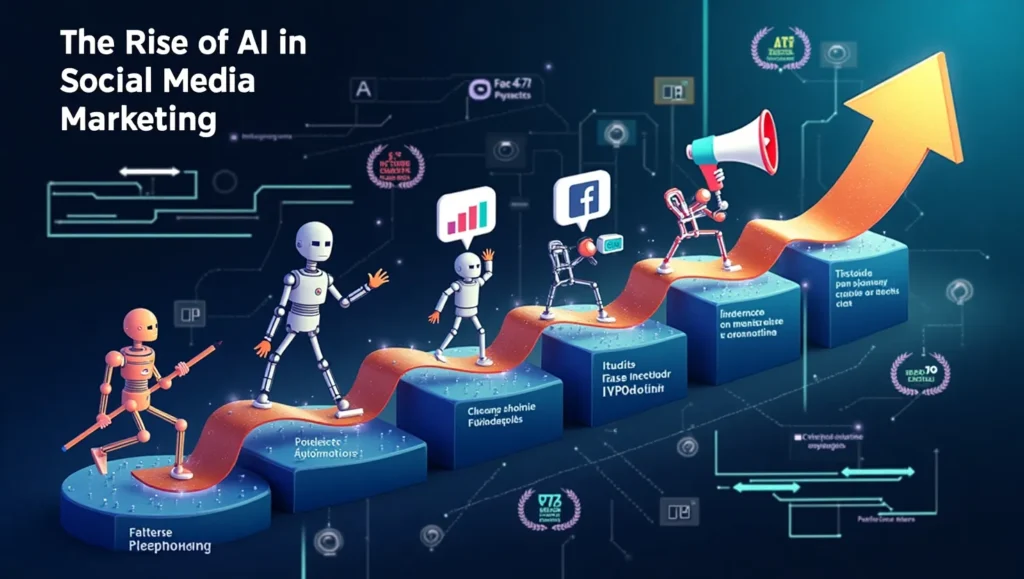
The Rise of AI in Social Media Marketing
Or: How the Robots Took Over Our Hashtags (and We’re Not Even Mad About It)
Once upon a timeline—about 10 years ago—social media marketing was a wild, manual ride. Picture this: marketers hunched over keyboards, furiously scheduling posts like digital DJs, trying to hit the sweet spot between “lunch break scroll” and “3 AM insomnia doom-scroll.” Every tweet, every caption, every hashtag was handcrafted like artisanal toast.
Enter automation. Suddenly, marketers could schedule posts ahead of time! No more frantic 9:59 AM Facebook updates. It was the first taste of freedom—and caffeine-fueled social teams rejoiced.
But then came Artificial Intelligence, sliding into our DMs with machine learning, natural language processing, and an uncanny ability to figure out who loves dogs and pumpkin spice. Today’s AI isn’t just scheduling posts—it’s writing them, targeting them, and even analyzing the results faster than you can say “click-through rate.”
Marketers now have AI tools that can predict trends, recommend the best time to post, and auto-generate personalized content for audiences of thousands. It’s like having a psychic intern who never sleeps and doesn’t ask for coffee breaks.
Why the AI love affair? Three big reasons: scale, personalization, and efficiency. AI lets you talk to a million people like they’re your only follower (without growing a thousand extra hands). It delivers customized content based on what your audience likes, clicks, and secretly dreams about at 2 AM. And it’s way more efficient than Carl from accounting moonlighting as your social media guy.
The numbers are here, and they’re flexing. According to recent studies, over 80% of marketers now use some form of AI in their social strategy. Chatbots are now handling more than 85% of customer service interactions, and AI-generated content sees up to 4x the engagement of non-personalized posts. Even grandma’s knitting blog is probably running AI analytics by now.
The future? It’s part human creativity, part robot genius—and 100% meme-approved. So don’t worry, social media marketers aren’t being replaced by machines. They’re being upgraded with jetpacks made of data and algorithms.
In this brave new world of AI-powered storytelling, we’re not just posting—we’re performing digital magic. And frankly, we love our robot sidekicks.
AI-Powered Content Creation Tools: Your New Favorite (Robot) Coworkers
If you’ve ever stared blankly at a blinking cursor trying to write the perfect caption, you’re not alone. Thankfully, the age of suffering through writer’s block with only caffeine for company is over. Enter AI-powered content creation tools—your witty, word-savvy digital sidekicks that never call in sick or complain about tight deadlines.
Let’s meet the squad.
Tools Overview
- Jasper (formerly Jarvis): Think of Jasper as the caffeinated intern who’s read every blog post on the internet and can write in nearly any tone. It’s great for long-form content, catchy headlines, and social media copy that doesn’t sound like it was written by a toaster.
- Copy.ai: This one’s like the peppy marketing buddy who always has a clever tagline up their sleeve. It’s built for creating short-form content fast—captions, email subject lines, and punchy product descriptions galore.
- ChatGPT (Hi, that’s me!): From deep-dive blog posts to quirky tweets and customer responses, ChatGPT is your conversational all-rounder. Want to sound like a pirate in a product review? We won’t ask why—we’ll just do it.
- Lately.ai: This tool is all about turning long-form content into snack-sized social posts. Upload a blog or podcast, and it’ll whip up dozens of posts faster than you can say “content calendar.”
Use Cases That Save the Day
- Caption and Copywriting: Whether you need a clever Instagram caption, a LinkedIn thought leadership post, or a Facebook ad with punch, AI tools are there with a flurry of options—and zero judgment.
- Generating Blog-to-Social Snippets: You spent hours writing that blog, so let it work overtime. Tools like Lately and Jasper can extract quote-worthy lines, distill key takeaways, and repurpose content for every platform without breaking a sweat (because they don’t sweat).
- Trend-Based Content Ideation: Wondering what to post for National Avocado Day and tie it to your SaaS product? AI tools can scan current trends, hashtags, and audience interests to spark ideas you hadn’t considered—no avocado required.
Benefits: Why Marketers Are Hooked
- Speed: What used to take hours now takes minutes. Need 10 captions in 10 minutes? Done. Need them in pirate speak? Also done.
- Creativity: These tools don’t get stuck in ruts. They think outside the box (and the inbox), suggesting wordplay, analogies, and ideas that can freshen up even the driest content.
- Consistency: AI doesn’t forget your tone or brand voice—unless you tell it to. This means you get posts that sound like you, even on your fifth coffee.
Limitations and Ethical Considerations
Of course, even the best robot writer isn’t perfect.
- Lack of true originality: AI writes based on patterns, not lived experiences. It might nail your caption, but it won’t know how it felt when your iced coffee spilled during your first webinar.
- Over-reliance: The risk? Everyone starts sounding the same. You still need human creativity to guide and refine what the AI suggests. Think of it as the recipe—you add the secret sauce.
- Ethics and plagiarism: Not all AI-generated content is unique. Always check originality, and be cautious when publishing long-form pieces straight from the machine without editing. Also, be transparent—using AI is okay; pretending you wrote it during a solo retreat in Bali might raise eyebrows.
Final Thought
AI-powered content tools are here to help, not replace. They amplify your voice, supercharge your process, and free you up to focus on the bigger picture—like strategy, storytelling, or finally taking a lunch break.
And hey, if your next viral tweet comes from a robot—just remember, it still needed your genius to hit “post.”
Visual Content Creation with AI: Where Art Meets Algorithm (and Makes Magic)
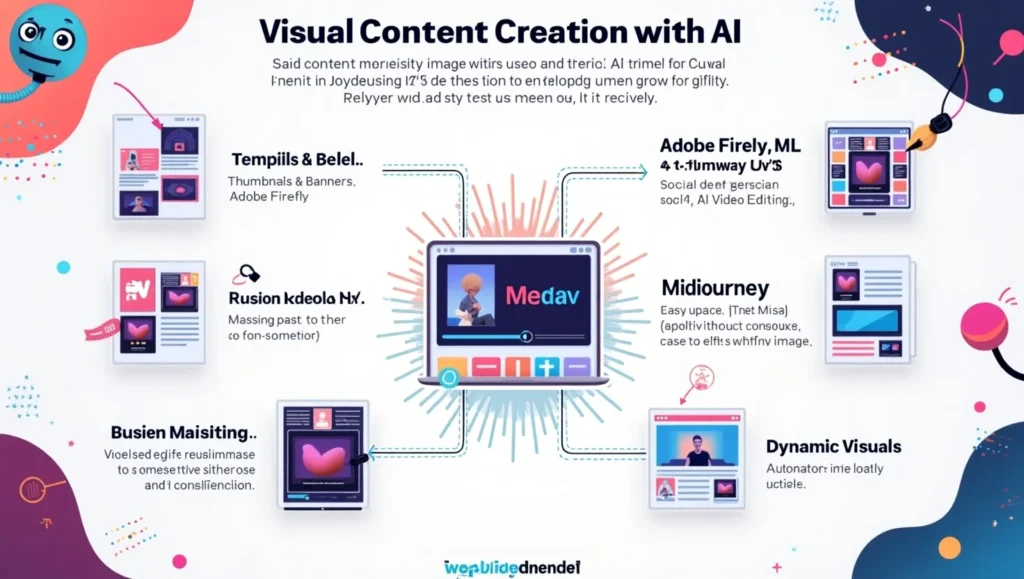
If a picture is worth a thousand words, then an AI-generated visual is worth a thousand saved hours and at least three skipped mental breakdowns. In the fast-paced world of social media marketing, the demand for scroll-stopping, eye-catching visuals is nonstop—and AI tools have swooped in like design-savvy superheroes.
Let’s take a colorful stroll through the most popular AI-powered visual tools lighting up our timelines.
Meet the Visual AI Dream Team
- Canva AI: Your go-to design buddy just got way smarter. Canva’s AI tools help generate entire templates, suggest layouts, remove backgrounds, and even write captions. It’s like having a designer and copywriter in one sleek browser tab.
- Adobe Firefly: Adobe said, “Hold my Photoshop,” and created Firefly—a suite of generative AI tools that let you whip up stunning, editable images from text prompts. Want “a futuristic skyline made of sushi”? Type it in. Firefly’s got you.
- Runway ML: This one’s for the video creators and content alchemists. Runway uses AI for everything from removing backgrounds in video to generating entirely new scenes. It’s basically Hollywood magic, minus the 6-figure budget.
- Midjourney: The artsy cousin of the bunch, Midjourney creates hyper-stylized, breathtaking visuals from simple prompts. If you’ve ever seen an AI-generated image that looks like it belongs in a fantasy film poster—it was probably born here.
Applications That Are Changing the Content Game
- Thumbnail and Banner Generation: Need a YouTube thumbnail that screams “click me!” or a Facebook banner that doesn’t look like it was made in 2006? AI can auto-generate stunning, brand-aligned visuals that pop—no design degree required.
- Social Media Ads: AI tools analyze what catches attention and churn out ad creatives that hit the sweet spot between eye-candy and CTA. Think bold fonts, dynamic imagery, and color palettes that dance together like a perfectly curated Instagram feed.
- Video Editing and Dynamic Visuals: Runway ML and Firefly allow creators to edit, stylize, and generate video content without ever opening a traditional editing suite. Want to turn your Zoom background into a bustling street market? You can. Want a drone shot without a drone? Yep.
Real-World Magic: Viral Case Examples
- A creator used Midjourney to design a fictional “AI Fashion Week” runway series. The images? So hyper-realistic and stylish, they fooled half the internet and went viral overnight.
- A small brand generated TikTok ads using Runway ML’s green screen and motion tracking features. Result: 3x higher engagement and a massive jump in CTR—all without a video shoot.
- Using Canva AI, a nonprofit created an entire campaign—posters, reels, and banners—in one day. Their polished, professional look got picked up by influencers and shared across platforms.
Final Frame
AI-powered visual tools aren’t replacing creativity—they’re unlocking it. Whether you’re a solo marketer or part of a lean team, these tools help turn imagination into shareable visuals faster than ever.
So go ahead. Dream big, type weird prompts, and let AI turn your wildest ideas into pixel-perfect reality. Your next viral visual might just be one prompt away.
AI in Social Media Scheduling and Automation: Post Smarter, Not Harder
In a world where social media never sleeps, marketers do—and thankfully, AI is here to pick up the slack. Scheduling and automation tools have gone from basic calendars to intelligent assistants that know exactly when to post, what to post, and even how well it’s likely to perform.
Let’s meet the scheduling squad:
Top Tools That Do the Heavy Lifting
- Buffer: Clean, simple, and smart. Buffer uses AI to suggest the best posting times based on your audience’s behavior. It’s the social equivalent of knowing when everyone’s hanging out at the digital water cooler.
- Hootsuite: One of the OGs in the space, Hootsuite now uses AI to recommend posting schedules, analyze content performance, and even predict what will resonate best with your audience.
- SocialBee: This tool helps you juggle multiple content categories and uses AI to optimize when each post goes live. It’s like a social media librarian with a flair for timing.
- Missinglettr: Great for blog-to-social automation, this tool turns your long-form content into a full campaign of scheduled social posts, complete with AI-driven timing. No more “set it and forget it”—this one sets it smartly.
AI-Driven Scheduling: It’s All About Timing
AI now tracks engagement trends, user behavior, and even industry shifts to tell you the exact best time to post. Morning tweets, afternoon LinkedIn updates, or weekend Instagram Reels—your content hits the feed when it’s most likely to be seen, not when you remembered to post it.
These tools also balance optimal frequency—ensuring you stay visible without annoying your followers like a clingy ex.
Predictive Performance: AI Sees the Future (Sort Of)
Tools like Hootsuite and Buffer now offer predictive analytics, forecasting how well your content is likely to perform before it even goes live. Think of it as content fortune-telling, minus the crystal ball.
Time-Saving Magic for Small Teams
For small teams or solo marketers, AI-driven scheduling is a lifesaver. Instead of manually queuing posts across platforms, you set up once and let AI handle the rest—batch scheduling, resharing evergreen content, and adapting timing as audience behavior changes.
The result? More time for strategy, creativity, or, you know, lunch.
Final Thought
AI in scheduling isn’t just a time-saver—it’s a strategy booster. By working smarter (not harder), you get better results, happier followers, and fewer late-night panic posts.
Because in the end, good timing isn’t luck—it’s machine learning.
AI for Social Listening and Brand Monitoring: Because Your Brand Has Ears Now

If your brand could eavesdrop on every conversation about it online, would it? With AI-powered social listening tools, it basically can. From glowing praise to spicy complaints, AI tools are now the digital ears marketers didn’t know they desperately needed.
Let’s tune into the main players:
Meet the Tools That Listen Better Than Your Ex
- Brand24: Tracks mentions across social platforms, blogs, news, and forums. With built-in sentiment analysis, it doesn’t just show what’s being said—it tells you how people feel when they say it.
- Sprout Social: Combines listening, analytics, and engagement tools. It not only detects trends but also lets you jump into real-time conversations without missing a beat.
- Talkwalker: The powerhouse of social listening, it tracks over 150 million sources and uses AI to analyze tone, emotion, and even image-based mentions. Yes, it can recognize your logo in a meme.
What Can AI Actually Do?
- Sentiment Detection: AI now understands sarcasm (sort of), analyzes tone, and classifies posts as positive, neutral, or negative. It’s your early warning system for potential PR crises—or a signal that your latest ad campaign is hitting the right notes.
- Trend Spotting: These tools pick up rising hashtags, viral conversations, and sudden interest spikes before your competitors do. It’s like having a trend-sniffing bloodhound in your marketing stack.
- Crisis Monitoring: AI can flag sudden surges in negative mentions or keywords like “scam,” “cancel,” or “never again” faster than your social team can finish their coffee.
Real-Time Engagement and Feedback Loops
AI doesn’t just listen—it helps you respond. Tools like Sprout Social allow teams to jump into live conversations, respond to complaints or compliments, and close the feedback loop in record time. It’s like turning your social channels into a customer service lounge—with extra flair.
Real Brands, Real Wins
- When a popular snack brand noticed a viral complaint about its packaging on Twitter, real-time listening via Brand24 helped them address it within hours—before it snowballed.
- A fashion retailer used Talkwalker to detect a sudden positive buzz about a color trend. They launched a targeted campaign within days—and doubled sales in that product category.
Final Word
With AI-powered social listening, your brand doesn’t just speak—it listens, learns, and adapts. In a world where conversations shape perception, that’s more than smart—it’s essential.
Personalized Advertising and Targeting with AI: Ads That Actually Get You
Gone are the days of one-size-fits-all advertising. Thanks to AI, your ads now know more about your audience than their best friends do (okay, almost). Personalized advertising has gone from creepy to clever—and marketers are cashing in big time.
Platforms Making the Magic Happen
- Meta Ads Manager (Facebook & Instagram): Meta’s AI engine predicts who’s most likely to engage, buy, or convert—then auto-optimizes delivery. It’s like Cupid for conversions, minus the arrows.
- LinkedIn Campaign Manager: Uses AI to match your content with users based on industry, behavior, and interests. It’s ideal for B2B campaigns targeting decision-makers with laser focus.
- Google Performance Max: This campaign type uses AI to deliver your ads across all Google channels (Search, YouTube, Display, Gmail, and Discover) while optimizing bids and placements in real time. Think of it as an ad campaign on autopilot—with a pilot smarter than you.
Dynamic Ad Creatives and Smart Targeting
AI doesn’t just help with who sees your ad—it helps with what they see. Dynamic creatives adjust text, images, and even calls-to-action based on the viewer. Someone in Chicago might see “Winter Deals Near You,” while someone in Miami sees “Hot Savings Today.”
AI also clusters audiences by behavior and intent, not just demographics. It knows who’s in buying mode versus window-shopping, and tailors messages accordingly.
Smarter Testing, Better Results
AI-enhanced A/B testing means you’re not manually comparing “Buy Now” versus “Shop Now” 40 times. Platforms test dozens of variations simultaneously and serve the best-performing combos—while you sit back with your coffee.
Even better, AI can predict conversions before you spend your full budget, adjusting campaigns mid-flight for maximum impact.
The ROI is Real
According to Google, advertisers using Performance Max campaigns see an average 18% increase in conversions at a similar CPA (cost per action). Meanwhile, Meta reports that advertisers using Advantage+ (its AI-driven targeting) see 32% lower cost per purchase on average.
A mid-sized eCommerce brand used Performance Max to replace siloed campaigns. Result? A 20% boost in ROAS (return on ad spend) and more naps for their marketing team.
Final Thought
AI doesn’t just help you reach more people—it helps you reach the right people, with the right message, at the right time. And that’s the kind of personalization we can all get behind (especially when it boosts ROI).
Chatbots and AI-Driven Customer Engagement: Conversations That Convert
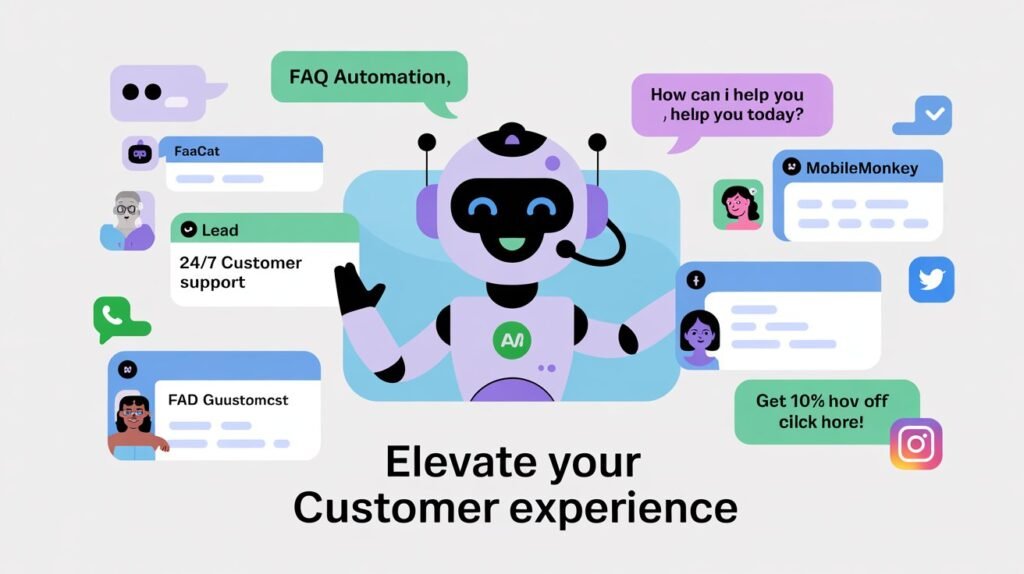
Once upon a time, brands only responded during office hours. Now, thanks to AI-powered chatbots, customer engagement never sleeps. Whether it’s answering questions at 2 a.m. or guiding a curious shopper to checkout, chatbots are the tireless MVPs of modern marketing.
Let’s meet a few of the chatbot champions:
Top Tools Powering Smart Conversations
- ManyChat: Specializes in Facebook Messenger, Instagram, and WhatsApp automation. With drag-and-drop simplicity, it’s the go-to for small businesses looking to set up powerful conversational flows.
- MobileMonkey: Great for multi-platform messaging—including Messenger, SMS, and web chat. Its OmniChat™ feature lets you build one chatbot and use it across platforms.
- Chatfuel: Designed with Facebook and Instagram in mind, Chatfuel allows marketers to create AI-powered bots that handle everything from FAQs to cart recovery—all without writing code.
Use Cases That Work While You Sleep
- FAQ Automation: Tired of answering “What are your hours?” or “Do you ship internationally?” 50 times a day? Chatbots instantly handle common questions, freeing up your human team for more complex issues (or snack breaks).
- Lead Generation: These bots don’t just talk—they convert. Chatbots can collect emails, phone numbers, and preferences through conversational flows that feel less like forms and more like friendly DMs.
- 24/7 Customer Support: With bots, “business hours” become 24/7. Whether it’s troubleshooting an order or helping someone pick the right product, chatbots ensure no customer is left on “seen.”
Real-World Wins on Facebook & Instagram
- A fitness brand used ManyChat to launch a Messenger-based quiz that recommended products based on fitness goals. Result? A 30% boost in email sign-ups and a 20% lift in conversions.
- An online clothing store used Chatfuel to recover abandoned carts through Instagram DMs. The chatbot nudged users with personalized reminders—and recovered 25% more sales.
- A real estate agency used MobileMonkey to pre-qualify leads on Facebook via chat. The bot collected preferences, budgets, and contact info automatically—cutting response time by 80%.
Final Thought
Chatbots don’t just automate responses—they build relationships. With AI in the mix, these digital assistants turn casual scrolls into meaningful interactions, and one-time visitors into loyal customers.
So go ahead, let your bots do the talking (and the selling). Your audience won’t even miss the typing dots.
AI Analytics and Performance Tracking: From Data Dumps to Smart Decisions
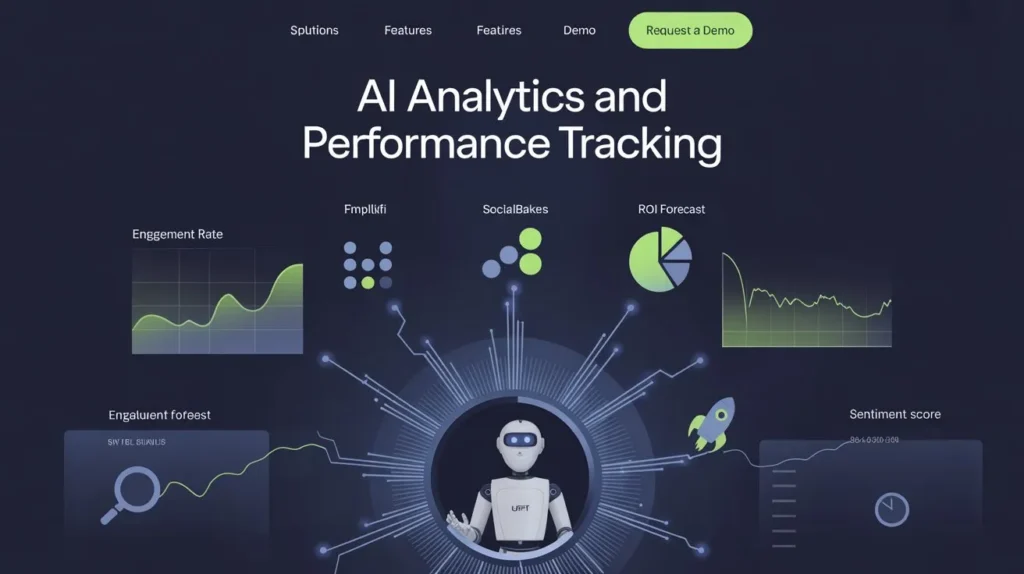
If traditional analytics is like checking your rearview mirror, AI-powered analytics is more like having a GPS that predicts traffic, suggests shortcuts, and warns you when your fuel (or ad budget) is running low. Today’s social media marketers no longer just track performance—they optimize it in real time, thanks to AI.
Let’s break down the tools turning raw data into marketing magic:
Meet the AI Analytics A-Team
- Sprinklr: A powerhouse for enterprise social media management, Sprinklr’s AI analyzes engagement, sentiment, and content performance across multiple platforms—then recommends what to do next.
- Emplifi: Combines social analytics, customer care, and influencer tracking. Its AI identifies what content works best, when to post, and how to boost ROI.
- Socialbakers (now part of Emplifi): Known for its intuitive dashboards and predictive features, it uses AI to suggest content topics, analyze audience behavior, and track competitor strategies.
From Raw Data to Real Action
AI doesn’t just collect likes, clicks, and shares—it connects the dots. These tools process huge volumes of raw data to spot patterns in engagement, audience preferences, and platform performance.
Instead of saying, “Your engagement dropped,” AI says, “Your Instagram engagement dropped 18% on weekends—consider adjusting your posting schedule or content type.” See the difference? One’s a fact. The other’s a strategy.
Predictive Analytics and Performance Forecasting
With predictive analytics, AI can forecast which posts are likely to go viral, which campaigns will underperform, and even how much ROI to expect from your next ad set. It’s like peeking into the future—without the tarot cards.
These insights help marketers make proactive decisions, not reactive ones.
KPI Dashboards & Real-Time Optimization
Modern AI tools like Emplifi and Sprinklr offer smart dashboards that go beyond vanity metrics. You get KPIs like conversion rate, sentiment score, cost-per-click, and even share of voice—all in one glance.
Better yet, these platforms often offer real-time optimization: auto-adjusting budget allocation, recommending creative tweaks, or alerting you when a post is unexpectedly blowing up (or flopping).
Final Thought
AI analytics doesn’t just report what happened—it tells you why it happened and what to do next. It’s like having a strategist, data analyst, and coach rolled into one sleek dashboard.
In the age of data overload, AI helps you focus on what matters: results.
Risks, Challenges, and Ethical Considerations: The Fine Print of AI in Marketing
AI is transforming social media marketing faster than a TikTok trend—but with great power comes great responsibility (and a few ethical speed bumps). While AI tools offer efficiency, personalization, and scale, they also raise important questions about privacy, authenticity, and how much control we really want to give the machines.
1. Data Privacy and User Consent
AI thrives on data—the more it knows about users, the better it can target, predict, and personalize. But with that comes a big red flag: privacy. Marketers must tread carefully, ensuring data is collected transparently and used in compliance with laws like GDPR and CCPA. Gone are the days of “Just grab the data and go.” Today, it’s all about consent, clarity, and control.
Failing to safeguard data not only breaks trust—it can break your business.
2. Automation vs. Authenticity
Sure, AI can write captions, respond to comments, and even recommend the perfect emoji 🍕. But users still crave genuine human interaction. Over-relying on automation can lead to robotic replies, tone-deaf posts, or awkward “Hello [First Name]” mishaps.
The challenge? Finding the sweet spot where AI handles the grunt work, while humans handle the heart.
3. Misinformation and Misuse
AI-generated content is fast—but not always factual. There’s a real risk of spreading misinformation, especially when using AI to generate trend-based posts or news commentary. Without proper oversight, brands could inadvertently share incorrect info, offensive content, or even AI-generated deepfakes.
The lesson? Review before you publish. Always.
4. Balancing the Human-AI Partnership
AI isn’t here to replace marketers—it’s here to augment them. But keeping humans in the loop is crucial. Over-automation risks creative stagnation, ethical blind spots, and losing the personal touch that makes social media social in the first place.
Think of AI as your co-pilot—not the captain.
Final Thought
AI in social media marketing is powerful—but not infallible. The best results come when it’s used ethically, transparently, and thoughtfully, with humans leading the way. Because even the smartest bot can’t replace good judgment, empathy, and a well-timed meme.
The Future of AI in Social Media Marketing: From Smart Tools to Creative Co-Stars

If you think AI has already reshaped social media marketing, buckle up—the future is just getting warmed up. Emerging technologies are pushing the boundaries of what’s possible, and marketers are evolving right alongside them.
Emerging Trends to Watch
We’re entering the age of generative video, where AI tools can create short-form content from a single prompt—perfect for platforms like TikTok and Reels. Voice AI is also on the rise, enabling brands to create dynamic voiceovers, personalized audio messages, or even interactive voice-based bots on social platforms.
Real-time content generation is set to go mainstream, with AI responding instantly to trends, comments, and live data. Imagine your brand’s social post auto-adjusting tone, visuals, or messaging based on breaking news or customer sentiment. It’s next-level reactivity.
The Evolving Role of Marketers
As AI handles more of the “doing,” marketers will focus more on strategy, creativity, and ethical oversight. The marketer of tomorrow won’t just be a creator—they’ll be a curator, coach, and conductor, guiding AI systems to produce aligned, brand-safe, and human-centered content.
Looking Ahead: 5–10 Years from Now
Expect AI to become even more integrated across platforms—suggesting campaign ideas, writing scripts, editing videos, and even running adaptive ad spend in real-time. We’ll see the rise of AI brand ambassadors—virtual influencers that are indistinguishable from real people.
But one thing won’t change: authenticity will still win. The brands that blend AI’s efficiency with human empathy will lead the pack.
Final Thought
The future of AI in social media isn’t just smarter—it’s more creative, more responsive, and more collaborative. The bots aren’t taking over—they’re teaming up. And that’s a future worth posting about.
Conclusion: The AI-Powered Future Is Now
From streamlining content creation to decoding audience sentiment in real time, AI has undeniably transformed the way we approach social media marketing. What once required entire teams and round-the-clock effort can now be handled—at least in part—by intelligent systems that work faster, smarter, and around the clock.
We’ve explored how AI helps craft compelling content, personalize ads, schedule posts at peak times, and engage with customers through chatbots—all while analyzing performance and adapting on the fly. It’s not just about working harder anymore; it’s about working smarter.
But let’s be clear: AI is a tool, not a takeover. It can automate tasks, surface insights, and even write a killer caption, but it can’t replace human creativity, empathy, or strategic thinking. The brands that thrive in this new era will be those that blend human intuition with machine intelligence.
Now’s the time to experiment, explore, and evolve. Try out AI tools. Test new automation features. Let an algorithm write your next headline (but maybe give it a once-over). Embrace the learning curve—because AI isn’t going anywhere, and the sooner you adapt, the more prepared you’ll be.
In short: Don’t fear the bots. Make them your allies. Social media marketing is no longer just about keeping up—it’s about staying ahead, and AI just happens to be one very fast-moving friend.