
Introduction
Let’s be brutally honest here: C is both the superhero and the supervillain of programming languages. On one hand, it powers the backbone of our modern digital world—operating systems, databases, embedded controllers, IoT devices, even the microchips in your car and pacemaker. On the other hand, C has an unnerving habit of letting developers shoot themselves in the foot… with a rocket launcher.
So why are we talking about safe C coding practices in 2025? Because the stakes have never been higher.
Why Safe C Matters More Than Ever
Back in the early days, writing C felt like running around with scissors—dangerous, but kind of thrilling. Fast-forward to today, and unsafe C code isn’t just a personal hazard—it’s a global liability. We’re talking buffer overflows, undefined behavior, memory leaks, dangling pointers, and other gremlins that hackers love to exploit.
Those little bugs you thought were harmless? They’ve fueled catastrophic breaches, from the Heartbleed vulnerability in OpenSSL to entire worms (hello, Morris Worm) that took down swathes of the internet. Unsafe C isn’t just bad coding—it’s an open door for cybercriminals, and in a world increasingly powered by connected systems, that door needs to stay shut.
Where Unsafe C Hurts the Most
Unsafe coding practices in C aren’t just an academic concern—they directly impact:
-
System software: Your OS kernel doesn’t forgive sloppy pointer math.
-
Embedded systems & IoT: The tiny chip in your smart fridge can be hacked into part of a botnet if your buffer bounds aren’t checked.
-
Cybersecurity-critical apps: One unchecked input string, and suddenly sensitive data is out in the wild.
-
Medical, automotive, and aerospace software: Imagine a buffer overflow in your pacemaker or airplane navigation system. Not fun.
Why Defensive Programming in C Is Non-Negotiable in 2025
In today’s landscape, cyber threats are multiplying like rabbits on energy drinks. Governments and industries are responding with stricter compliance standards: think MISRA C for automotive, DO-178C for aerospace, and CERT C guidelines everywhere else.
The reality is this: writing defensive C code is no longer just good practice—it’s survival. Whether you’re coding firmware for a toaster or kernel drivers for a spacecraft, the philosophy is the same: assume nothing, validate everything, and fail safely.
And here’s the kicker: while newer languages like Rust are nibbling away at C’s dominance, C isn’t going anywhere. Why? Because it’s fast, portable, and has a four-decade legacy of powering everything from nuclear reactors to Nintendo consoles. The world runs on C—so the world needs secure C code in 2025.
What You’ll Learn in This Guide
This isn’t going to be another dry lecture with dusty textbook jargon. Nope. By the end of this article, you’ll walk away with:
-
Core principles of defensive programming in C (assume nothing, validate everything, fail predictably).
-
A rundown of the most common C vulnerabilities (buffer overflows, null pointers, memory leaks, integer overflows, and more).
-
Defensive coding techniques with real-world, practical examples.
-
The latest tools, standards, and industry practices that can save you from embarrassing (and costly) disasters.
-
Real case studies of vulnerabilities that rocked the world—and how they could have been avoided with better code.
-
A peek into the future of secure C programming in 2025 and beyond.
So grab your metaphorical seatbelt, because we’re about to dive into the world of defensive programming in C. It’s not just about avoiding embarrassing bugs—it’s about making sure your code doesn’t end up as tomorrow’s cybersecurity headline.
Because here’s the truth: secure C code in 2025 is not optional—it’s your responsibility.
The State of C Programming in 2025
If you thought C would be dead and buried by 2025, surprise—it’s still very much alive and kicking. In fact, it’s thriving in places where other languages dare not tread. Sure, Python and Rust may dominate Twitter debates, but when it comes to bare-metal performance, hardware control, and portability, C is still the boss.
Why C Refuses to Retire
Let’s put it this way: if programming languages were cars, C would be the 1967 Mustang. Old? Yep. Lacking modern safety features? Definitely. But can it still smoke most competitors on the highway? Absolutely.
C gives you raw speed and precise control over memory and hardware, things higher-level languages often abstract away. That’s why it’s irreplaceable in:
-
Operating systems (Linux, Windows kernels, real-time OSes).
-
Embedded systems & IoT devices (because 2KB of RAM doesn’t like JavaScript).
-
High-performance computing (databases, compilers, and interpreters).
-
Safety-critical industries (aerospace, medical, automotive).
The Flip Side: Security Is Harder in C
But here’s the problem: C doesn’t babysit you. Unlike languages with built-in memory safety, C leaves it up to you to manage pointers, memory allocation, and buffer sizes. That’s like giving a toddler a chainsaw and saying, “Good luck, champ.”
Compared to Python or Java, where unsafe memory access is basically impossible, C puts the responsibility (and blame) squarely on the programmer’s shoulders. A single missed bounds check, and congratulations—you’ve just written the next zero-day exploit.
Evolution of the C Standards
The good news is that C hasn’t stood completely still. Over the years, the language has slowly evolved to add safer practices:
-
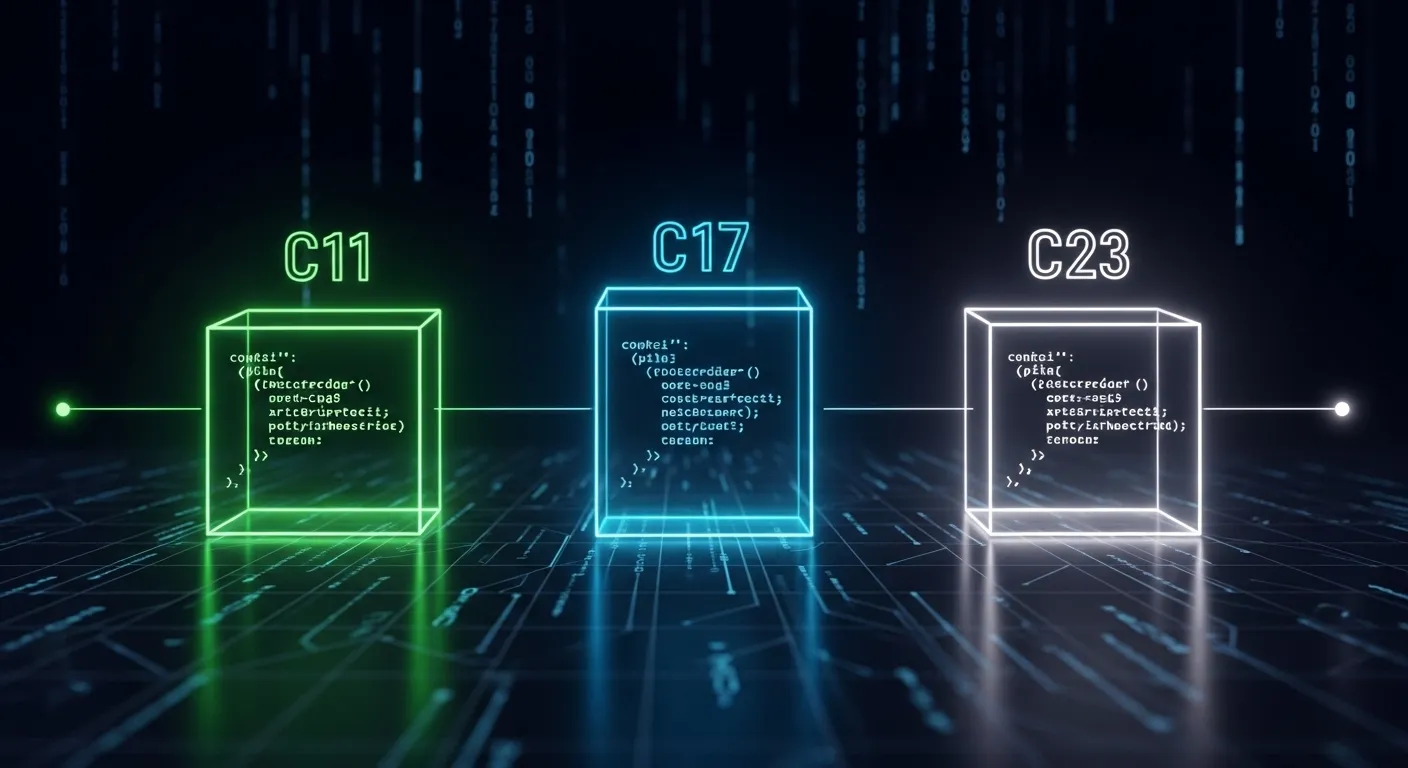
C11 introduced
_Thread_localstorage, improved Unicode support, and atomics. -
C17 was mostly bug fixes and clarifications (the housekeeping release).
-
C23 (the latest) brings more usability improvements, like
nullptr,constexpr-like features, and improved memory safety hints.
These updates are a step forward, but let’s be real—they’re not a silver bullet. They help, but they don’t eliminate the risks that come with low-level programming.
Industry Trends in 2025
Here’s where things get interesting: industries that rely heavily on safety and security have doubled down on defensive programming in C.
-
Automotive: ISO 26262 requires rigorous safety checks. Self-driving cars can’t afford a dangling pointer.
-
Aerospace: DO-178C compliance ensures planes don’t crash due to sloppy memory handling.
-
Medical devices: Pacemakers, insulin pumps, and ventilators often run C code. Nobody wants a buffer overflow there.
-
Cybersecurity tools: Ironically, many intrusion detection systems and firewalls are written in C—and must themselves be secure.
So while flashy new languages pop up every year, the industries that matter most—where failure equals lives lost or billions wasted—still rely on C.
Core Principles of Defensive Coding in C
If Section 2 made C look like a thrill ride with sharp turns and hidden spikes, Section 3 is your seatbelt, helmet, and emergency brake all rolled into one. Defensive coding in C isn’t just a fancy buzzword—it’s a survival strategy. In a language where a stray pointer can cause chaos, defensive practices separate seasoned pros from “oops, I just crashed the system” amateurs.
Here’s how to think like a defensive C programmer in 2025.
1. Assume Nothing, Validate Everything
C doesn’t validate inputs for you. It won’t check if your pointer is NULL before dereferencing, nor will it prevent a buffer overflow. That’s why trusting anything blindly is a rookie mistake.
-
Always check function inputs. If a string is expected, ensure it’s non-
NULLand within bounds. -
Validate user input and external data. Even if it’s coming from “trusted” sources—assume hackers are lurking.
Think of it like checking if your parachute is packed properly before jumping out of a plane. You just cannot skip this step.
2. Fail Safely and Predictably
When things go wrong, C programs often crash spectacularly. Defensive coding aims to fail gracefully, so your system doesn’t go from 0 to disaster in milliseconds.
-
Use assertions for critical invariants during development (
assert(ptr != NULL);). -
Handle errors gracefully in production code: return error codes, log failures, and avoid undefined behavior.
Example: Instead of blindly dereferencing a pointer, check first:
3. Keep It Simple and Readable
Complex code is dangerous code. The simpler your functions, the less likely you are to miss a subtle bug.
-
Avoid one-liners that cram multiple operations.
-
Modularize: small, well-named functions are easier to audit and defend.
-
Comment wisely—not every line, just the tricky parts.
Think of this as writing a map for someone else to survive a maze. If it’s a spaghetti mess, nobody will make it out alive.
4. Minimize Trust Boundaries
Every time data crosses from “untrusted” to “trusted” code, it’s a potential vulnerability.
-
Treat all external inputs—network, files, user input—as suspicious.
-
Sanitize and validate before processing.
-
Don’t mix trusted and untrusted code in the same function if you can avoid it.
5. Prefer Explicitness Over Implicitness
C loves implicit conversions, but they can be sneaky. Defensive programmers favor explicit casts, clear initialization, and obvious control flow.
-
Initialize all variables; don’t rely on default zeroing.
-
Use clear boolean checks instead of relying on integer truthiness.
-
Prefer
enumover magic numbers—readability reduces mistakes.
Real-World Example: Ignored Principles
Consider a famous pitfall: blindly copying user input without bounds checks:
The result? Buffer overflow, memory corruption, or an open door for exploits.
Defensive rewrite:
Here, you assume nothing, validate input, and fail gracefully if things go wrong.
By embracing these core principles, you’re no longer gambling with your system’s integrity. Instead, you’re building robust, maintainable, and safe C code—the kind that makes managers sleep at night and hackers pull their hair out.
Common Security Vulnerabilities in C
If C were a medieval kingdom, vulnerabilities would be the open gates and weak walls just waiting for invaders. In 2025, ignoring these weaknesses is like leaving your castle unguarded while hackers are armed with cannons. Let’s explore the most notorious C vulnerabilities and how secure C coding examples can save your digital kingdom.
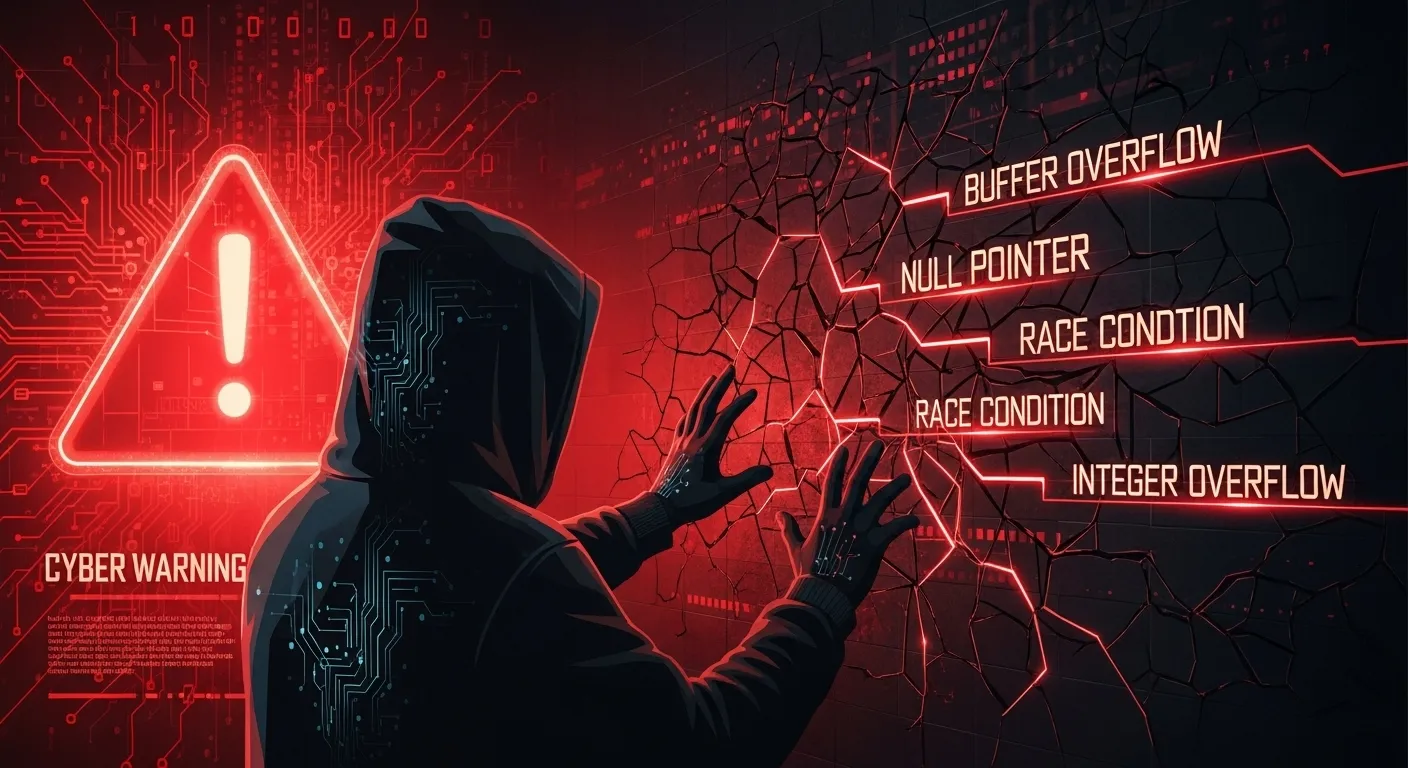
1. Buffer Overflows and Stack Smashing
Ah, the classic nightmare: a buffer overflow. This occurs when a program writes more data into a buffer than it can hold. The extra bytes overflow into adjacent memory, potentially overwriting variables, control structures, or even return addresses.
Unsafe example:
Risk: Stack smashing, crashes, or remote code execution.
Defensive alternative:
Notice how memory safety in C is vastly improved just by enforcing bounds.
2. Null Pointer Dereferencing
Dereferencing a NULL pointer is like trying to open a door that doesn’t exist—it ends badly. Programs crash, resources leak, and if this happens in critical systems, consequences can be catastrophic.
Safe approach: Always check pointers before use:
Assertions can also help during development:
3. Dangling Pointers and Memory Leaks
C requires manual memory management. Forget to free() allocated memory, and you’ve got a memory leak. Free memory too soon, and you create a dangling pointer, which can lead to undefined behavior or exploitation.
Unsafe example:
Defensive alternative:
Setting pointers to NULL after freeing them is a small but powerful habit.
4. Integer Overflows and Underflows
C won’t complain when integers wrap around. Adding 1 to INT_MAX produces INT_MIN. Multiply two large values, and you’ve got unexpected results—sometimes opening a security hole.
Defensive approach:
Simple bounds checking keeps your arithmetic safe.
5. Format String Vulnerabilities
Uncontrolled format strings are a hacker’s delight. Consider:
If user_input contains %x %x %x, it can leak memory contents. %n can even overwrite memory.
Safer version:
6. Race Conditions in Multithreaded Programs
When multiple threads access shared resources without proper synchronization, unpredictable behavior arises. This can lead to data corruption, memory leaks, or security breaches.
Safe practice: Use mutexes or atomic operations:
Real-World Example: Unsafe vs Safer Code
Unsafe snippet:
Defensive rewrite:
Notice how explicit size limits, input validation, and error handling make a simple program dramatically safer.
Key Takeaways
-
Buffer overflows remain the most dangerous and common exploit.
-
Memory safety in C demands diligence: check pointers, free memory carefully, and prevent leaks.
-
Integer overflows, format strings, and race conditions are subtle but devastating vulnerabilities.
-
The common thread? Defensive thinking transforms risky code into robust, secure C programming practices.
By learning these vulnerabilities and practicing defensive coding, you’re not just avoiding crashes—you’re building resilient, hacker-resistant software for 2025.
Defensive Coding Techniques for Safer C Code
Writing C code is like tightrope walking over a pit of hungry alligators. One misstep—buffer overflow, dangling pointer, or unchecked input—and you’re toast. But with defensive coding techniques, you can cross safely, build reliable software, and maybe even enjoy the view.
Here’s your ultimate guide to writing secure C code in 2025.

5.1 Memory Safety Practices
Memory mismanagement is the top culprit for C vulnerabilities. Defensive programmers take memory seriously.
Use safer functions: Standard C functions like strcpy and sprintf are dangerous because they assume you know the buffer size. Instead, prefer their safer cousins:
Avoid dangerous functions:
-
gets()→ never use -
strcpy()→ preferstrncpy() -
sprintf()→ prefersnprintf()
Proper allocation & deallocation:
Memory initialization: Always initialize memory to avoid undefined behavior. Zeroization is crucial for sensitive data (passwords, keys).
Tools for memory safety:
-
Valgrind: detect leaks
-
AddressSanitizer (ASan): detect buffer overflows
-
UndefinedBehaviorSanitizer (UBSan): detect undefined behavior
5.2 Input Validation & Sanitization
Your program should trust nothing. Always validate input:
-
Whitelisting vs blacklisting: Prefer whitelists (accept known good values) over blacklists (block known bad values).
-
Length checks: Ensure strings and buffers don’t exceed allocated size.
-
Edge case handling: Empty strings,
NULLpointers, oversized inputs.
Example:
5.3 Error Handling & Defensive Assertions
Good defensive code anticipates failure.
-
Use
assert()during development for invariants:
-
For production, return error codes consistently and check every function call:
-
Perform defensive checks before pointer dereferencing. It’s a small habit with huge benefits.
5.4 Integer and Arithmetic Safety
Integer overflows/underflows are sneaky bugs that can compromise security.
Defensive practices:
-
Use safe math libraries if possible.
-
Check for overflows before operations:
-
Prefer unsigned integers carefully—don’t assume they prevent errors; they just wrap around differently.
5.5 Secure Coding Patterns
Immutable data when possible: Constant data prevents accidental overwrites.
Encapsulation with static functions/variables: Keep things local when possible; reduces attack surface.
Use enums instead of magic numbers:
-
Easier to read and safer than
int c = 0;
Defensive defaults in switch statements: Always include a default: case to handle unexpected values.
Real-World Example: Combining Techniques
Unsafe:
Defensive rewrite:
Here, memory safety, input validation, and arithmetic checks come together to create robust, secure C code.
Modern Tools and Practices for Safer C
If writing defensive C code feels like building a fortress, modern tools and practices are your moat, drawbridge, and watchtowers. In 2025, the landscape is richer than ever: static analyzers, dynamic testing tools, compiler options, and hybrid safety approaches make writing secure C code more manageable than relying solely on discipline and luck.
Static Analysis Tools
Static analysis is like having an eagle-eyed mentor comb through your code before it even runs. These tools inspect your source code to detect potential vulnerabilities, memory errors, and undefined behavior.
-
Clang Static Analyzer: Integrates seamlessly with Clang/LLVM, catching null pointer dereferences, uninitialized variables, and memory leaks.
-
Coverity: Enterprise-grade tool for catching security defects and ensuring compliance with standards like MISRA C.
-
PVS-Studio: Detects a wide range of potential bugs, including buffer overflows, uninitialized variables, and logic errors.
Static analysis is particularly powerful for large codebases, where manual inspection is impractical. Think of it as a safety net catching issues before they hit production.
Dynamic Analysis Tools
Static analysis is great, but it doesn’t catch everything. Enter dynamic analysis—testing your program as it runs to catch runtime issues.
-
Valgrind: Detects memory leaks, uninitialized memory reads, and heap corruption.
-
AddressSanitizer (ASan): Catches buffer overflows and use-after-free bugs in real time.
-
UndefinedBehaviorSanitizer (UBSan): Detects integer overflows, misaligned accesses, and other undefined behaviors.
Dynamic tools are the fire alarms of C programming—loud, immediate, and invaluable for preventing disasters.
Compiler Options for Safety
Modern compilers can act as your first line of defense. Enabling the right flags can turn warnings into hard stops, preventing unsafe code from compiling.
-
-Wall -Wextra -Werror: Treat warnings as errors, forcing you to address potential issues.
-
-fstack-protector: Adds stack canaries to detect stack smashing attacks.
-
-D_FORTIFY_SOURCE=2: Adds runtime checks to common functions like
strcpyandsprintf.
Even a seasoned developer can benefit from letting the compiler point out mistakes. It’s like having a safety harness on a high-wire act.
Memory-Safe Alternatives and Hybrid Approaches
C isn’t going to disappear, but you don’t always need to reinvent the wheel when safety is critical:
-
Checked C: An extension of C providing bounds-checked pointers and arrays, reducing buffer overflow risks.
-
Rust Integration: Using Rust for memory-safe components while keeping C for legacy code or low-level control.
Hybrid approaches combine performance, legacy support, and safety, giving you the best of both worlds.
Role of CI/CD Pipelines
In modern development, continuous integration and deployment (CI/CD) pipelines are crucial for catching unsafe code early. By automating:
-
Static analysis
-
Unit tests
-
Dynamic memory checks
…you can ensure every commit is scanned for vulnerabilities before it hits production. Think of it as having a security guard reviewing every line of code automatically.
Putting It All Together
Modern defensive C isn’t just about careful coding—it’s about leveraging tools, compiler features, and processes to enforce security. By combining:
-
Static analysis
-
Dynamic runtime checks
-
Compiler protections
-
CI/CD enforcement
…you drastically reduce the likelihood of critical vulnerabilities slipping through. In 2025, defensive coding is no longer just a mindset—it’s a tech stack.
Standards, Guidelines & Industry Best Practices
Writing secure C code isn’t just about avoiding crashes or memory leaks—it’s about following proven standards and guidelines that the industry trusts. Think of it as having a GPS for your code, ensuring you don’t take a wrong turn into a buffer overflow or undefined behavior.
MISRA C: Automotive Safety
MISRA C is the gold standard for automotive and safety-critical embedded software. It provides rules for writing reliable, maintainable, and secure C code, including:
-
Restrictions on unsafe language features (like
gotoor unchecked pointer arithmetic) -
Guidelines for initialization and error handling
-
Mandatory checks for undefined or implementation-defined behavior
For cars, where a single memory error could be life-threatening, following MISRA C is non-negotiable.
CERT C Secure Coding Standard
CERT C is a widely adopted secure coding standard for preventing vulnerabilities in general-purpose software. It covers:
-
Buffer overflows: Always validate input sizes
-
Memory management: Proper allocation, deallocation, and pointer handling
-
Concurrency: Avoid race conditions in multithreaded applications
CERT C complements MISRA by focusing on security, rather than purely functional safety.
ISO/IEC TR 24772: Programming Language Vulnerabilities
This standard focuses on vulnerabilities inherent in programming languages, including C. It identifies risky constructs and recommends safe alternatives. Following ISO/IEC TR 24772 can prevent common mistakes like:
-
Using unsafe library functions
-
Mismanaging memory
-
Exploitable undefined behavior
It’s like having a security blueprint for your language.
OWASP Top 10 Relevance to C Projects
While OWASP is often associated with web applications, its principles apply to C projects that handle network input or user data. For instance:
-
Input validation: Prevent injection attacks
-
Buffer handling: Prevent overflows
-
Error handling: Avoid leaking sensitive information
In 2025, even embedded or IoT systems need to consider OWASP principles, because connectivity equals exposure.
How Compliance Ensures Long-Term Safety
Adhering to standards isn’t about bureaucracy—it’s about future-proofing your code. Compliance:
-
Reduces the risk of critical vulnerabilities
-
Improves maintainability and readability
-
Ensures software passes audits for automotive, aerospace, medical, and IoT devices
By combining MISRA, CERT C, ISO standards, and OWASP principles, you’re creating a strong safety net for your software.
Practical Tip
Don’t just read the standards—integrate them into your development workflow. Use static analyzers to enforce rules, CI/CD pipelines to catch violations, and code reviews to reinforce best practices.
Remember: standards aren’t shackles—they’re guardrails that keep your C code safe, secure, and robust in 2025.
Defensive Coding in Practice: Real-World Case Studies
Theory is great, but seeing defensive coding in action is what really drives the point home. Let’s look at some famous C disasters—and how they could have been prevented with proper defensive practices.

1. Heartbleed: OpenSSL Buffer Over-Read
Heartbleed, one of the most infamous security bugs of the past decade, stemmed from improper bounds checking. Attackers could read sensitive memory contents from a server because the code didn’t verify the length of the user-supplied input.
Lesson learned: Always validate inputs and lengths, especially for network-facing software.
Defensive rewrite concept:
Even a simple bounds check would have prevented the catastrophe.
2. Morris Worm: Exploiting Buffer Overflows
The 1988 Morris Worm targeted vulnerabilities in Unix systems, primarily buffer overflows in networked services. It spread rapidly, causing widespread downtime.
Lesson learned: Always sanitize inputs and avoid unsafe functions like gets() and strcpy().
Defensive example:
A safer approach stops overflows and, by extension, malware propagation.
3. Boeing 787 System Vulnerability
Even modern aerospace systems are not immune. Some vulnerabilities in avionics software came from race conditions and unchecked pointer usage. In critical systems, a small memory bug could affect flight safety.
Lesson learned: Defensive programming for real-time systems is non-negotiable. Synchronize threads and validate memory before dereferencing.
Defensive example:
Key Takeaways from Case Studies
-
Input validation is paramount—Heartbleed shows that ignoring it can leak sensitive data.
-
Avoid unsafe functions—Morris Worm proves how dangerous functions like
gets()can be. -
Concurrency and pointer safety matter—critical systems like Boeing 787 cannot tolerate race conditions or dangling pointers.
-
Small defensive habits prevent big disasters—even adding length checks, pointer validation, and proper synchronization goes a long way.
In short, defensive coding isn’t theoretical—it saves lives, money, and reputation. Real-world case studies show that ignoring safety in C isn’t just risky—it’s catastrophic.
Future of Safer C Programming
If you think C is old-fashioned, think again. In 2025, C remains the backbone of critical systems, but the future of safe C programming is evolving faster than ever. Let’s explore what’s next for defensive coding in C.

Coexistence with Modern Languages
Languages like Rust, Go, and Zig are rising stars for memory-safe programming, but C isn’t going anywhere. Instead, hybrid approaches are emerging:
-
Use Rust or Zig for memory-critical modules while keeping C for legacy or performance-sensitive code.
-
Build safety wrappers around C libraries to prevent buffer overflows and unsafe memory access.
This allows teams to retain C’s performance and portability while adding modern safety guarantees.
AI-Assisted Code Analysis
Artificial intelligence is making automated bug detection and code review a reality:
-
AI tools can scan your C code for potential vulnerabilities before compilation.
-
Predictive models can suggest safer alternatives to unsafe constructs.
-
Continuous learning ensures that your code evolves with the latest security threats.
In 2025, AI is not replacing programmers—it’s amplifying their defensive coding superpowers.
Verified Libraries and Safety-Centric Ecosystems
Expect more verified and memory-safe libraries for C. These libraries reduce reliance on unsafe functions and make defensive coding more practical. Developers can focus on business logic rather than reinventing safety measures.
Why Defensive C Coding Still Matters
Even with AI and hybrid languages, defensive programming in C remains essential. The reality: many embedded systems, operating systems, and legacy software are C-based, and the stakes are higher than ever. Following defensive principles ensures reliable, maintainable, and secure software—no matter how advanced tools become.
Writing C code is like navigating a jungle with a machete: powerful, fast, and effective—but fraught with hidden dangers. In 2025, safe C programming is no longer optional; it’s a necessity. From buffer overflows to memory leaks, the risks of unsafe code are high, but the rewards of defensive coding in C are even higher: robust, maintainable, and secure software.
Key Takeaways
-
Follow core principles: Assume nothing, validate everything, fail safely, and keep your code simple.
-
Avoid common vulnerabilities: Buffer overflows, null pointers, dangling pointers, integer overflows, and race conditions are frequent culprits.
-
Use defensive techniques: Memory safety, input validation, safe arithmetic, defensive assertions, and secure coding patterns transform risky code into reliable systems.
-
Leverage modern tools: Static and dynamic analyzers, compiler protections, CI/CD pipelines, and hybrid language approaches help enforce security automatically.
-
Adhere to standards: MISRA C, CERT C, ISO/IEC 24772, and OWASP principles provide proven guardrails for safe C programming.
-
Learn from real-world cases: Heartbleed, Morris Worm, and aerospace vulnerabilities remind us why defensive coding isn’t theoretical—it’s survival.
Call to Action
If you write C code in 2025, don’t treat defensive coding as optional. Integrate safety tools into your workflow, follow industry standards, and continuously learn about emerging threats and best practices. Every check, assertion, and safe function you use is a small step toward safer, more reliable systems.
Remember: C remains powerful, versatile, and indispensable, but only disciplined, defensive coding will keep your software—and its users—safe.
Final takeaway: Secure C code isn’t just a nice-to-have. It’s the foundation for safe systems in 2025 and beyond.
FAQ: Safe and Defensive C Programming
1. What is defensive coding in C?
Defensive coding in C is a programming approach where developers anticipate errors, validate inputs, and proactively prevent vulnerabilities. Instead of assuming everything will work perfectly, you assume nothing, check everything, and fail safely. It involves practices like input validation, memory checks, error handling, and using safer coding patterns to minimize risks such as buffer overflows, memory leaks, and race conditions.
Think of it as putting a safety net under your code—you’re not just avoiding bugs; you’re preventing potential disasters.
2. What are unsafe C functions to avoid?
C has several functions that are notoriously unsafe if used without caution:
-
gets()→ no bounds checking, easily causes buffer overflows -
strcpy()→ copies without checking buffer size -
sprintf()→ writes formatted data without checking limits -
scanf("%s")→ can overflow buffers if input is too long
Defensive alternatives:
-
fgets()instead ofgets() -
strncpy()instead ofstrcpy() -
snprintf()instead ofsprintf() -
Always limit input sizes in
scanf()
Using these safer functions is a core part of writing secure C code in 2025.
3. How does MISRA C improve code safety?
MISRA C is a set of coding guidelines for automotive and safety-critical systems. It improves safety by:
-
Restricting unsafe language constructs (like
gotoor unchecked pointer arithmetic) -
Encouraging consistent initialization of variables
-
Enforcing error handling and code clarity
-
Reducing undefined behavior
Following MISRA C ensures robust, maintainable, and verifiable code, which is crucial when human lives or expensive machinery are at stake.
4. Can you make C as safe as Rust?
C and Rust have different design philosophies:
-
Rust: memory safety is built-in; the compiler enforces strict rules to prevent overflows, dangling pointers, and data races.
-
C: memory safety is manual; the programmer is responsible for ensuring correctness.
While you can’t magically make C as safe as Rust, you can approach similar levels of safety by:
-
Following defensive coding practices
-
Using safer functions and libraries
-
Applying static and dynamic analysis tools
-
Integrating CI/CD pipelines for automatic checks
In 2025, hybrid approaches are common: some systems use Rust for critical modules and C for performance-sensitive parts, combining safety and efficiency.
5. What tools help write secure C code?
Modern C developers have a wealth of tools at their disposal to enforce safety:
Static Analysis Tools:
-
Clang Static Analyzer
-
Coverity
-
PVS-Studio
Dynamic Analysis Tools:
-
Valgrind
-
AddressSanitizer (ASan)
-
UndefinedBehaviorSanitizer (UBSan)
Compiler Options for Safety:
-
-Wall -Wextra -Werror→ turn warnings into errors -
-fstack-protector→ detect stack smashing -
-D_FORTIFY_SOURCE=2→ adds runtime checks to common functions
Best Practices:
-
CI/CD pipelines for automated testing
-
Defensive coding patterns like bounds checks, assertions, and input validation
-
Using safer alternatives to risky functions
Combined, these tools and practices make writing secure C programming in 2025 practical and effective.
✅ Key Takeaways from the FAQ
-
Defensive coding is about anticipating problems, validating inputs, and writing robust, safe C code.
-
Avoid inherently unsafe C functions and replace them with safer alternatives.
-
MISRA C, CERT C, and static/dynamic analysis tools help enforce industry best practices.
-
While C can’t reach Rust’s inherent safety, defensive coding, tools, and standards can drastically reduce vulnerabilities.
By internalizing these answers, you’ll be better equipped to avoid buffer overflows, achieve memory safety in C, and follow best practices for secure C programming in 2025.